Images

It’s all about the bridges…
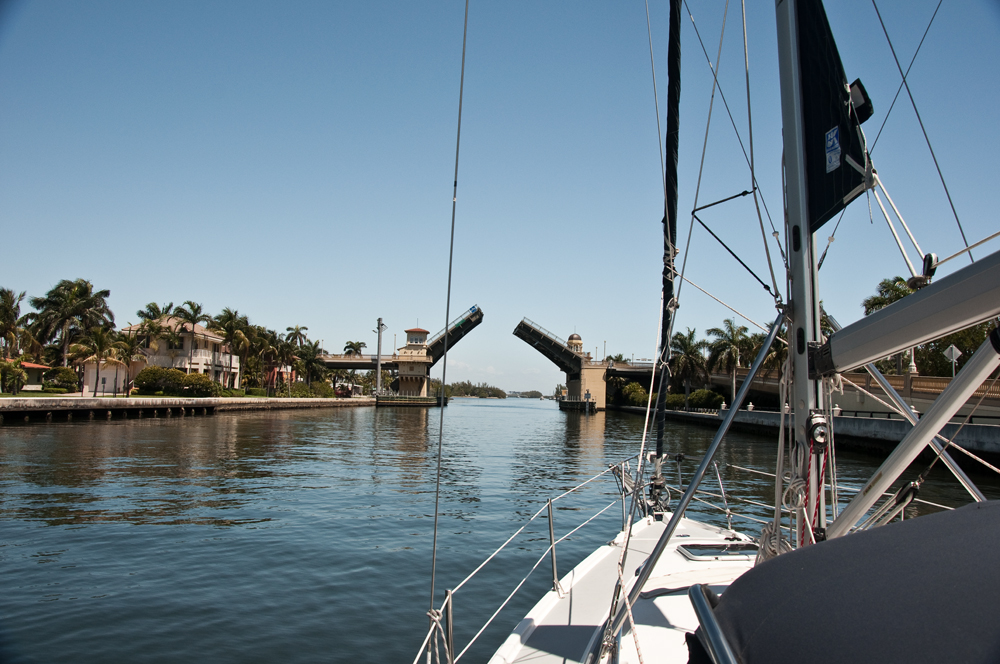
The voyage on the ICW between Miami and Fort Lauderdale is all about bridges. There are around 10 that you need to navigate. Some are fixed and 65 feet high, which easily accommodates our 55-foot mast, but most are low drawbridges or bascule bridges which have to open to let sailboats and other large boats go through. Since they typically open on a schedule, you have to pay attention to arriving at the bridge at the right time, otherwise you miss the opening and have to circle for a half an hour until the next one.
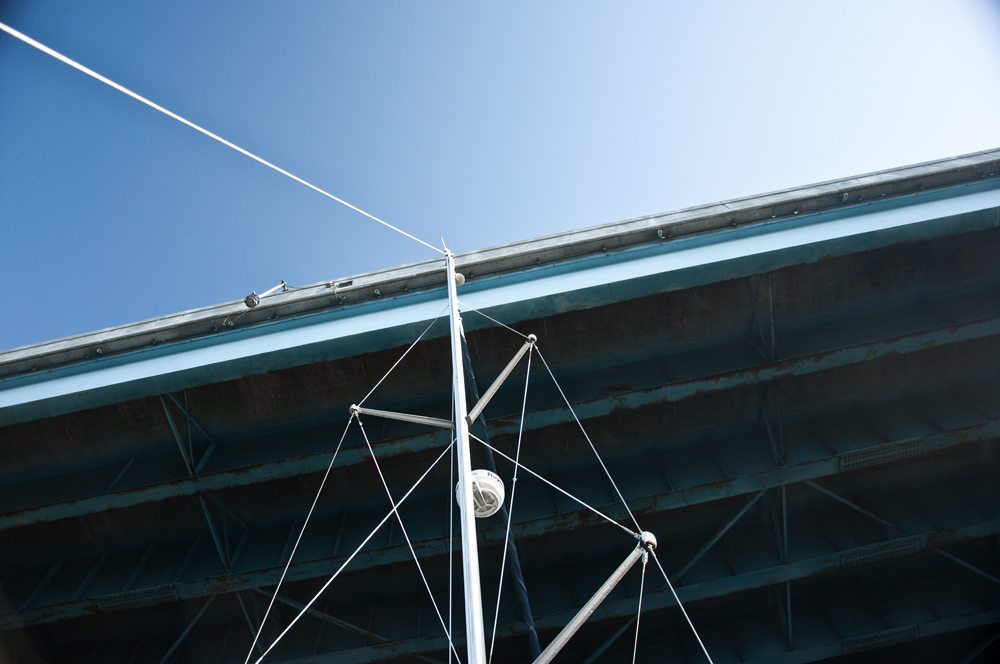
For the most part, everything went beautifully. There was very little traffic on the ICW since it was a week day.
But there was one bridge near Miami that gave us grief. The ruler beside the Julia Tuttle bridge said we were supposed to have 56 feet of clearance, and our mast is just over 55 feet, so we knew it would be close. But there should have been room.
I was looking up when we went through and saw something on the top of our mast hit the bridge and fly off in pieces. I was afraid it was our antenna. That would have left us without a good VHF radio. (We have a handheld one that we can use in a pinch.) But it turned out to be our anchor light. Bob tells me we have an extra one and is threatening to send me up the mast to replace it. Such a funny man!
 At noon, we had one more bridge to go through before reaching Fort Lauderdale. As we were coming through Port Everglades where all the cruise ships head out to sea, we saw some commotion around the 17th Street Bridge.
A sailboat with a draft of 14 feet 3 inches had run aground right in the middle of going through the bridge. Two tow boats were struggling to get him off. We joined a small parade of sailboats and other boats circling around for an hour or so until the situation was resolved. The poor captain was very apologetic to everyone for holding us all up. He said he had successfully made it through that bridge in the past. But the tide was pretty low today so perhaps that was it.
If we hadn’t hit this snag, we were thinking of continuing on to Boca Raton. Instead we’re moored just before the Las Olas bascule bridge in Fort Lauderdale and we have access to the Municipal Marina facilities, including Wifi.
On to Boca Raton tomorrow!
Share this:

Sailing dogs
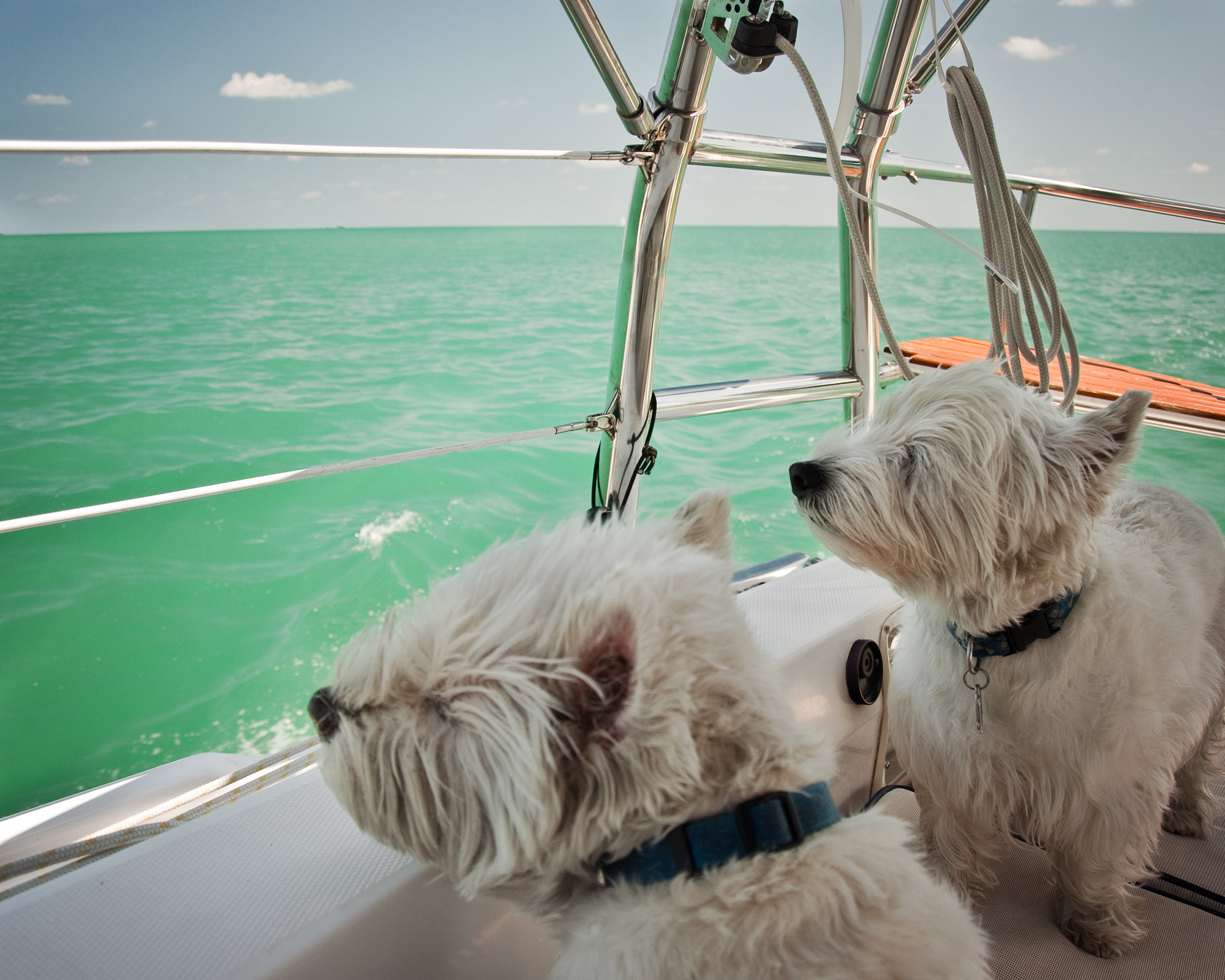
The wind in your face feels so good!
Share this:

Perfect boat dessert
Happy Easter everybody!

Baked bananas, Windsong II style
I grew up eating baked bananas. I’m not sure if my parents started making the recipe when they lived in the tropics or not, but by the time we moved to Canada, it was a regular part of our summer dessert repertoire.
We put the ingredients (which we always had on hand) in small foil boats and placed them on the BBQ and waited with great anticipation for them to meld together into a tangy-sweet rum-laced dessert. In the winter we have been known to make them in a toaster oven. They are sublime with vanilla ice cream, but quite delicious alone. All in all, a perfect dessert for the sailboat.
Recipe
- 2 bananas
- Juice of 1 lime
- 1 tablespoon dark rum
- 1/4 teaspoon ground cinnamon
- 1/8 teaspoon ground nutmeg
- 1 tablespoon dark brown sugar
- 1 tablespoon butter (optional)
Peel the bananas and slice in half lengthwise. Lay the pieces into foil boats. Pour the lime juice and rum evenly over the bananas. Sprinkle on the cinnamon, nutmeg, and brown sugar. Dot on the butter, if using, and put on the BBQ for about 10 minutes. Serve hot, topped with a tablespoon of fresh cream or ice cream if you have it.
Share this:

A good friend visits…
 Our globe-trotting friend Kass came to visit us on the boat the other day, bringing along his cousin Nick, who lives near Orlando.
The two were on their way to the Keys for some well-deserved R and R.
It was great to see Nick again. The last time was 30 years ago, when Kass and I had taken a brief trip to Orlando to visit him (and see Disney World for the first and last time).
Kass had not been back to Florida since then. Mind you, he’s been everywhere else in the world in the meantime. (Tanzania, Mexico, Italy, Argentina, you name it!)
Kass is like a brother to me, and he teases me mercilessly just as a brother would. When he and Bob get together, I have to run for cover. As a oenophile with a magnificent cellar, he pulls no punches when he sees us with wine bottles that he doesn’t think are up to our standards. He also is the purveyor of Bob’s favorite French wine from Corbieres.
I was glad to see that he put his stamp of approval on our floating abode after checking out the sleeping quarters, the bar and the sound system, and he volunteered as crew on a future voyage. We’re definitely looking forward to a longer visit next time, Kass. But you have to bring the wine!
Share this:

Random Act of Kindness
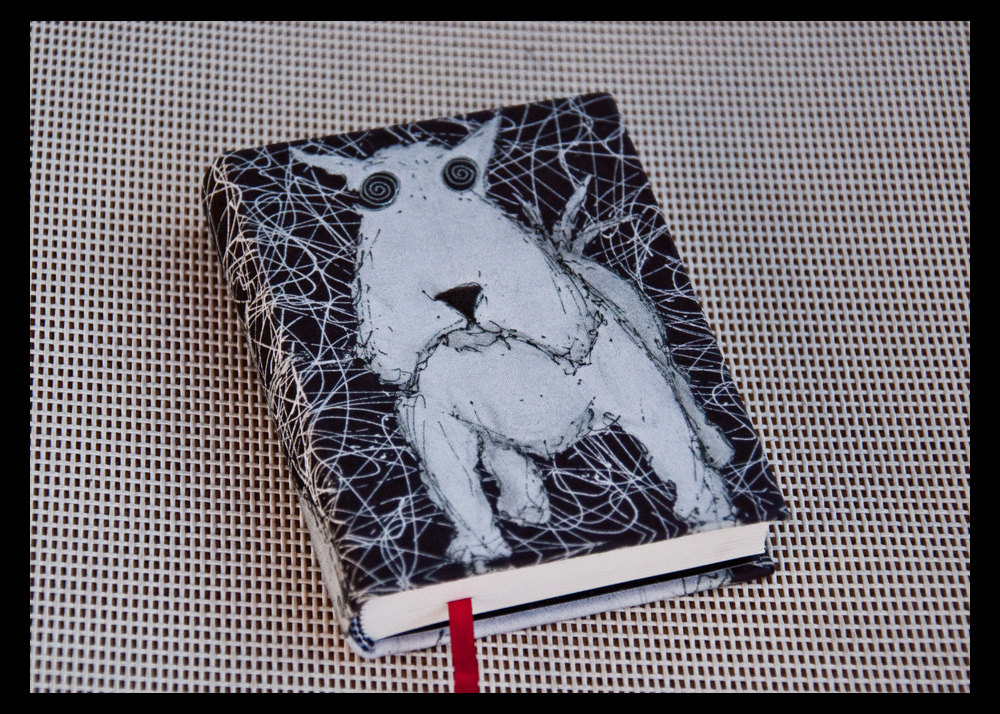
We arrived back to our boat the other day to find this little blank book sitting on a cockpit cushion. It took us a while to figure out who was responsible for this random act of kindness.
It turned out to be a lovely woman named Annie who lives on a neighbouring boat and has taken a liking to Angus and Charles….She said this book reminded her of them. How sweet!
Share this:

Painkillers, BVI style
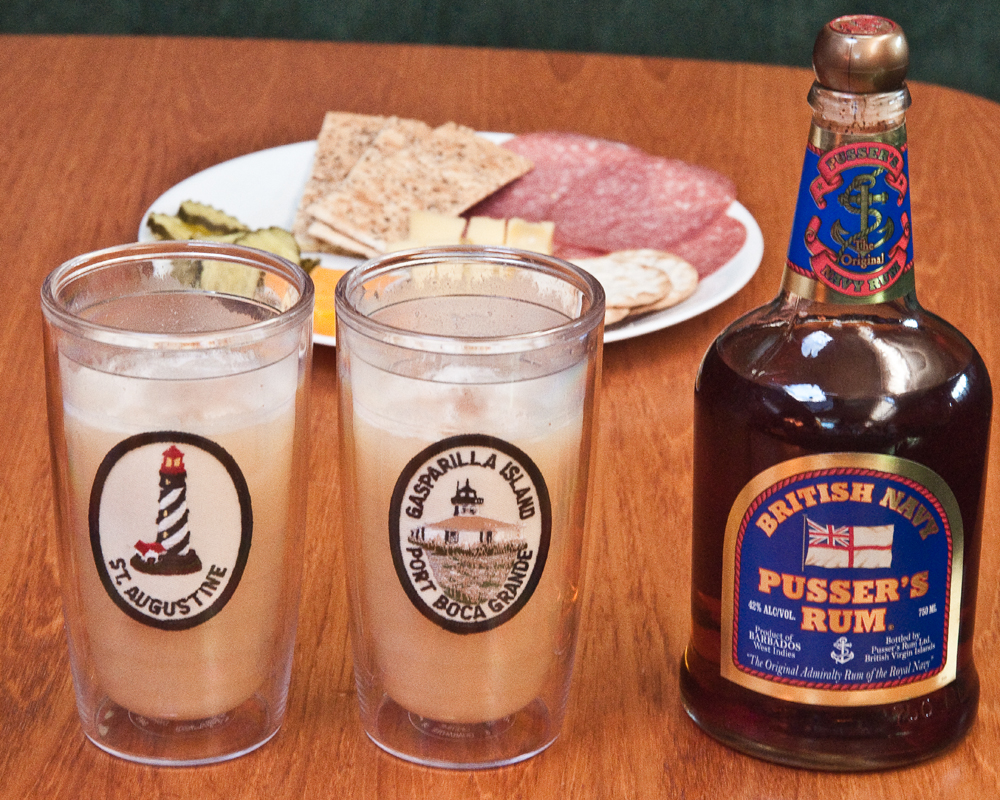
Ken and Jill generously left us with the key ingredients for “painkillers,” as well as the recipe. This was a new drink for us and it didn’t take long before we tried it out.
It’s a bit like a pina colada except you use orange juice instead of cream and top it off with nutmeg. And you can only use Pusser’s Rum.
It was invented by Daphne Henderson who operated the Soggy Dollar in the British Virgin Islands. It’s called the Soggy Dollar because it lacks a dock for boats so the sailors must swim to shore, making their money soggy.
The original cocktail is still “secret” but was reverse engineered by Charles Tobias, Pusser’s modern founder. It’s not as rich or sweet as a pina colada. Don’t skip the nutmeg — it makes a real difference.
Until 1970, members of the British Royal Navy were issued a daily ration of Pusser’s rum.
In 1980, Tobias managed to obtain the rights and the blending information from the Admiralty, set up Pusser’s Rum Ltd on Tortola and began selling it to the public for the first time. The rum is blended from five West Indian rums and uses no artificial flavours.
Recipe
2 oz Pusser’s Navy Rum
3 oz Pineapple Juice
1 oz Orange Juice
1 oz Cream of Coconut
Shake all ingredients with ice and stain into a glass filled with fresh ice. Garnish with a pineapple wedge and a dash, or three, of nutmeg.
Thanks, Ken and Jill. This is going to be a new favorite!
Share this:

Purple orchids

Share this:

Around and about the marina
It was such fun to spend time the other day with Ken and his lovely wife Jill, friends from Michigan vacationing in Florida. After a visit to the boat, we had a nice lunch at our hangout, Scotty’s Landing. Ken is an avid sailor and recently bought a trailerable 26-foot Seaward sailboat, which Bob enjoyed sailing on this past summer. We first met on our 2008 cruise in the North Channel of Lake Huron and hit it off right away. If there’s one thing I know and cherish it’s that kindred spirits can be found anywhere and anytime if you’re open to recognizing them…
Thanks so much for making the trip down from Naples, you two, and for leaving the ingredients for “painkillers!” (Watch for another post on that topic.) Maybe we’ll see you again next year?
Share this:

Splice of life
So, we needed a line spliced.
The mainsail furling line that had come with the boat had a bad spot in it. We were concerned that it could part, which would not be good if it happened under way, so we bought a new one. But we needed a splice. Two lines joined together as one.
Enter Bernard, the master rigger, a puckish man with a lilt that put me in mind of the islands of the French-speaking Caribbean.
Splicing a line is quite an art. Like weaving, quilting, sewing and knitting, you can tell when it is done with skilled hands. And since we have so many friends that are talented that way, I appreciate the beauty that nimble hands can create. (Looking at you, Joan, Kathy and Mary Lou!)
We asked Bernard to do an end-to-end splice of our new furling line to form a loop. The furling line allows you to roll your mainsail in and out of the mast like a window blind. It needs to be a smooth continuous loop so it will feed through the winches without jamming.
His 30 years of experience showed. His hands knew the line. He quickly and deftly spliced the two together. Throughout, he kept up a steady stream of chat, sharing tales of his sailing adventures all over the world. He was especially proud of having crewed on the famous Whitbread race.
Splicing was all a big mystery to me so afterward I asked Bob to tell me what Bernard had been doing.
He explained that double braid line has an inner and outer core and that Bernard used a metal fid (a pointed metal rod) to separate the core and outer braid and to feed the line back through itself. Then he “milked” it (stretched it) to smooth the outer braid, then rolled it to make an even transition, then stitched it for insurance, then burned the ends of the stitching. The result was a strong line, much stronger than if you knotted it.
It struck me as I listened that the process was a bit of an analogy for the process of two people joining together to forge any kind of partnership. There’s a bit of stretching and rolling and stitching and even burning before the end result: a strong union.
Pop quiz: What’s the difference between a rope and a line?
You buy rope at the store — it becomes line when you put it on a sailboat.
SIdebar:
When we mentioned we were from the Ottawa area, Bernard said he was scheduled to re-rig a boat in Ottawa that was being shipped from Miami. It’s quite likely that it will end up at our old club — the Nepean Sailing Club. Another example of how small the world is!
While he was here Bernard had a look at the mast and standing rigging and declared the boat to be in fine shape. Reassuring.

 Sherrygaley.com