…The secret is, it’s all love.It’s all doorways to truth.It’s all opportunity to merge with what is.Most of us don’t step through the doorframe.We stay on the known side.We fight the door, we fight the frame, we scream and hang on.On the other side, you are one with the earth, like the mountain.You hum with life, like the moss.On the other side, you are more beautiful:wholeness in your bones, wisdom in your gaze,the sage-self and the surrendered heart alive.


On the same tree…
If what I say resonates with you, it is merely because we are both branches on the same tree.
W.B. Yeats
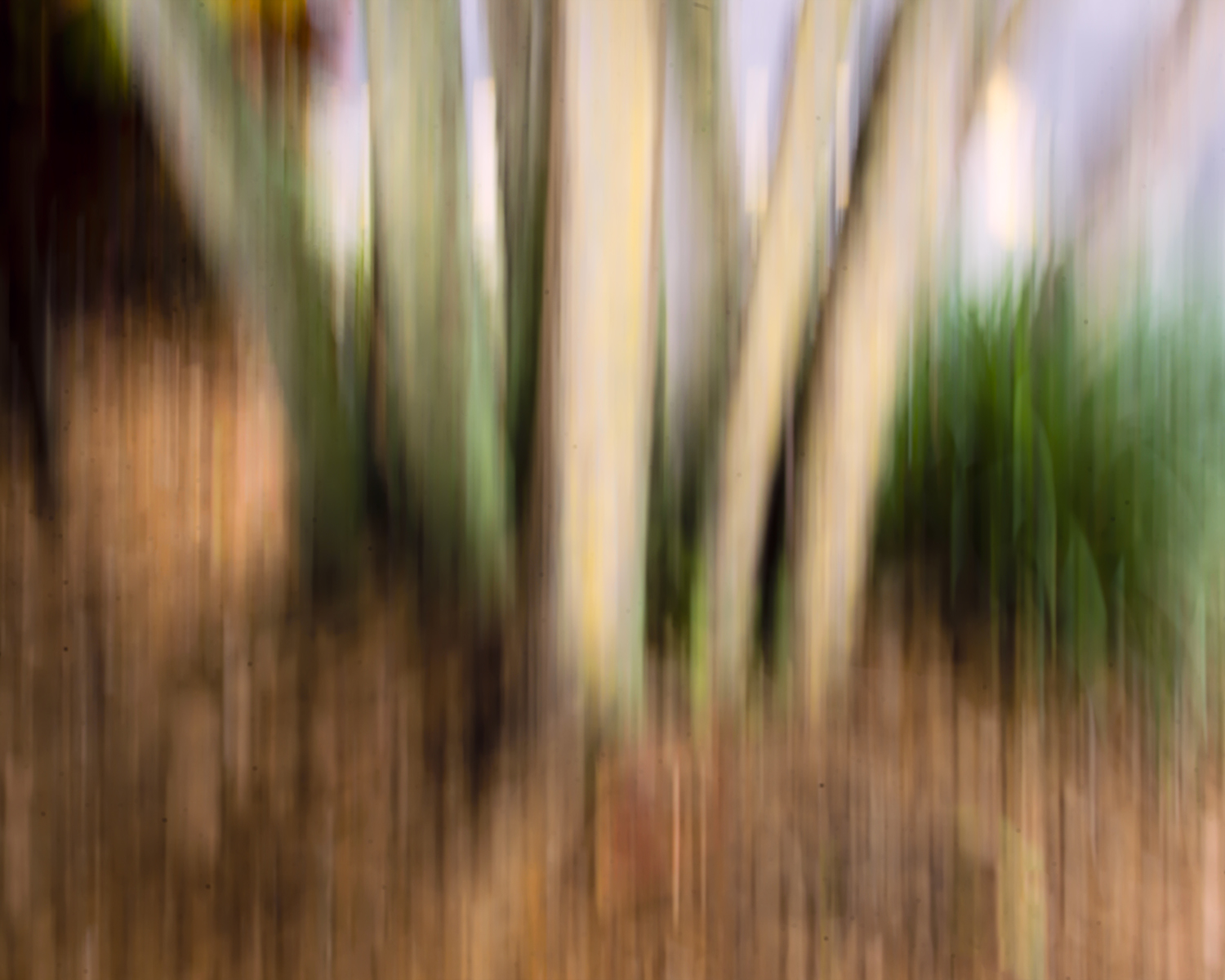
It’s been a while since I tried “intentional camera movement,” or ICM as it’s known. (You can see a previous experiment here plus find out about the technique.)
But since we’re coming to the end of the abstract photography course I’ve been taking, I thought I would give it another go. It’s a technique that takes a great deal of patience since the ratio of failures to successes is quite high. But it’s definitely worth the effort.
Even though I’m a big fan of non-recognizable abstracts when it comes to water reflections for example, I tend to prefer a slightly recognizable subject when using ICM.
You have to use a slow shutter speed so it’s important to control the light that comes into the camera otherwise the overall effect will be far too washed out. I tried several different combinations before I was happy.
For this image, I used a very low ISO and a small aperture combined with a quarter second exposure. I thought about using a neutral density filter but found that I didn’t really need to. I was pleased that the trees were still outlined and the colours were deep and rich in the example above.
Tell me, do you enjoy making ICM images, and if so, do you have any tips to share?
Share this:

Water abstracts…
The abstract nature of reality is the source of beauty.
William DeRaymond

The sun was going down and the light was beautiful in the marina. I had just finished shooting some pics of Charles and Chica (a dog on a neighbouring boat) and as I was walking down the dock, I caught sight of the most amazing reflections in the water.
I doubt I would have noticed them before starting to take the wonderful online course, Going Abstract, with Kim Manley Ort. My eyes are now so much more attuned to light and colour and pattern that I would have just walked past before. And that means so much more beauty is mine to delight in.
A wonderful gift…

It’s astounding just how much the eye/brain wants to find something recognizable in an abstract. I created quite a number of these water abstracts and I keep seeing animal/fish/bird shapes in them. And with their rounded shapes, they also remind me of abstract Inuit art.
Then I remember they are fundamentally water, light, reflection, pattern and colour. But when you think about the complex processes involved in getting that moment in the marina into our eyes and then into our brain to make meaning — through the medium of the camera — it all becomes rather miraculous.
“I understand abstract art as an attempt to feed imagination with a world built through the basic sensations of the eyes.”
Jean Helion
Share this:

Lessons from a life afloat…

Captain Charles

Heading toward Miami…

Sunrise at the marina — looking at our sailboat, Windsong II

Sunrise photography…

Me times three on my boat…

Washing dishes — no automatic dishwasher onboard!

.

In the Florida Keys…

Marina morning…

Funnel sunrise…

The wild sea…

She must find a boat and sail in it. No guarantee of shore. Only a conviction that what she wanted could exist, if she dared to find it.
Jeanette Winterson
I was honoured to be asked to contribute a guest post to Focusing on Life (FOL) , a collaborative blog by a group of women whose photography and writing I’ve long admired.(Thanks, Dotti!)
In my post, I share some key life lessons I’ve learned from living on a sailboat in southern climes part of the year. This lifestyle is our dream — we love the freedom, enjoy the new experiences that open up to us every day and embrace living with less. It’s not for everybody, that’s for sure, but we all have our own dreams and places where we feel most alive and at home with ourselves. What’s yours?
Click here to read my guest post.
Focusing on Life has as its goal “to create a caring community for people who are passionate about photography and life. We hope this will be a place that will inspire, teach, nurture, support and accept one another; a place where we can grow in our craft and as individuals.”
Why not come over and check out FOL? And while you’re there have a look at some of the other posts. I’m sure you’ll be inspired and delighted by the talent of the regular contributors and guest posters too. If you like what you see, you’ll want to become a regular reader and part of this wonderful supportive community.
Share this:

Share this:

Silent Sunday…
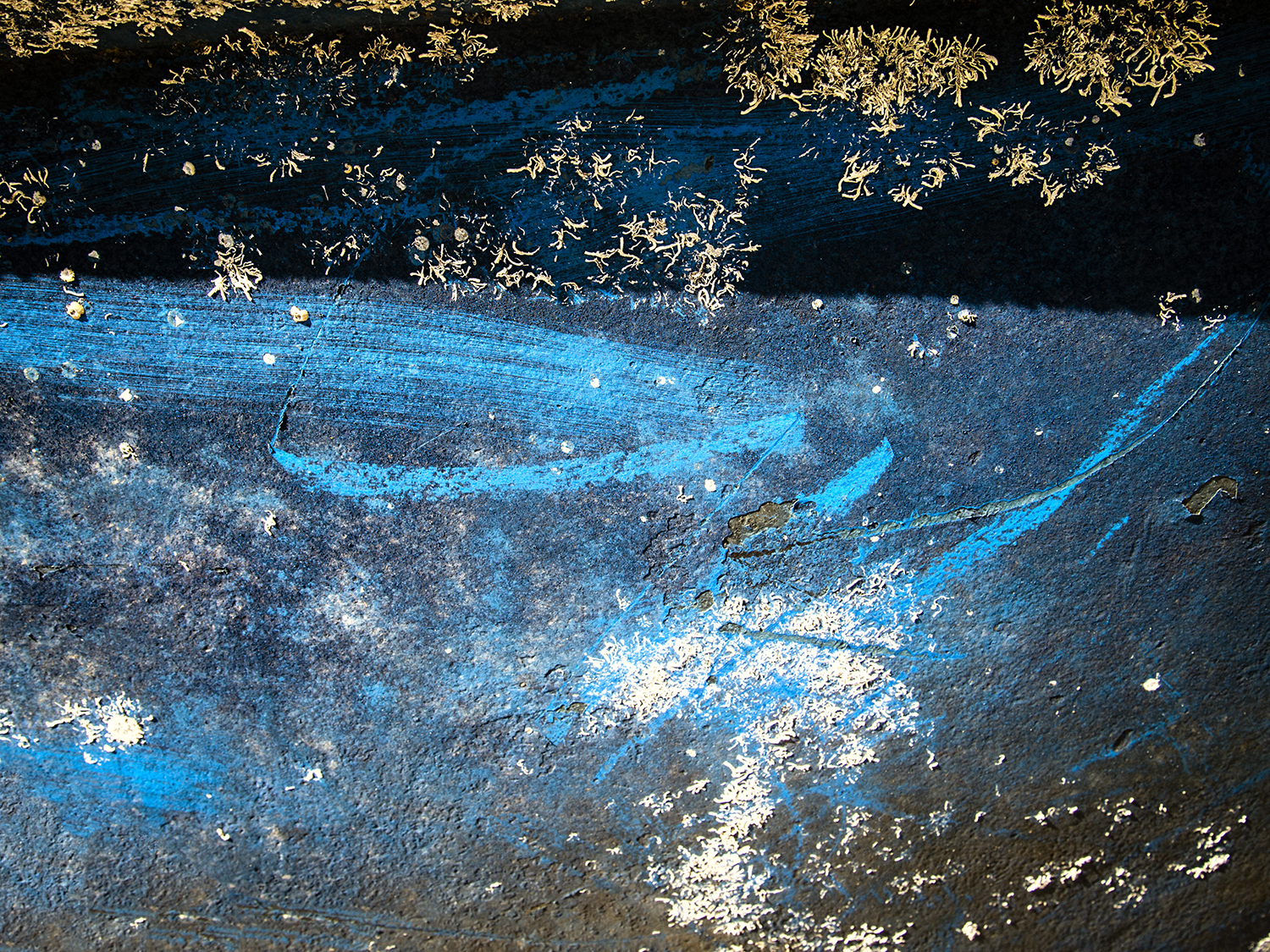
Colours of the sea — an abstract view…


…But tired of land, we open ourselves to oceans, tired of time
we give back all that we’ve taken, tired of ourselves
we open ourselves to ourselves at last, sensing the waves
and great abyss of the sea beyond,
the ocean stretching on sand
and the long view on the still sea that leads to another life.
David Whyte
Share this:

Serendipity…
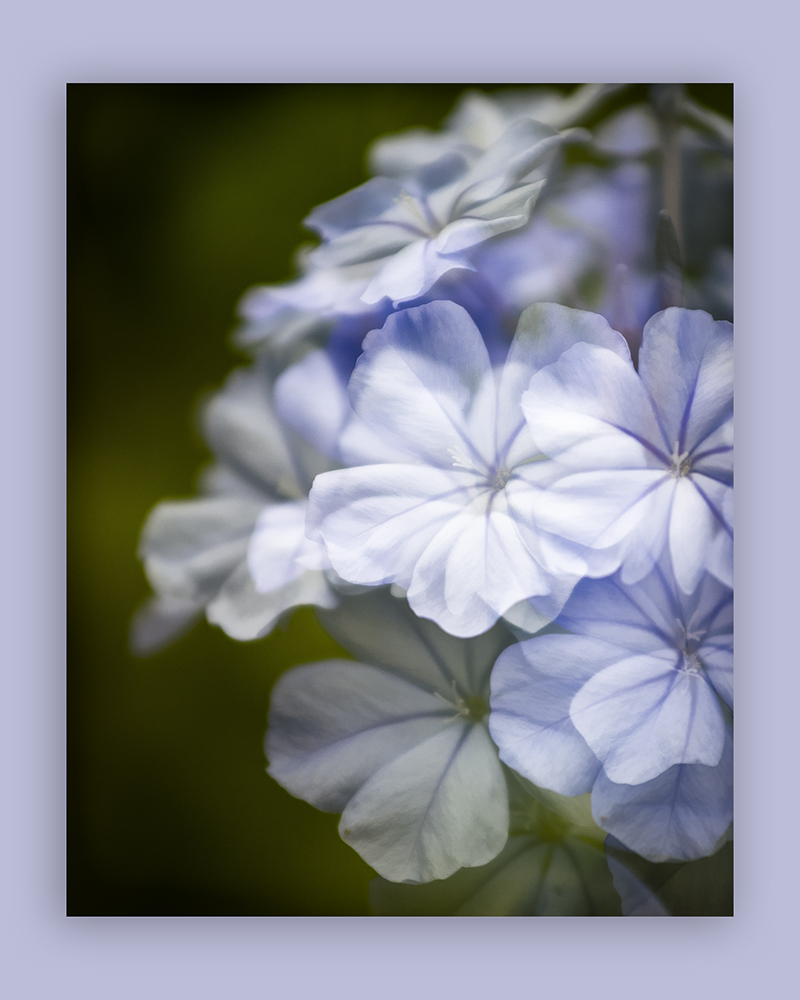
Serendipity. I’ve always loved that word… Well, this week I experienced it in the creative process. I didn’t get to where I was going, but I found something else quite lovely on the way there…Isn’t it great when that happens?
As I mentioned in my last post, I’ve been taking an online course in Abstract Photography offered by Kim Manley Ort. This week, we were looking at the history of abstract photography and delving into the work of some of its most well-known practitioners. We were to select an artist whose work we resonated with and create a piece that drew on that inspiration.
I chose Andre Gallant, a Canadian photographer known for “dreamscapes” and abstract impressionism using a variety of photomontage techniques, including multiple exposures. I decided to experiment with multiple exposures and set out to try to capture natural ones like he did.
I found out how incredibly difficult it is to use this technique to create an abstract piece that didn’t look like a big mistake!
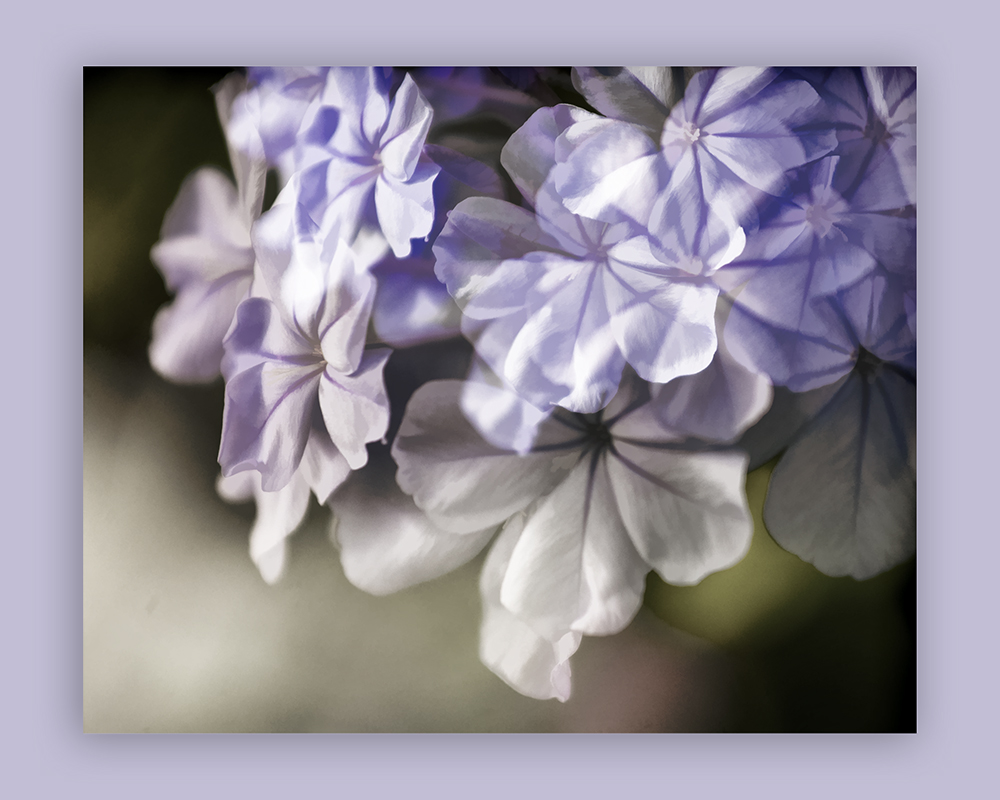
So my first attempt was decidedly unsuccessful; I wasn’t able to create a truly abstract image using multiple exposures.
But, when I looked at what I did capture, I was still pleased with the way some of the flower images had turned out. You couldn’t call them abstract because they were still recognizable as flowers, but they were definitely impressionistic.
The multiple exposure seemed to enhance the dreaminess of the flower petals and emphasize the delicacy and subtlety of the overall image.
So serendipity took me down another road — one I think I’ll be coming back to further explore in the future. I still have to work on my abstracts though!
Share this:

February is an abstract time…
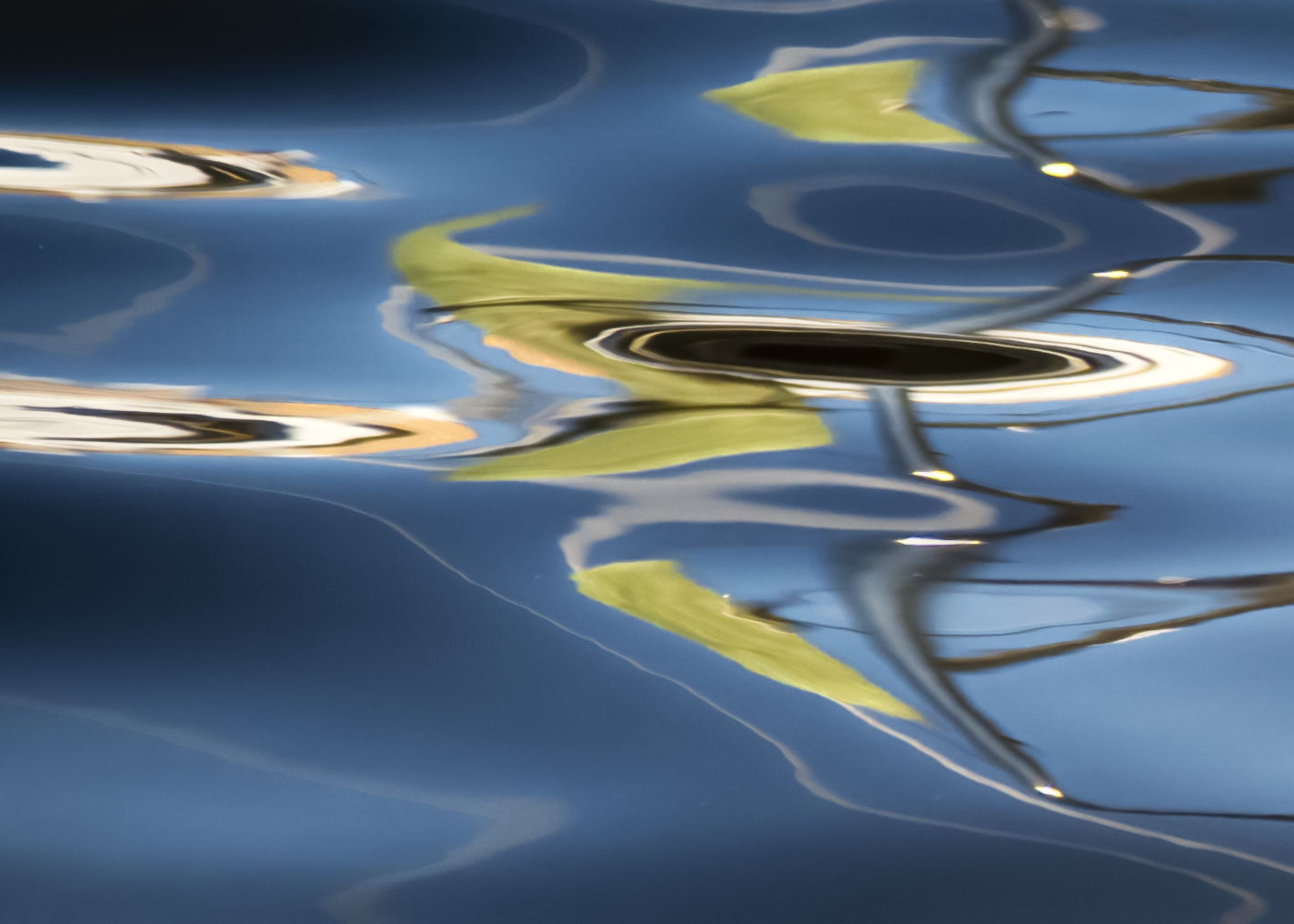
If you look at a photo and there’s a voice inside you that says “What is it?”…. Well, there you go. It’s an abstract photograph.
John Suler

Taken in a parking lot
I’ve always wanted to spend more time trying out abstract photography. Some of my favorite paintings are abstracts and I have long admired the work of Kandinksy and Lawren Harris, among others. I am also excited by the abstract work of the photographer Freeman Patterson.
I started to play around with abstracts in December when I became fascinated with the patterns and colours of paint I found on boat bottoms.
So when I saw that Kim Manley Ort was offering an online course in February, I signed up for it.
Kim points us to resources about abstract photography and stimulates discussion and exchange in our Flickr group about our experiences with it.
But most of all she encourages us to approach abstract image-making with an open and exploratory mindset, one that is not limited by thoughts and labels and judgements about what things are and how they should look. It’s like returning to the sensibility of very early childhood, which most of us have long left behind.
It is so freeing to venture forth with my camera, without expectation, allowing myself to be halted by pure perception that delights me, wherever I see it. It might be colour, pattern, light or form, or a combination of all four. You don’t try to explain it, you just respond.
Abstract photography is the same as abstract painting; appreciating a piece means feeling something, rather than struggling to understand it intellectually.
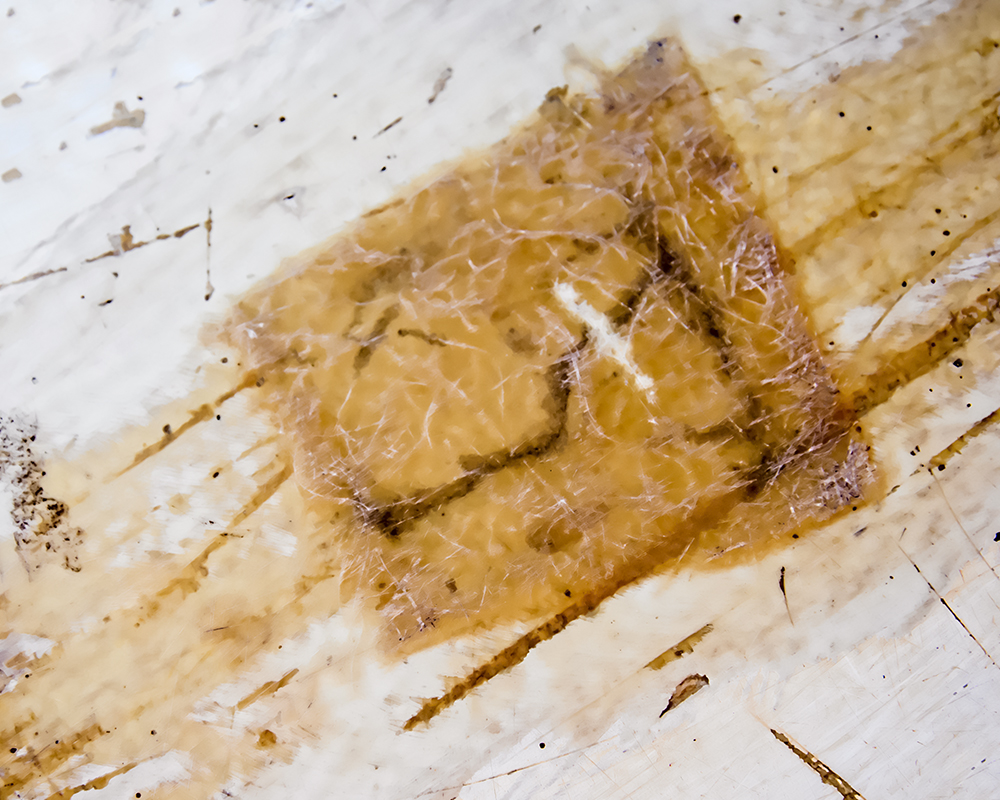
Taken in a state park
I think one of the things I love the most about this form of photography is that it keeps revealing just how varied and mysterious the world really is when looked at through different eyes — there is so much more to see and enjoy than we usually let ourselves. And you don’t have to go far. It is astounding how many surprises you can find even in your own home — in the few feet around you. Sometimes going abstract is just the antidote to being stuck in a photography rut; it can help to shake us loose from habitual ways of seeing that cease to excite and inspire us.
I’ll share more of my discoveries as the month goes on…I’d love to know if you have ever tried it? What have you found?
Share this:

Photo Heart Connection: January
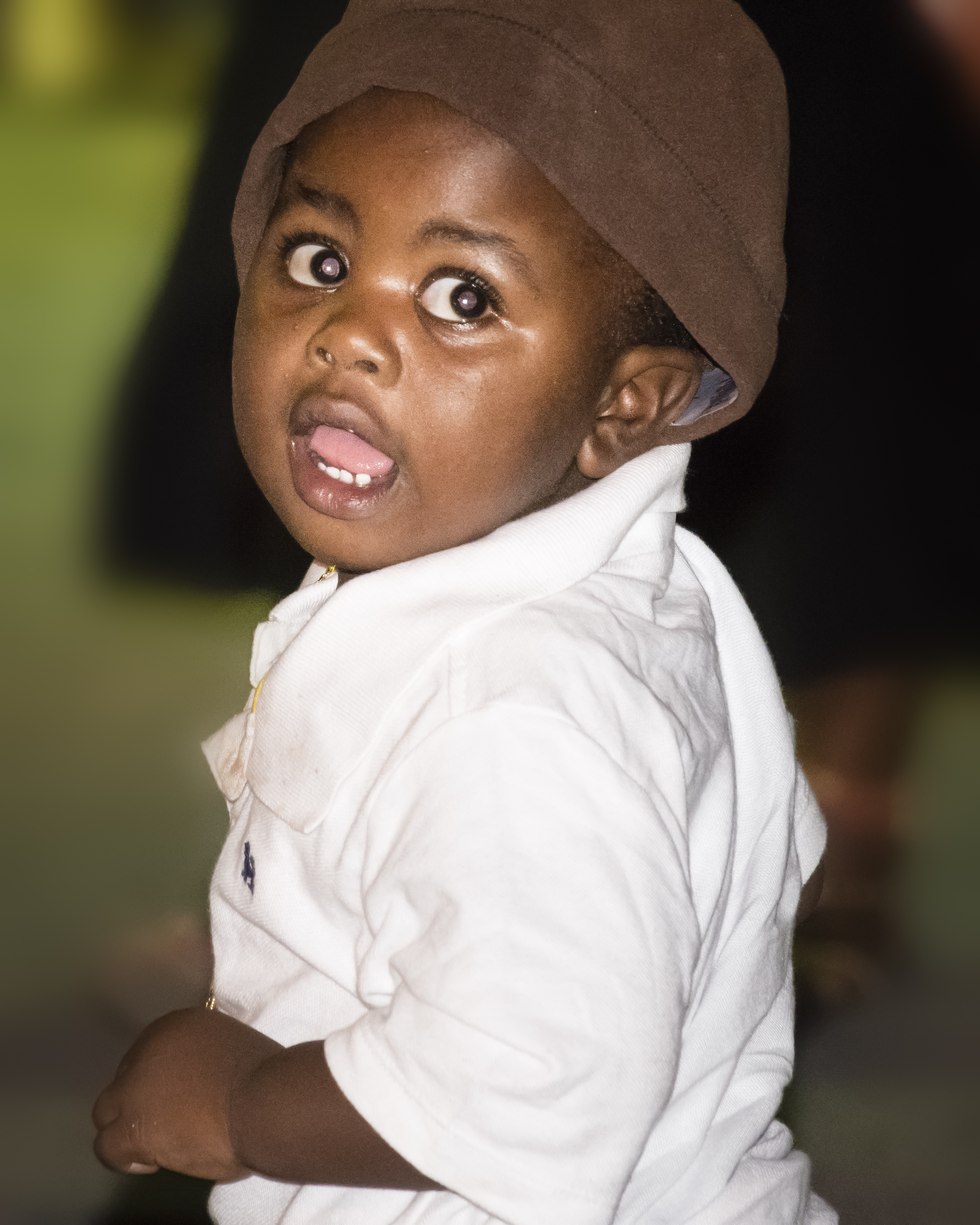
In January, we were fortunate to spend some time in the beautiful Bahamas. The light was so stunning and energizing. And so I settled on my word for the year.
To celebrate the New Year and my word, I gorged on sunrises — an obvious place to capture light.
But there are so many others. Children can be beings of light can’t they? And they don’t have to be our own to capture our hearts, do they? I cherish and honour the free and pure spirits of young children wherever I see them. That feeling is something that can connect us all in our common humanity…
I just fell for this little guy. His uninhibited street dancing during the New Year’s celebration of Junkanoo absolutely delighted me.When I get too serious in 2014, I will think of him!
 Sharing with Kat Sloma’s Photo Heart Connection…

Share this:

Weekly Photo Challenge: Object

There’s a type of photography called contemplative photography that I first learned about from Kim Manley Ort that makes me feel as though I’ve come home to myself.
Kim says this meditative form of photography is “about being present and open to life as it is, without judgment. It’s about being open to what the world offers up to me rather than looking for a particular shot.”
Today, for the Weekly Photo Challenge, I am offering such an image. In December I participated in a month focusing on the photography of simplicity, and many days I chose to deliberately capture images following the principles of this type of photography.
Contemplative photography has been described as “a method for seeing and photographing the world in fresh ways, to reveal richness and beauty that is normally hidden from view. Instead of emphasizing subject matter or the technical aspects of photography, the contemplative approach teaches you to see clearly, and make images based on fresh perceptions.”
If any of this intrigues you, I urge you to have a look at the site Seeing Fresh: The Practice of Contemplative Photography. You can contribute to and receive inspiration from the amazing galleries there. And check out Kim’s site too to learn more.
When you see such an image, it is startling in its purity. For those who are used to seeing heavily processed and manipulated images, such an image can seem almost too simple. But really what it is is fresh and new and untainted.
These images suggest to me what is possible with photography when we are guided by our clearest visual perceptions and an open mind and heart…when we are able to leave our preconceived notions, judgments and expectations behind us.
Since I’m an eclectic photographer, I plan to continue enjoying and practising many styles and schools of photography… But contemplative photography contains a treasure trove of insights and practices that can be used to improve and enliven our image-making.
For those who are still wondering what the object above is that I photographed, it’s part of a boat reflecting part of another boat.

 Sherrygaley.com