Windex for the eyes…Part 1

orange and gree

Part 2 is delayed due to technical difficulties….it will be posted as soon as possible.

Sometimes in life serendipity takes over. And I’ve learned that it’s kind of crazy to ignore it.

When I left Canada in January, I had no plans to take a photography workshop , but when the opportunity presented itself, I hesitated a few minutes and then decided to jump at it.

I had heard of the Miksang school from Kim Manley Ort, and I have long admired her contemplative approach to photography, which has Miksang roots.

So when I read that there were a few places left at a workshop being held at Delray Beach, only a short distance away, it all seemed quite doable.

I was also familiar with the teachings of the instructors, Julie Dubose and Michael Wood, through their books, which I owned and had pored over, fascinated by their unique approach. I had also gone through the photographs in their books marvelling at how startlingly fresh they were.

What would I learn I wondered? I still didn’t know quite what to expect, but was quite excited about the prospect of devoting four full days to photography.

This slideshow requires JavaScript.

And while the workshop  was definitely about photography, it was so much more than that. There was no instruction about how to take a “good” photograph or compose a “good” image.

In fact, the desire to take a good photograph was discussed as an obstacle to direct perception! Our ideas of what is good are very conditioned by how we have been taught and can really get in the way of really seeing what is right there in front of us.

So this workshop was really about seeing. Seeing without filters — without overlays of meaning and value, pleasure, dislike, or disinterest. Seeing afresh, seeing as if for the first time.

As Julie and Michael say: “These perceptions are vibrant and vivid, pulsating with life. The visual world is our feast, our playground. Seeing in this way brings us joy in being alive.”

Who wouldn’t want to see this way?

This slideshow requires JavaScript.

The camera comes in as a tool to express our visual perceptions exactly as we experience them.

Julie and Michael continue: “Through our images we can express our experience of seeing. Our photographs will carry within them our heart, our mind, the blood of our experience.”

Now that might seem easy, but it’s really incredibly difficult. I’ll talk about that in Part 2.

I loved the format of the workshop. We gathered in the morning to hear a short presentation and go through some experiential exercises designed to sharpen our perceptions. These were quite extraordinary in their effectiveness, yet so easy we learned we could do them any time we wanted to “wake up.”

Then we spent several hours working on our assignments and having lunch somewhere in the warm, colourful and visually delightful community of Delray Beach. Then back to the workshop to select the 10 images we wanted to share. The rest of the day was spent looking at each others’ work and hearing the instructors’ and other participants’ reactions.

The first two days we focused on colour, the next day on texture and the last day on pattern and light.

Stay tuned for more in Part 2…

This slideshow requires JavaScript.


Miami…

While at the Miami Boat Show, I took the opportunity to shoot a few abstract pieces based around the always startling and unusual Miami architecture.

I could do this for days and never get tired. Unfortunately, I only had part of one!


miami building

This slideshow requires JavaScript.


Celebrating different kinds of love…

heart copy

We’re all a little weird. And life is a little weird. And when we find someone whose weirdness is compatible with ours, we join up with them and fall into mutually satisfying weirdness—and call it love—true love.

Robert Fulghum

rainbow - love


I don’t love my friends with my heart nor with my mind
this is because, the heart stops, and the mind forgets
i love my friends with my soul
it never stops and nor does it forget.

Rumi

cuddling


 Until one has loved an animal, a part of one’s soul remains unawakened.

Anatole France

Puppy love…

dad mum and puppy

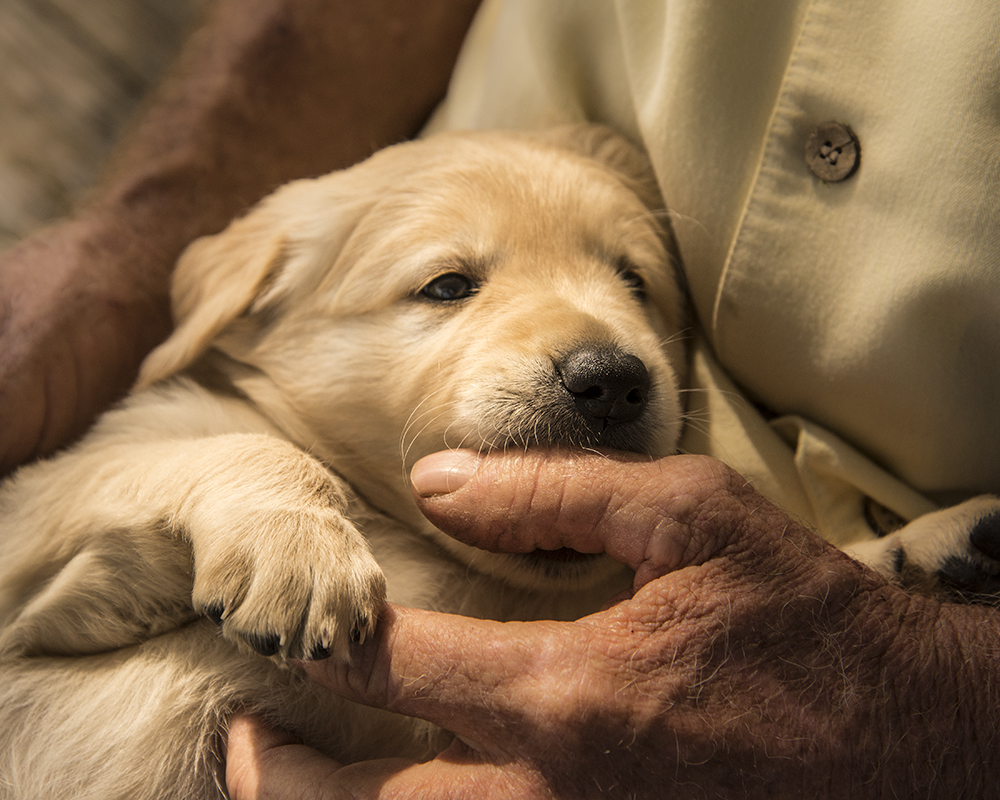
A week ago I returned from a photography workshop in Delray Beach to find that a litter of five Golden Retriever puppies had taken over the marina — well, the attention of most of the boaters and liveaboards here anyway.

The pups’ human is a sea captain who lives on his boat with the two parents — Punkin (mom) and Fuzzy (dad). Punkin gave birth to the puppies in early January. Their birth story was a bit traumatic — as two of the pups were born on the boat — but the last three were not coming out. An excellent vet was able to perform a C-section the next day and save all the puppies. What a relief for Chris and Punkin!

All seven dogs now live on the boat and Chris brings the pups ashore several times a day for exercise and training purposes. As you can imagine, they attract quite a bit of attention and generate lots of smiles.  Even the toughest and most serious cannot seem to resist these puppies.

I’ve been thoroughly enjoying my play time with the puppies. And I’ve been trying my best to capture their cuteness with my camera. I’ve never really done much pet photography, except for Angus and Charles of course, so it’s been quite a challenge. While focusing on one, the others nip at my ankles and try to trip me up. They race around like little maniacs, which makes it hard to get clear shots, and then they collapse in a pile.

Chris has been sending out some of my photos to people who are interested in taking a pup, so I’m glad to be helping the pups find good homes. They have about three more weeks and then they will be gone. Life at the marina will not be the same without them!

This slideshow requires JavaScript.

Pelican play…


pelican bluelr

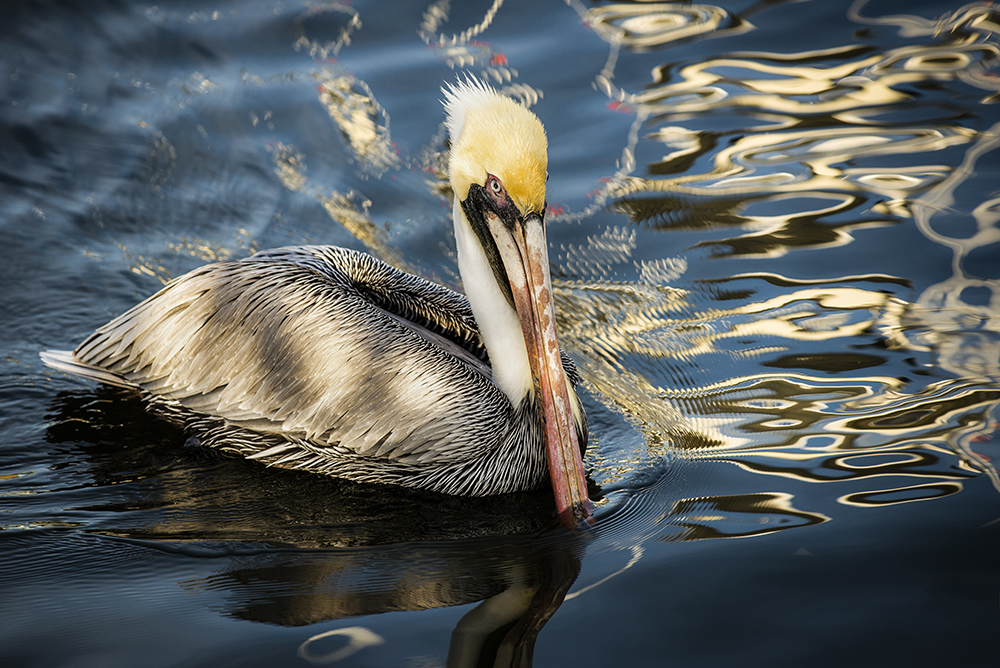
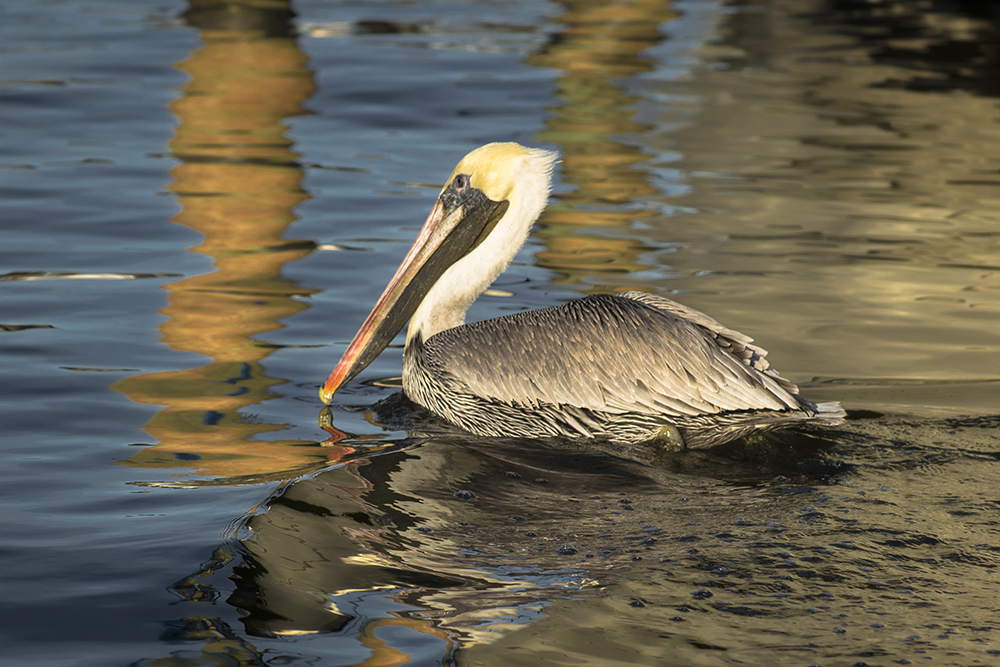
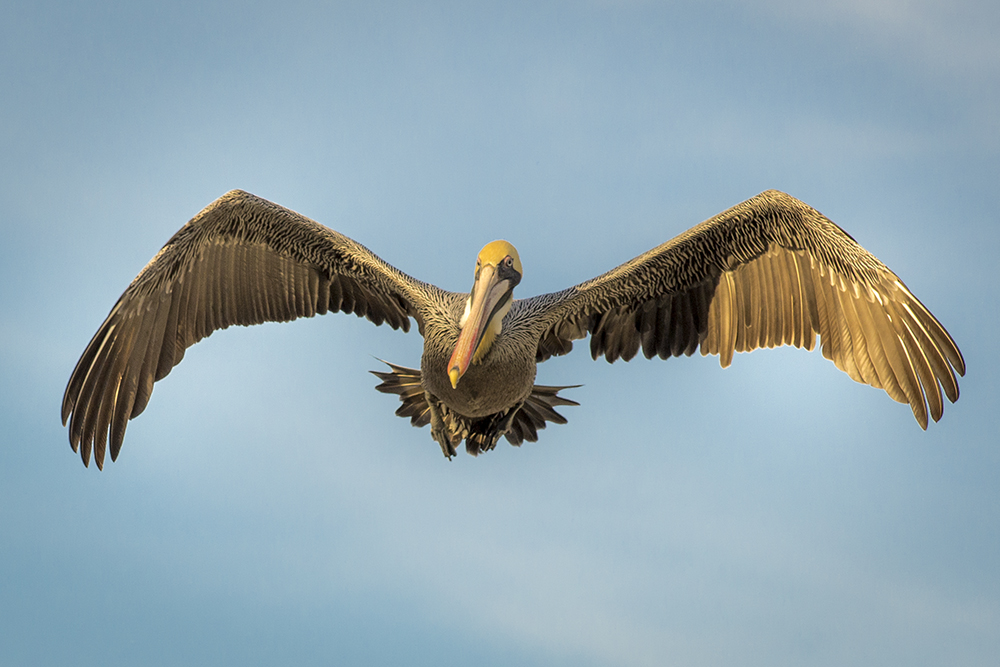
I wasn’t planning to shoot pelicans today, but there they were in the marina we are living in now on our sailboat, attracted by the man cleaning fish at the table designed for that purpose. The light was great so I grabbed my camera.

Groups of pelicans are called squadrons. They hover around waiting for tasty tidbits to be thrown at them. They swoop in and splash down, see what they can grab to eat, and then they fly away, splashing on take off too. They are so intriguing.

I learned a lot about these funny looking creatures last year and shared some of it in a previous post on pelicans. I took most of my shots last time from our dinghy and used my 24 to 85 mm lens.

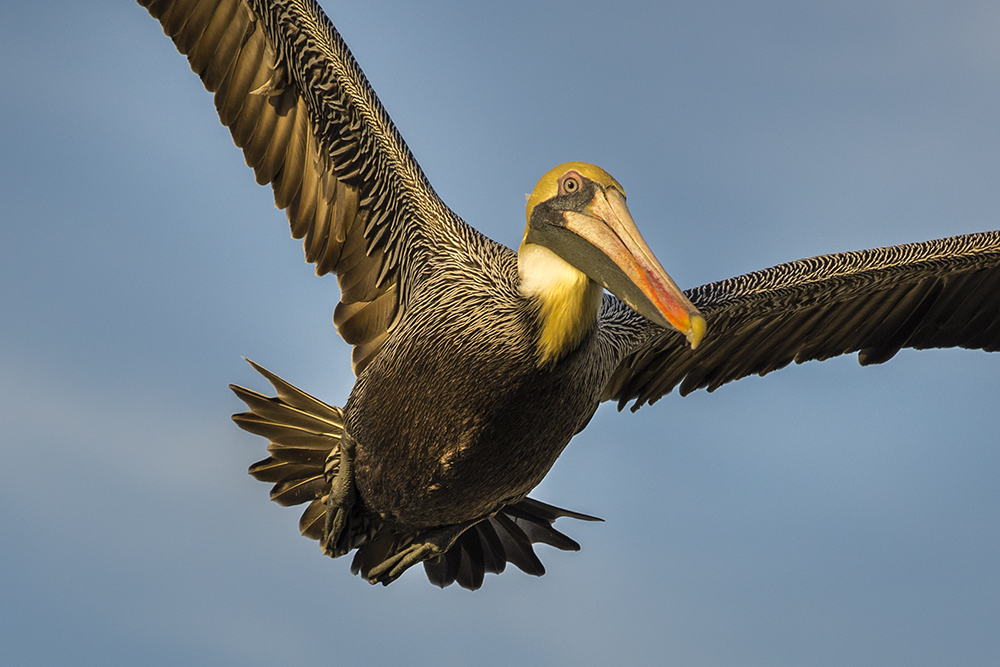
This time I used my 70 to 200 mm lens to capture the pelicans which enabled me to get some decent close ups. I also used back button focus, which resulted in much better focus in most of my shots. And of course continuous shooting gave me a good selection of pelican poses. Here are some of my favourite captures.

By the way, I started a new blog about living on our sailboat, Windsong II. Pop over if you are interested.

pelicanslr

Here’s looking at you, kid.


pelican pilingslr

winspanlr

The pelican wingspan is about 6 to 7 feet.

part of pel

Unseen forces…


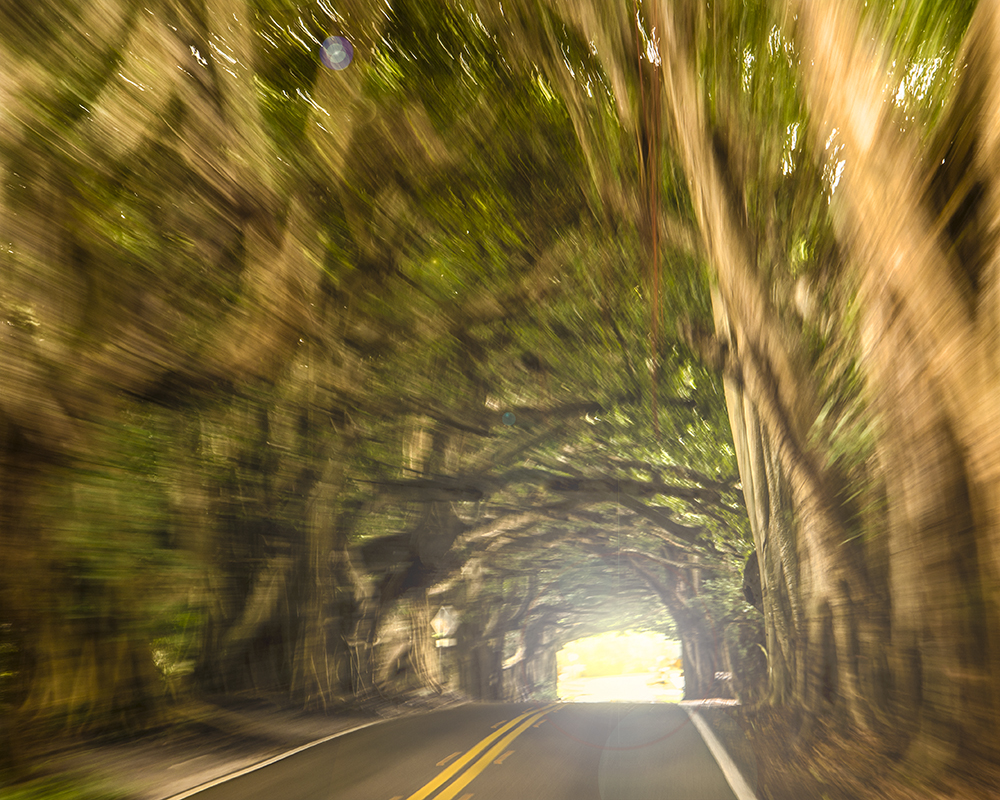
st lucie blvdLRLight precedes every transition. Whether at the end of a tunnel, through a crack in the door or the flash of an idea, it is always there, heralding a new beginning.

Teresa Tsalaky


archway

We were sent into the world alive with beauty. As soon as we choose Beauty, unseen forces conspire to guide and encourage us towards unexpected forms of compassion, healing and creativity.

John O’Donohue

Boatyard abstracts

With abstract art I can create in the moment. No preconceived ideas. I just put some color on the canvas and keep going.

Peggy Guichu

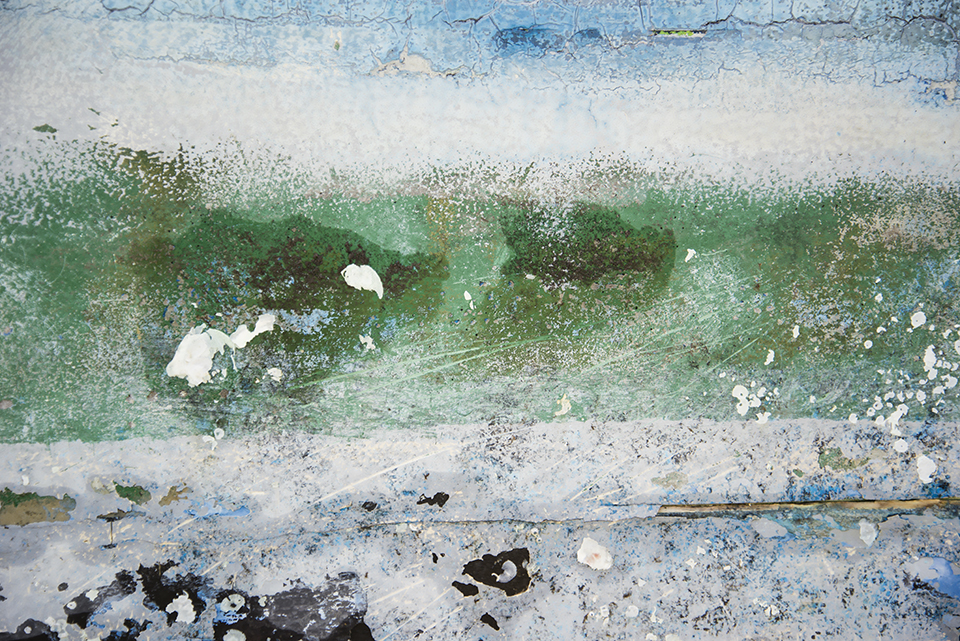
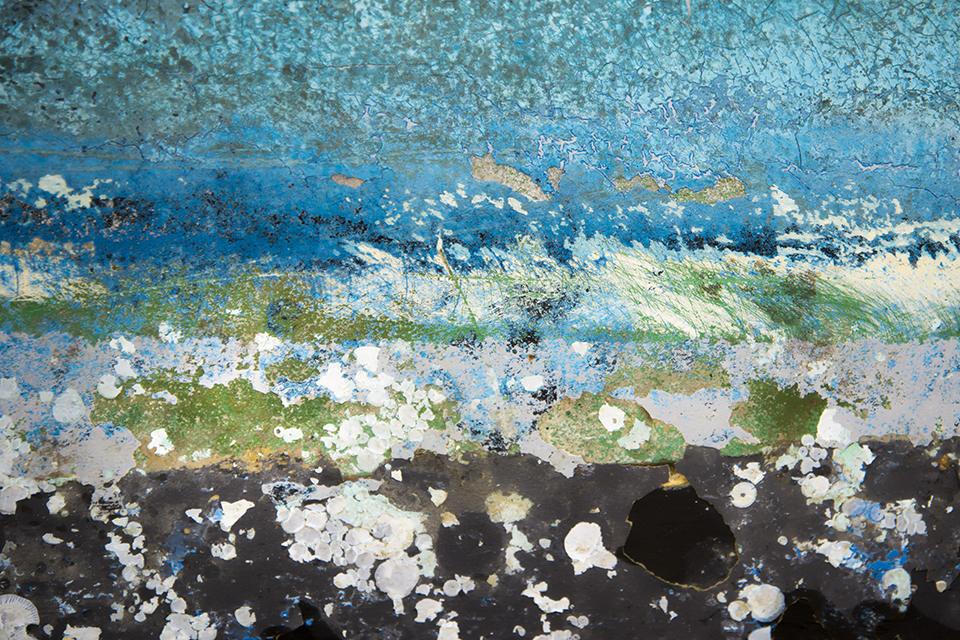
Hanging around the boatyard last year while we were getting Windsong II ready to launch, I practised “fresh seeing” — or seeing in a new way, as I’ve been striving to do.

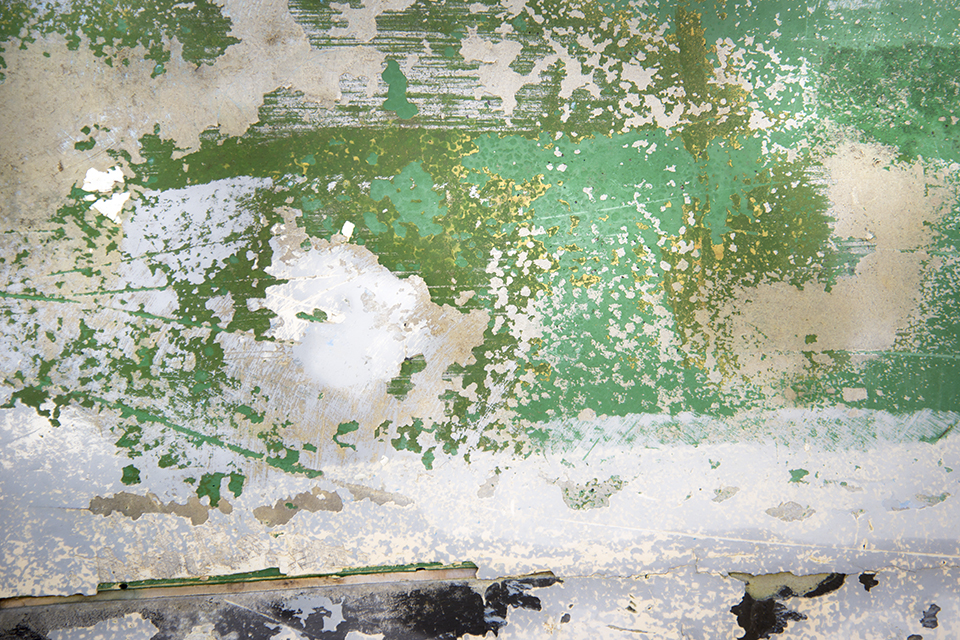
I started to look more carefully at what I had ignored before — the peeling, chipping paint and barnacles on the old boat hulls and noticed a wealth of detail that I had overlooked before.

Most people ooh and aah over boats when they are shiny and clean and pristine. But I was captivated by the imperfections — the marks left by time and use and history. The colour and lines and shapes spoke to me as art.

I imagined that an abstract artist had paid a visit to the boatyard and left her mark — the hulls being her canvas.

I made several photographs of pieces of these beautiful hulls, and even framed and mounted one I loved for my dining room.

What is it that draws me to abstracts — both in art and photography? “No preconceived ideas” sums it up nicely. Freedom. There is nothing that I have to think of them based on what they are supposed to represent — I am free to respond and feel whatever comes up. They may or may not remind me of anything familiar — mostly not. I don’t have to rationalize or explain. I just am in the moment with them.

So this year I was eager to return to the same boatyard this year and see what was new. I wasn’t disappointed.

boat hull 1

boat hull 2lr


boat hull 3

New (and old) horizons…

lagoon2

Here I am in Florida after a leisurely four-day drive down from Ontario. Our sailboat, Windsong II, is “on the hard” nearby and some repairs and additions need to be made before we move aboard. Nothing major like last year, when we had to get a whole new mast and rigging! I’m excited about living on the sailboat for the next few months and hopeful we’ll be able to cross to the Bahamas once again. I assembled a collection of images from last year and hope to add to them as time goes on.

The trip down was a great time to think about my intentions for 2015 — creative and otherwise. Everybody talks about resolutions and plans and goals and new habits. I just made list after list of  the things that enliven me that I want to do more of. I know what is important to me and what I value most so it’s just a matter of keeping that top of mind and living it out.

Photography, of course, is right at the top of that list.

For me, photography is not only about documenting moments and memories so I can share them on social media or look back on my life in the future.

It’s bound up with a way of living life to the fullest and being more open to what’s happening in the moment. It’s a way to see and experience the world more intensely and intimately. It’s a way to find out what I’m drawn to and figure out why. It’s a way to connect with myself and others, wake up and come alive. It is pro-awareness and anti-auto pilot.

But it’s also a way to create something that did not exist before (an image) out of something that does (what I point the camera at).

Images are never exact representations of things or scenes — they are the outcome of many choices made by the photographer in the moment of pressing the shutter, some conscious and much unconscious (subject, framing, lighting conditions, aperture, shutter speed, POV etc.). These choices reflect the photographer’s preferences, prejudices, history, and skills with the camera and processing — and so much more. Looked at that way, photography is art.

I learned a huge amount in 2014 that I used to make better photographs — some of it from courses and much of it from studying, practising and teaching myself. I hope to share some of what I’m learning on this blog over the course of the next year. I’ve now found many good tools and resources and I want to take the time to plumb what they have to offer. But there’s no substitute for doing it — and then doing more of it — and then doing it all again.

I’ve been dabbling in stock photography over the years but in 2015 I doubled by collection for sale on Getty Images — and my sales have improved nicely. I’ve sold almost 20% of my collection at least once, some many times. I’m going to continue with stock, not as a major focus, but as a nice sideline that helps pay for my photography needs. I don’t denigrate stock — some of the most amazing and creative images I’ve seen are on the Getty Images website. The challenge is to make compelling stock photographs.

I’ve also been mapping out a plan to rework my website/blog to better reflect my current passions in photography.

In 2015 I want to pursue black and white photography with vigour — that means more street photography, cityscapes, architecture and portraiture. I hope to refine my approach to colour work, focusing on and playing with simple but intense colour combinations.

And I want to continue “seeing in a new way,” which means practising contemplative photography in a way that has been inspired by Kim Manley Ort and the Miksang school. I also want to experiment more with abstract and impressionistic photography.

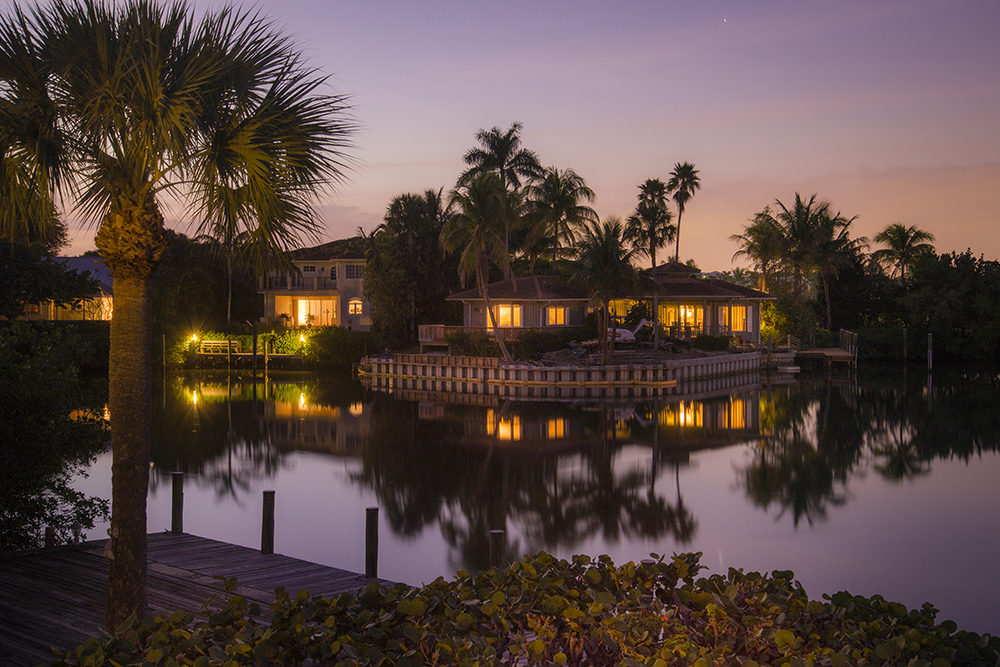
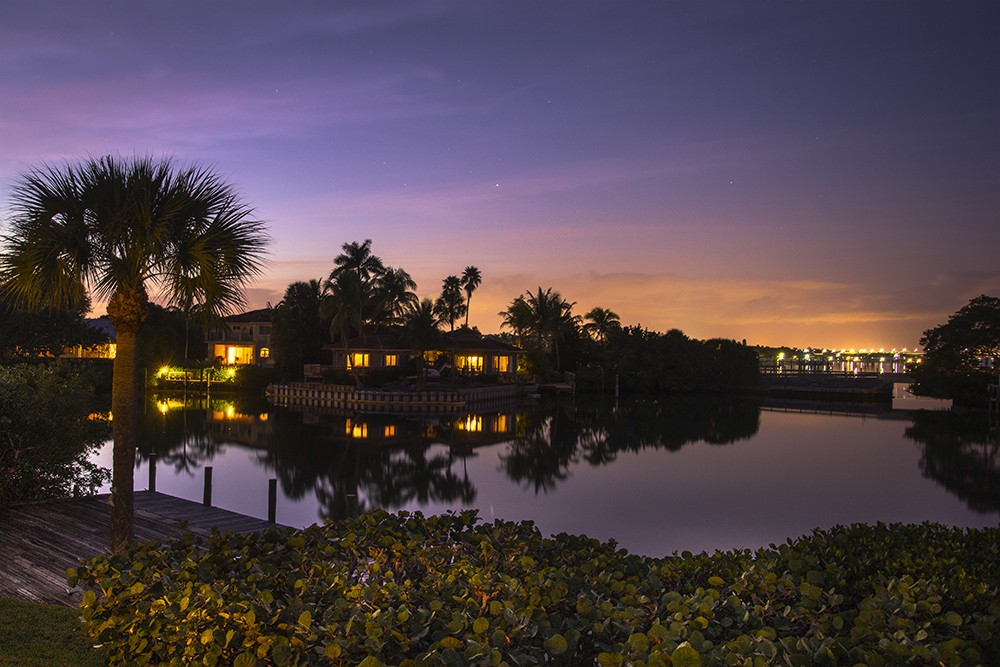
I’m also committed to improving my technical skills to learn how to make the best possible images in camera — so that I am more able to create the kind of images that communicate to others. This means, for example, working on things like night photography and long exposures.lagoon

My friends over at the collective blog Focusing on Life are working on “night photography” this month so I thought I’d give it a try. I haven’t always been happy with my night photography so I definitely need more practice here. So I pulled out the trusty tripod the other night and tried to capture the lagoon that we can see from where we’re staying.

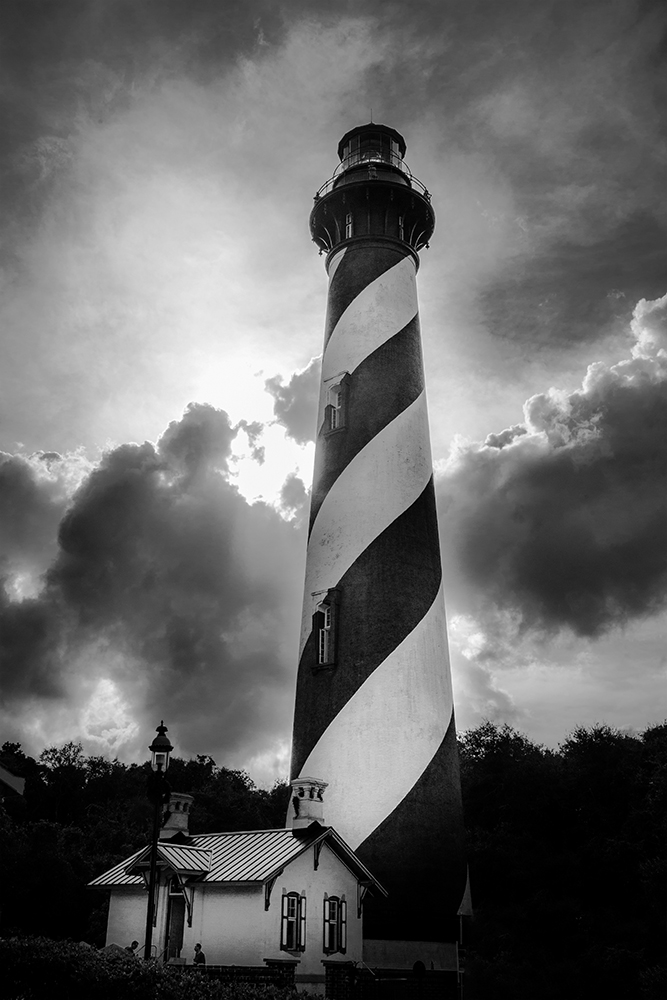
On the way down to Florida, we made a stop in St. Augustine — the oldest city in North America — and a favourite place of mine. I love the old buildings and the character of the aging Florida cottages. And of course, I had to visit the lighthouse. I was lucky to arrive just as the sun was breaking through the clouds behind it, which made for a dramatic shot.

lighthouse st a

Last year, the word I chose to guide myself was “light.” And without even thinking about it much, I  saw my photographs change organically to be much more aware of and sensitive to light. I learned about how to deal with different kinds of light and what kind of light I gravitated to. For photographers, who literally “write with light,” this is a study that never ends.

So I’m not yet finished with “light.”

I told one of my dear sister photographers some time last year that I was taking my photography more “seriously.” She never fails to remind me that it seems to be paying off. So, no need to fix an approach that’s not fundamentally broken. But, being serious doesn’t mean you can’t have a ton of fun!