Prince Edward County in Black and White

Today’s post features some recent explorations in black and white photography.

I recently went on a delightful sojourn with my family in Prince Edward County, Ontario — a wonderful rural region around Picton which has become very popular for its amazing food and wine and hospitality.

Hundreds of images later, I have only managed to process a few. I’ve joined a wonderful Facebook group that focuses on black and white photography, and this has encouraged me to work on one of my very favorite forms of photography.

So here is a just small taste for now…

This slideshow requires JavaScript.

Rising out of the water…

cover

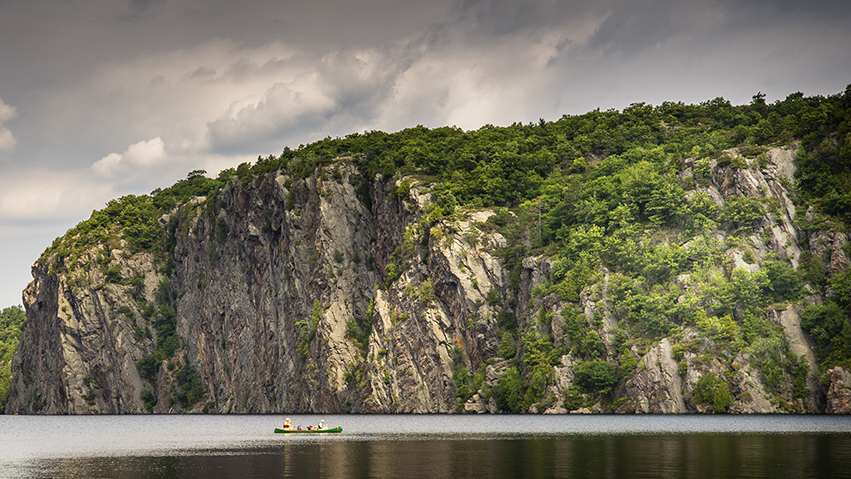
Not too far away from us is a gem of an Ontario Provincial Park called Bon Echo.

We headed that way recently to visit some friends who have a cottage on Upper Mazinaw Lake, right next to the park.

The southeastern shore of the lake features the massive 100 m (330 ft) high Mazinaw Rock, an escarpment rising out of the water, adorned with some 260 Aboriginal pictographs, the largest collection in Canada.

I had heard of these and was quite excited to have the chance to see them for myself.

paddling

pictograph

bob and rodger

The cottage can be reached only by boat so we arranged a time to meet and be picked up at the dock.

Our host was kind enough to take us for an up-close tour of the Rock by boat, which is the only way you can really see the pictographs well.

The rock art paintings are spread out over 65 rock faces along a 2.5 metre stretch of the cliff face and the pictographs are extremely complex and abstract.

The Mazinaw pictographs were designated a national historic site of Canada in 1982 and have been researched since 1895.  This is the largest rock art site on the southern Canadian Shield and the only major pictograph site in southern Ontario. Pictographs have also been found in northern Ontario.

At 145 metres deep (476 feet) this lake is the second deepest in the province and the Rock goes down 100 metres into the lake.

The whole area is wonderful for canoeing, kayaking, camping, hiking, climbing and all manner of outdoor activities. The park even has yurts for people who want a slightly more comfy camping experience.

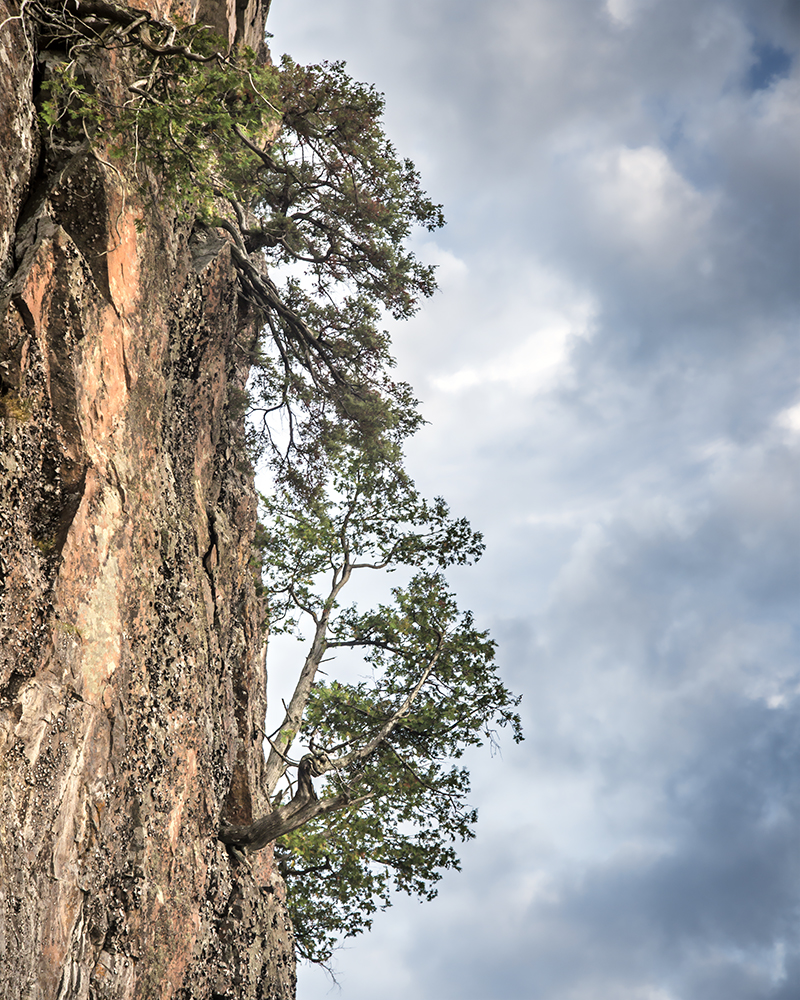
It seems inexplicable that there are trees growing on the side of the Rock, but some of them are said to be 1,000 years old.

Bon Echo is French for “good echo.”  The rock is responsible for the large echo that is unmistakable during thunderstorms and fireworks displays.


tree on cliff


August break, Day 29

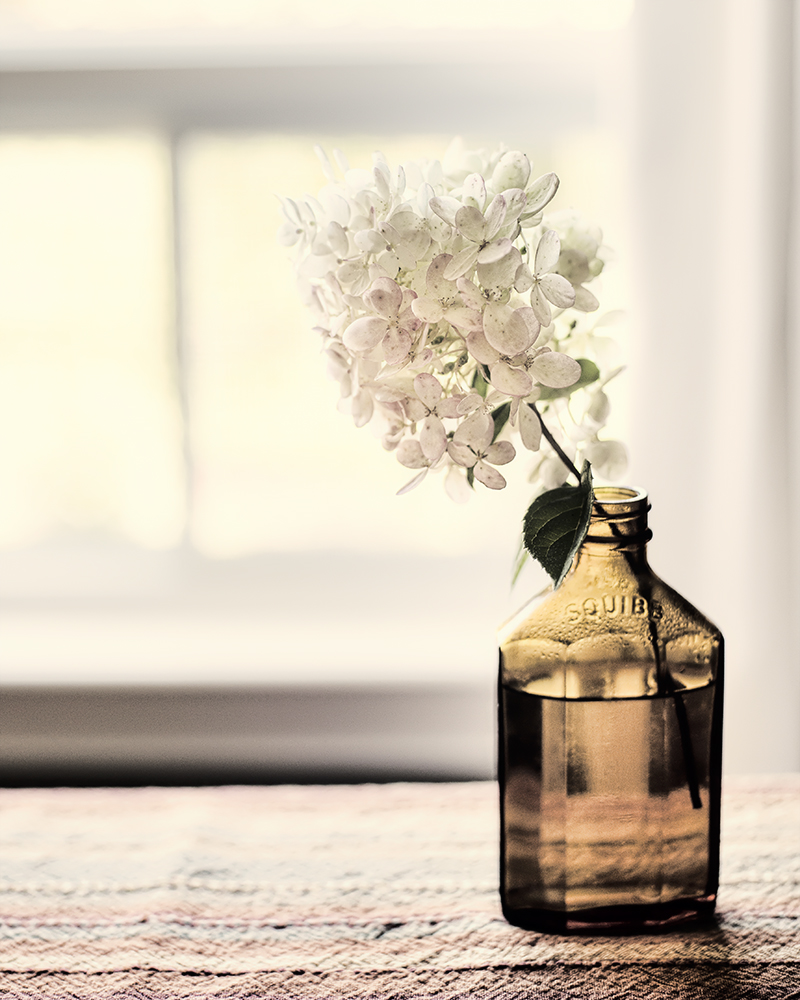
hydrangea in bottle

Today’s prompt  for the August Break is “nature,” and I today I offer a little piece of it that I brought indoors — a hydrangea, one of my favorite flowers.

I feel so fortunate that blogging and photography have introduced me to so many fascinating and talented people across Canada and the United States — and even further afield.

One woman I very much admire is Laurie MacBride — a passionate environmentalist and wonderful photographer — who lives on the other side of the country from me on one of the Gulf Islands near Vancouver, British Columbia. (I have to admit I am a bit envious that she lives on an island, since I’m an island girl at heart.)

Laurie spent much of her career heading up the Georgia Strait Alliance, which is a conservation group working to protect the Strait and its adjacent waters.

These days she communicates her love and concern for nature largely through her photography. The images she shares of B.C.’s amazing and intricate coastline — from her boat and her kayak — are incredibly compelling. So compelling in fact that I fell in love with one of her mounted prints, and it now has a place of honour in my dining room.

Laurie has exhibited her work over the last few years — and she made a slide show video of one of those exhibits called Reflections on the Coast. It is well worth watching not only to enjoy her gorgeous land and seascapes  but to also hear her poetically describe the environment she is so intimate with. Watching the show you can see that Laurie is as adept at capturing large natural vistas as the small, telling details.

Laurie has a beautiful portfolio, as well as a Flickr photostream and a great photoblog. I have a feeling Laurie is out with her camera in her boat right now creating new images of more natural wonders. Can’t wait to see them!


August break, Day 28

apples

Today’s prompt for the August Break 2014 is “something new” and these little apples fill the bill. The tree is new too. We planted it two years ago, but it’s not growing as you might imagine, as a stand-alone tree.  We are growing it “espalier-style” up the trellis beside our deck.

The term “espalier” refers to the ancient art of training fruit trees to grow against a wall or flat surface. You prune and tie branches to a frame, often in decorative patterns. This method was often used in traditional walled kitchen gardens and is perfectly suited to growing fruit in the smaller garden.

We had a very tiny city garden in Ottawa before we moved and we grew our first espaliered apple tree against a brick wall in our meditation garden there.

In a temperate climate, planting next to a wall can reflect more sunlight and retain heat overnight. This seems to allow the season to be extended so that fruit has more time to mature.

It was so successful that we decided to do it again at our new house. The young Cortland tree has filled in nicely against the trellis providing not only fruit this year, but the privacy of a nice green screen for our deck.

This summer we installed two more trellises in our backyard renovation project so next year we will be adding two more espaliered fruit trees — an apple and maybe a plum.

How to espalier fruit trees.


August break, Day 23

Taken at Great Guana Cay, Bahamas, in April 2014.

I really want to thank Susan Licht for giving me the impetus to do more black and white photography. It is one of my favorite forms and yet I don’t do enough of it. Participating in the Life in Black and White group on Facebook has been a great motivator.

A talented image-maker with such an affinity for light, Susan has the perfect name for a photographer — it is pronounced “light”. When I first saw her images on Flickr, I immediately resonated with her choice of subject matter, and her approach, which exudes warmth. Few days have gone by since then that she has not shared a new image that has both astonished and delighted. I have learned a huge amount from observing her artistic development.

Embed from Getty Images

Susan used to be a teacher and I can tell she would have been an excellent one, because she is a born encourager of others. She fairly bubbles over with enthusiasm for the art and craft of photography — her own and her tribe’s. Her own work and her contributions to others have won her many friends and admirers. I am quite in awe of how she manages to keep it all up.

Susan blogs at Licht Years, she has a very popular Flickrstream and she sells her images   through Getty Images. You can see one of my very favorite images of hers above. If you aren’t already a huge fan, I think you will become one.


August break, Day 22

I began seeing line and shape in a highly graphic way, and gained an appreciation for the dramatic effects of light and shadow on form. One of the unique properties of photography is its spontaneity, its ability to capture a transient moment. A moment of discovery becomes a moment of rediscovery when the subject is viewed through the lens. In this way photography becomes a simultaneous act of intuition, feeling and recording.

Richard Martin