The New York Series, Part 6….

family

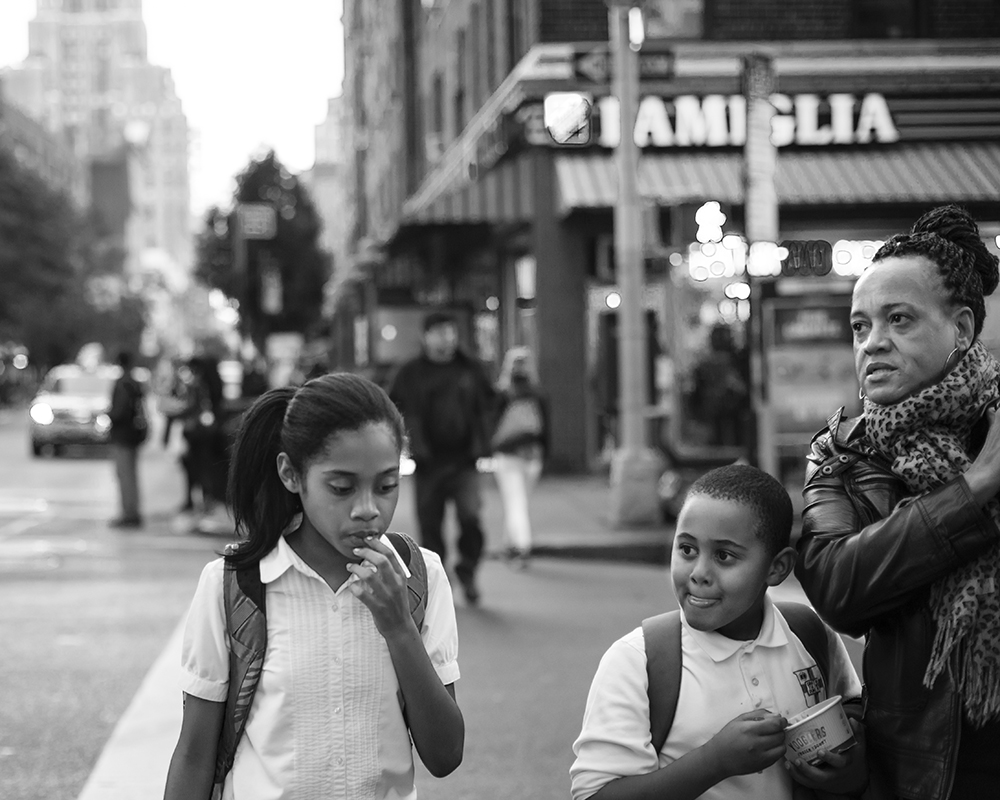
Kids coming home from school with Mom…

I find street photography to be one of the most challenging types of photography to do well, but since people are endlessly fascinating to observe and wonder about, I can’t help wanting to try it when I travel.

Framing and composing the image and pressing the shutter at just the right time to tell an interesting story is not easy. Especially when the subjects are moving — since they often have no idea they are being photographed. So many times I miss the most interesting action or cut somebody’s head off or something…

And then there’s the question, black and white or colour? Fortunately, that decision doesn’t have to be made until afterward, in post-processing. I read a helpful interview with New York photographer James Maher, which helped me decide which of my images I would convert to black and white and which ones I would leave in colour.

These are just a few of my favorite candid images of people doing what they do in New York City….

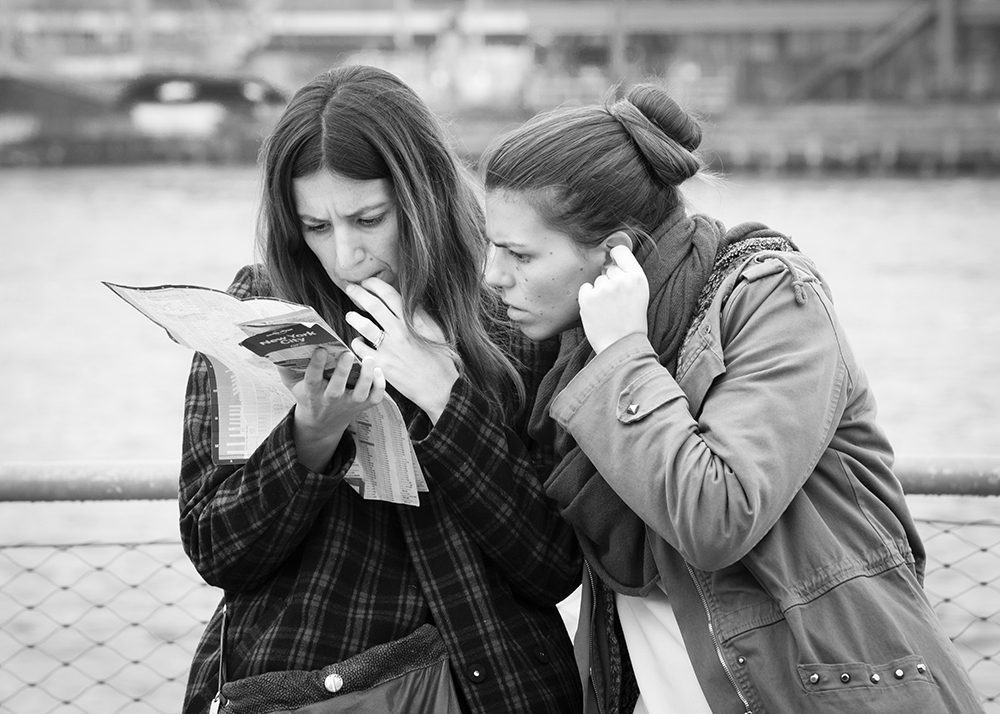
“How the heck are we going to get there from here?”

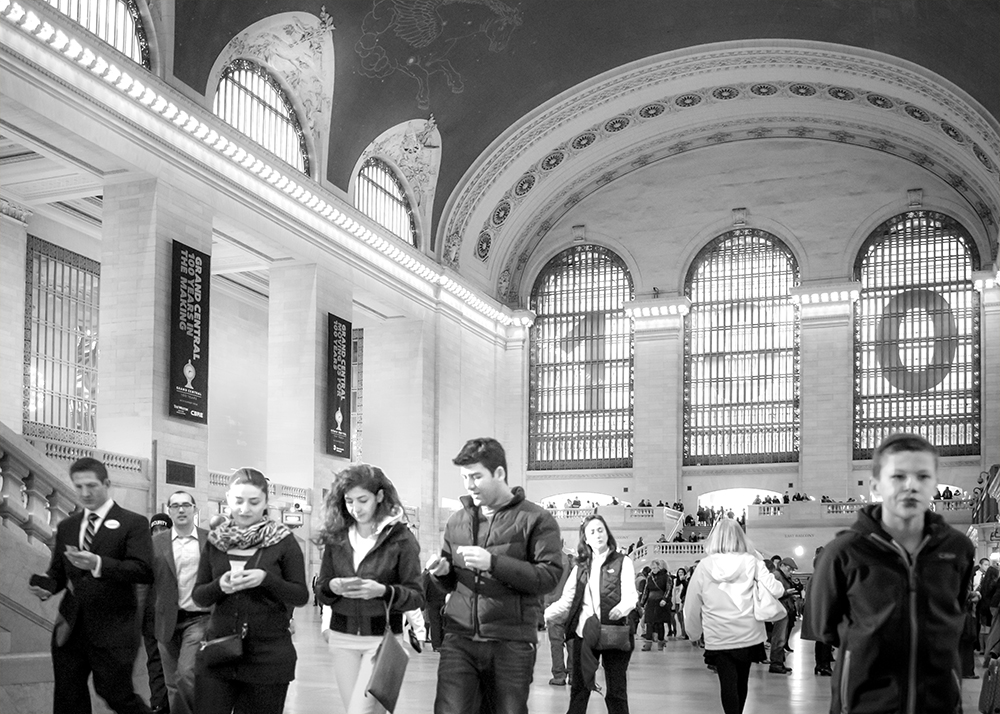
Grand Central Terminal

“As long as I have my cell phone, I’ll be fine…” at Grand Central Terminal

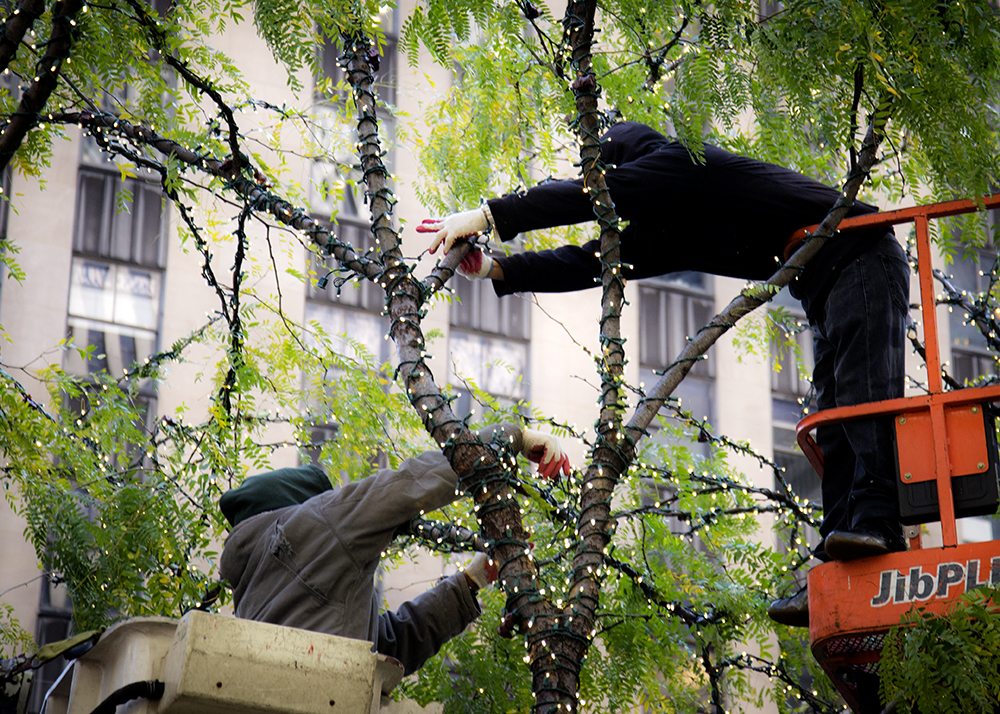
Putting up the tree lights near Rockefeller Plaza

“Some weird lady is taking a picture of me…”

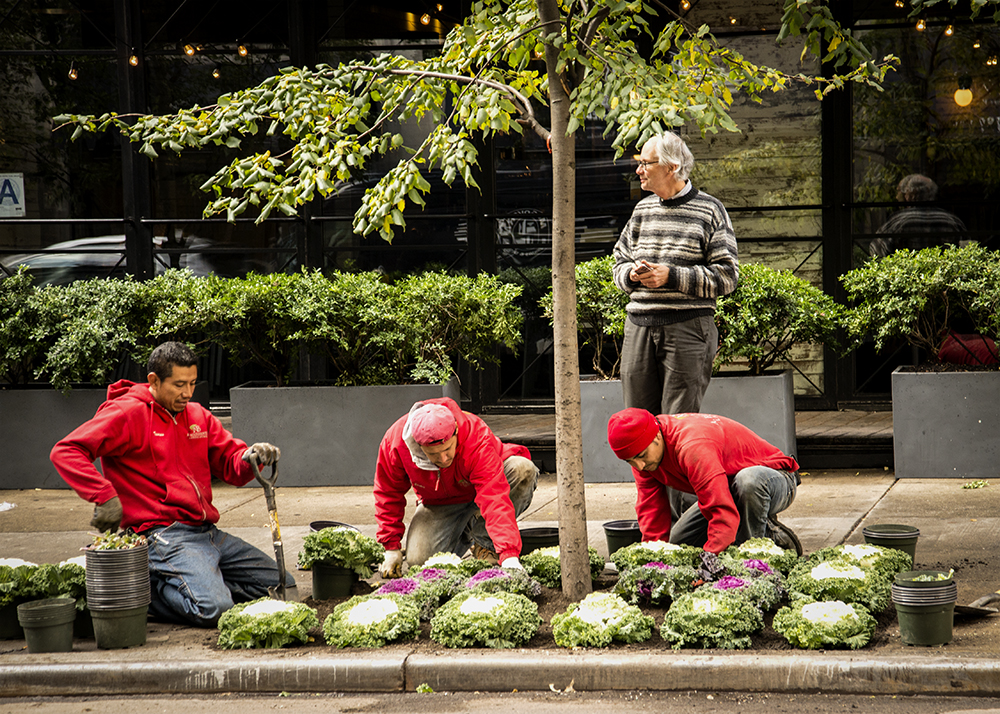
Planting ornamental cabbages on the street for winter colour…

The New York Series, Part 5

Top of the Flatiron, detailsbandw3

Top of the Flatiron, details1000

Still on the Flatiron Building today in this the fifth part of my New York City series…You can scroll back to see the other four parts, if you wish. I feature shots of Central Park and the Manhattan skyline.

Because a lot of the joy of looking at the Flatiron Building is in the details, I wanted to show them to you closer up. This was taken with my 70-200 mm zoom, at 70mm. It has been cropped.

Before I cropped it, I took three different exposures into Photomatix and processed them as a High Dynamic Range (HDR) photograph, but with a natural look. Then I converted one to monochrome, leaving a hint of blue.

I may print this one, or one like it. Just curious, which version do you prefer?

Thanks so much for helping me out today — and I really appreciate all your kind and thoughtful comments on this series. I read and smile at every single one!

The New York Series, Part 4…

flatiron busy1000

I would forgive you if you called me obsessed by the Flatiron Building in New York. Given how much time I spent trying to capture its lovely uniqueness from different angles, even on different days and at different times and with different lenses, I could not argue. (And no doubt I will do the same next time I’m in New York — trying yet again to capture its essence.)

This is the building I love — way more than the Empire State or the Chrysler or any of the other iconic buildings. The Flatiron says New York to me…

Completed in 1902, it’s shaped like an old fashioned cast iron clothes iron, thus the name. It sits on a triangular island-block formed by Fifth Avenue, Broadway and East 22nd Street.

It was designed by Chicago’s Daniel Burnham as a vertical Renaissance palazzo with Beaux-Arts styling. The bottom of its facade is limestone changing to glazed terra cotta from Staten Island.

H.G. Wells wrote of the Flatiron Building in 1906:

I found myself agape, admiring a sky-scraper the prow of the Flat-iron Building, to be particular, ploughing up through the traffic of Broadway and Fifth Avenue in the afternoon light.

Now I get one of the reasons I love it. It reminds me of a ship!

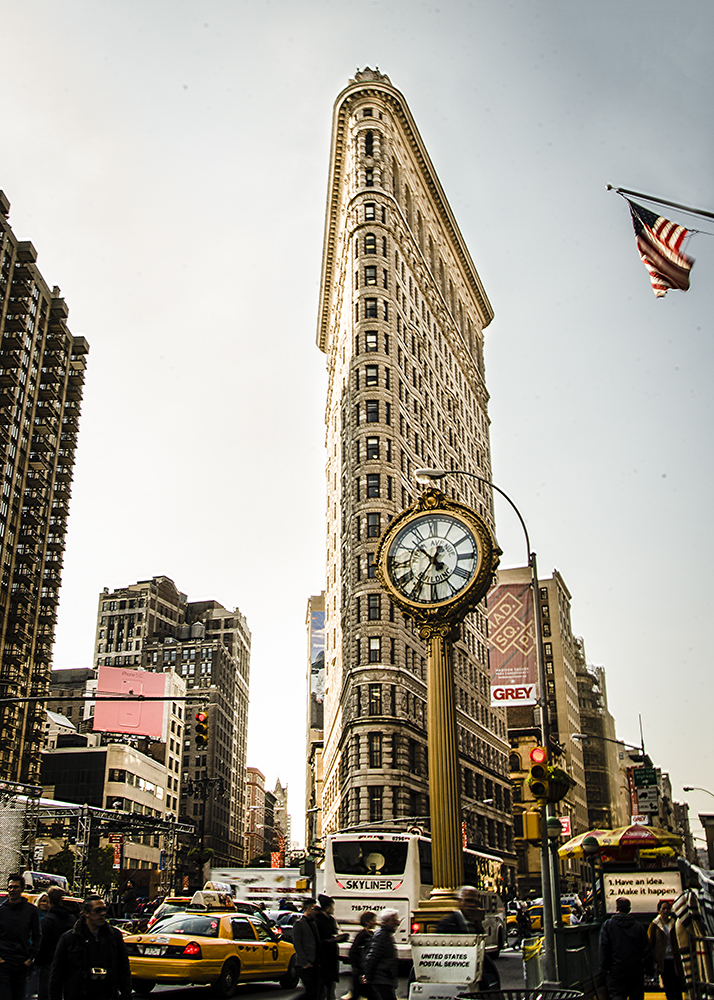
I also love the cast iron clock not far from it on Fifth Avenue.  I set out to try to capture them in the same image. Not a terribly easy task, given that the best spot to stand was smack in the midst of crazy traffic. I didn’t try that.

(I hadn’t noticed the sign in the lower right of the first image until just now. “Have an idea. Make it happen.” Appropriate.)

The clock was installed in 1909. One of the most ornate of New York’s cast-iron street clocks, it’s composed of a rectangular, classically ornamented base, and fluted Ionic column. The two dials, marked by Roman numerals, are framed by wreaths of oak leaves and crowned by a cartouche.  A masterpiece of cast-iron workmanship, it is beautifully designed, and a prominent sidewalk landmark.

Such old, historic and delicately intricate beauties make New York City endlessly fascinating to me and are why I return time after time.

The New York Series…Part 3

Top of the Rock security guard

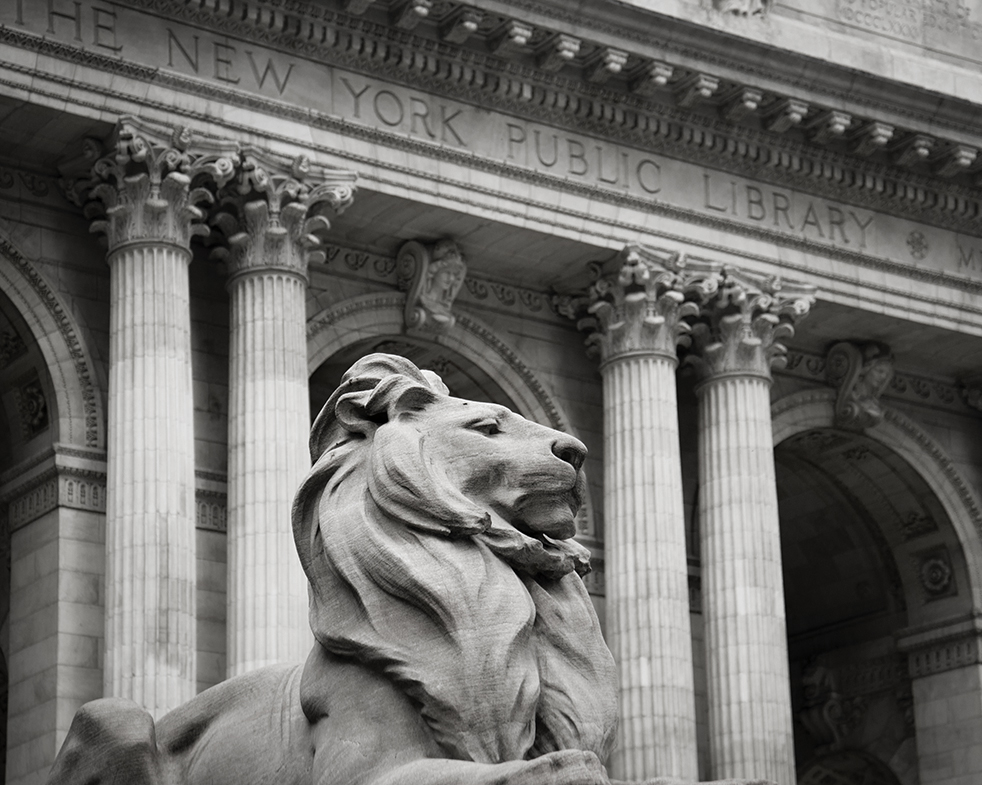
New York Public Library

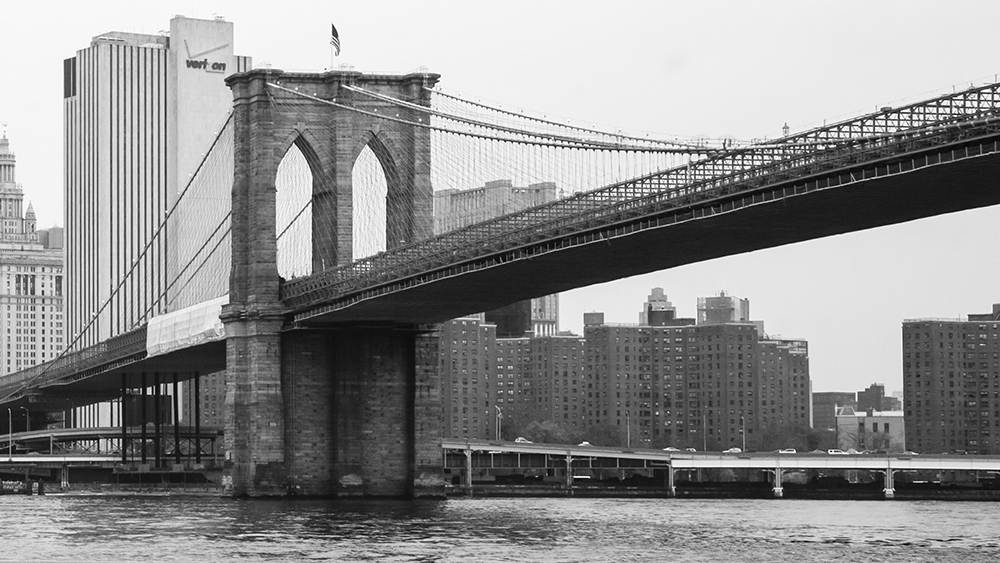
Brooklyn Bridge from Brooklyn side

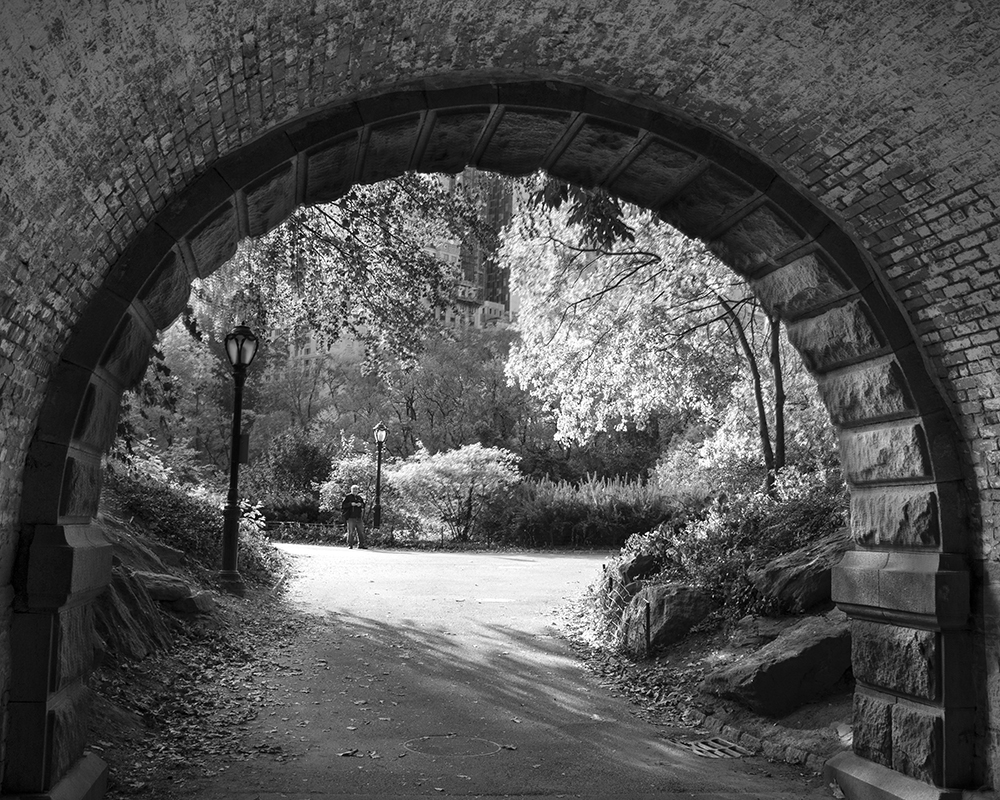
Central Park tunnel

I am a huge fan of black and white photography. Most of the photographs that are not mine and that hang on my walls at home are black and white. My favorite photographs of my father’s are his black and whites. I consider Ansel Adams a hero, along with Vivian Maier and Dorothea Lange. And yet I rarely create a black and white image myself.

On my recent trip to New York I set about to change all that. It was a clear intention of mine to come back with some images that looked good in black and white.

It really isn’t that difficult in this city. Many New York images cry out for black and white treatment, since so much available subject matter is architecture, cityscapes and street photography. Remember Woody Allen’s Manhattan? Iconic New York. Shot all in black and white.

I love how black and white photography strips things down to the essentials. Colours can often be distracting and may even make a photo look messy and disjointed. In black and white images, the subject is much easier to zero in on.

Black and white is also superb for revealing great composition and texture. It allows you to focus on shapes, light and shadows, lines and perspective. Some images that look positively banal in colour take on a new life and importance in black and white.

Black and white images can be more dramatic and authoritative looking, especially if combined with great lighting. Think of Karsh’s portrait of Churchill.

And you can’t ignore the classy and exquisite feel of black and white images. They are often more timeless looking.  My parents’ wedding photos were done in black and white and they still look classic and fabulous to this day.

In all my times in New York, I had never seen the Manhattan Skyline from the Brooklyn Bridge Park or shot the Brooklyn Bridge itself. So those shots went on the shot list, and that trip went on the agenda. The day I went to Brooklyn was quite grey and dreary so the resulting images had little or no colour to begin with. They worked perfectly in black and white.

I have only begun to process the keepers from my trip to New York City, but I’m hopeful there are a few more that will lend themselves to a black and white treatment — and some that may even make it to my walls!

Manhattan skyline from Brooklyn Bridge Park

The New York Series…Part 2

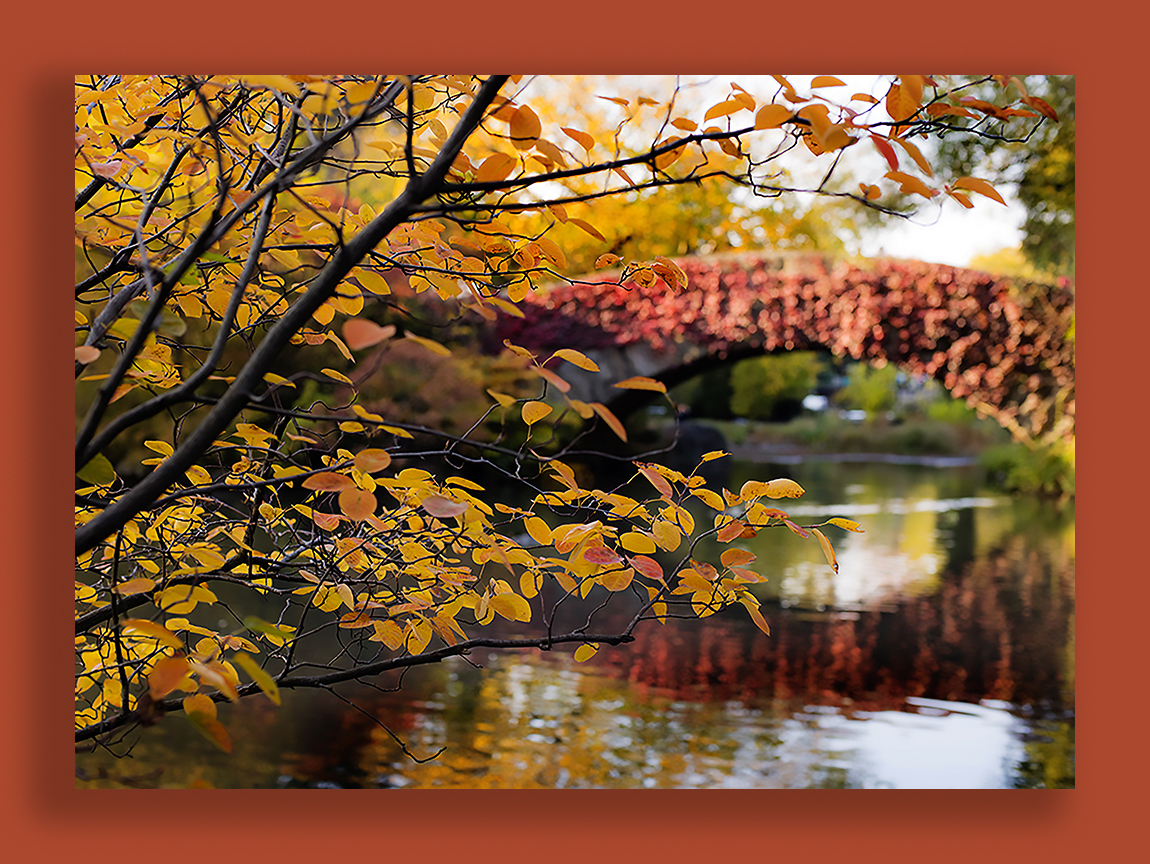
parkbridge1000 copy

Yesterday I posted an overview of Central Park in autumn shot from the Top of the Rockefeller Plaza. Today, let’s go into the park and enjoy some more intimate views…

Before I left for New York, I made a shot list. I knew that there was so much to see and capture in New York City that I might get overwhelmed if I didn’t at least have an idea of what I was hoping to photograph. It turned out to be a good idea for me. I didn’t get everything on the list and I got lots of shots I didn’t plan to, just by being open to what I was drawn to in the environment, but overall I feel that doing some advance research was well worth the effort.

Let me give you an example. I knew I wanted to shoot Central Park. But where? As was evident in yesterday’s shot, the park is huge and you could walk around in it for days…I knew I didn’t have a whole lot of time and I had plenty of other places on my list, so I decided to be selective.

I figured New York, being south of where I live, was still likely to have colourful leaves on the trees. So I googled fall foliage in New York and discovered that the fall colour was likely to be at its peak last week. Good start!

Then I went to one of my favorite photo sharing sites — 500 px — and did a search for Central Park. This site is chock full of wonderful high-quality images that provide great inspiration. The search function works really well (much better than flickr)  because it can filter by date and also by popularity.

Lo and behold I saw a stunning image of a beautiful stone bridge covered with red ivy. I could see that it had been taken only a few days before so that confirmed that the colours were still quite glorious.

I could also see that it was called the Gapstow Bridge. I love stone bridges (covered with ivy especially) and this is a beauty. It did not take long to find out that this particular bridge was in the southeast corner of the park, not far from the entrance. Bingo! I had a great destination all picked out.

Once I got into the park, I had to ask directions to the bridge, but it was only a short walk and there it was! I was in my element running back and forth trying to capture the bridge from a variety of perspectives with a few different lenses. It was obvious that it had a completely different personality and feel shot from different vantage points. It was late afternoon so the sun was providing fairly nice light.

I am more comfortable with intimate landscapes than really large ones, so that is what I tend to shoot. But it was good practice to try to capture some wider shots as well.

woman walking on bridge1000framed

I had to work around the people who were walking across the bridge and feeding the ducks at the water’s edge. Sometimes I like to have people in my shots, but I did want to make sure I got some of just the bridge.

I probably could have stayed there a good while longer, but the Metropolitan Opera’s performance of Tosca was on the agenda for that evening, so I had to reluctantly wrap it up. (Little did I know then that by the end of the night I would become a raving fan of opera and especially Roberto Alagna! If you’re curious why, click here to hear.)

As I walked out of the park, I managed to get a few shots of the park’s trees with the New York skyline behind.

I just love images that show the natural and built worlds side by side, which stands out so clearly at the edge of Central Park. Such a study in contrast.

If you’re going to New York and don’t have days to wander at will, a bit of advance research can really save you a lot of time.

skyscrapers from central park1000col

buildings behind park1000framed

The New York Series…Part 1

forpost 2000

I’ve been to New York City a few times before — 12  to be exact — but this was the first trip I had a good camera — and it was autumn in the city. That made for a great combination!

You probably won’t be surprised to hear that I took hundreds of photographs. I plan to spread some of them out over a series of  blog posts.

I’m starting with this image since Central Park is one of my favorite places in the world.

I wanted to see what it looked like from a great height in the fall with the trees leafed out in their beautiful colour, so I took the elevator up the 67 floors to the observation deck on the Top of the Rockefeller Plaza on a sunny perfect fall day.

What a vista!

In this photo, you’re looking north and you see the west side of the park and the buildings of the Upper West Side.

A few years ago, my mother and sister and I took a guided walking tour of Central Park, which we thoroughly enjoyed. Up until then, I simply had no idea what a massive accomplishment this park is and how unique it is.

Central Park was the first public landscaped park in all of the United States.  In 1853, the state legislature first set aside land for a major public park. City commissioners spent $14 million for the land and the construction of the park, which extended from 59th Street to 106th Street, between Fifth and Eighth Avenues.

The designers, Frederick Law Olmsted and Calvert Vaux were chosen in public competition in 1858. The park was developed over a span of 16 years.

(Olmsted is considered the father of landscape architecture and he went on to design Prospect Park in Brooklyn and many other North American parks, such as Boston’s Emerald Necklace, Biltmore Estate in North Carolina, Mount Royal in Montreal, and the grounds of the U.S. Capitol and the White House. Here are ten lessons for landscape design you can pick up from him.)

Central Park occupies 843 acres in Manhattan, 6% of its total acreage. You could fit 16 billion New York apartments in the park.

The park includes seven water bodies totaling 150 acres (some of which you can see above), 136 acres of woodlands and 250 acres of lawns. There are 58 miles of walking paths and 4.25 miles of bridle paths.

It also boasts more than 26,000 trees, 36 bridges and arches and nearly 9,000 benches.

It surprised me to learn that there are 215 species of birds in a 6.1-acre sanctuary, many rare to the area including the peregrine falcon.

The 25 million people that visit every year can also enjoy 26 ballfields; 30 tennis courts; 21 playgrounds; one carousel and two ice-skating rinks, one of which is converted into a swimming pool in the summer.

Stay tuned for more images inside the park…

Rich spiced residues…

dying cosmos1000
leavesalmonte1000
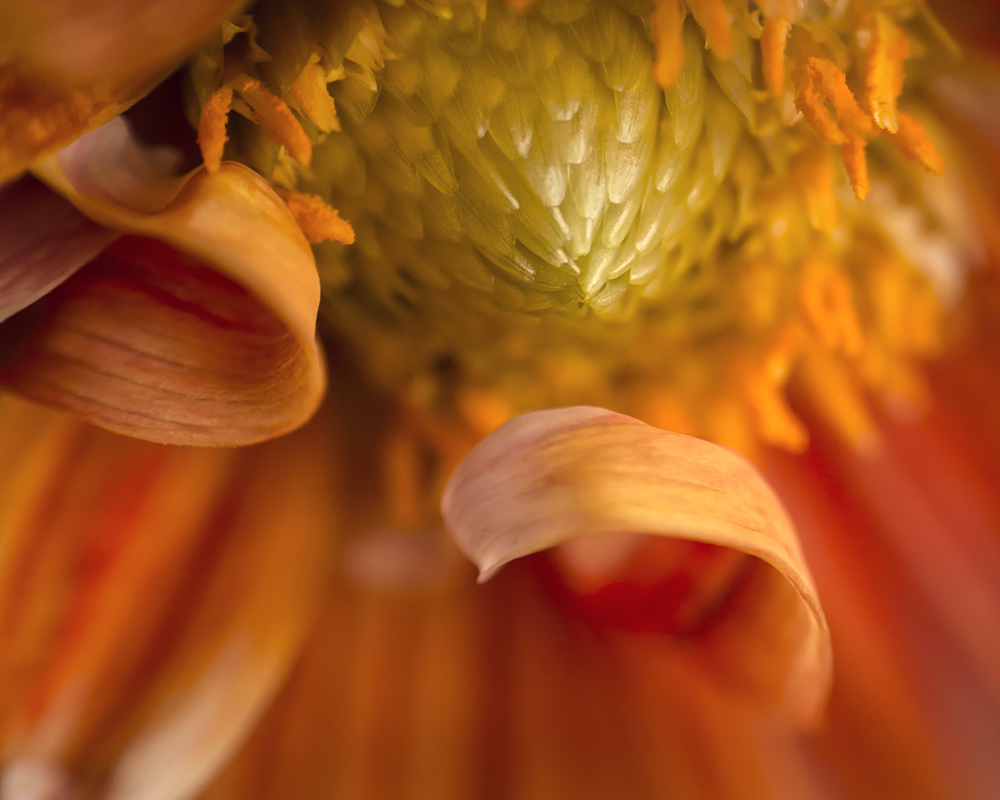
orange dahlia1000

Fall Song

Another year gone, leaving everywhere
its rich spiced residues: vines, leaves,

the uneaten fruits crumbling damply
in the shadows, unmattering back

from the particular island
of this summer, this NOW, that now is nowhere

except underfoot, moldering
in that black subterranean castle

of unobservable mysteries – roots and sealed seeds
and the wanderings of water. This

I try to remember when time’s measure
painfully chafes, for instance when autumn

flares out at the last, boisterous and like us longing
to stay – how everything lives, shifting

from one bright vision to another, forever
in these momentary pastures.

Mary Oliver
**********************************************************************************************************
I’ll be away from my blog for about a week. I look forward to catching up with you when I return. In the meantime, I hope you relish whatever particular delights this time of year offers in your part of the world!
**********************************************************************************************************
red leaf-1000b

Kim Klassen dot Com

On photography…

Photography, both the craft and the art, helps me to be. It allows and enables me to live creatively, which is to honour creation and my own existence. 

FREEMAN PATTERSON

small abstract
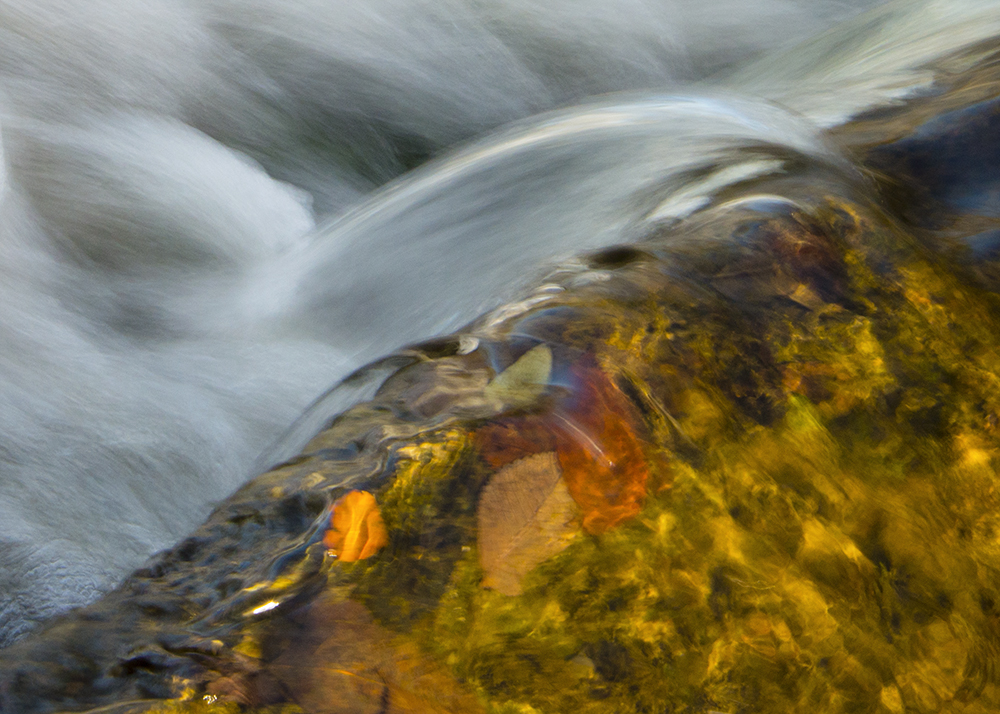
Double exposure: Leaves and the river in the fall

I never know where I’m going to find creative inspiration next…Sometimes, I see or feel something in other’s people’s images or words. I may experience a sharp flash of insight or a soft sense of recognition that washes over me like a fine mist at the seashore.

Inspiration may come as I look through the viewfinder, or I may not feel it until I see my raw images onscreen. It may abandon me for days…only to return with a shudder of realization or a frisson of enthusiasm.

One thing I know is that human beings are all creative. That’s one characteristic we all share — although how we express it differs radically. Sometimes it is used for ill. Most often, for good.

How we choose to live out our creativity is at once a deeply serious yet profoundly joyous matter. And how we engage creatively with ourselves and with the world deserves some conscious deliberation once in a while…

Since this is a blog about photography…the question becomes how do we talk about what we do as photographers? I don’t mean the “how” — there is an untold number of informative books, articles, videos and courses about that.

I mean the why.

I ask myself why I am so entranced by pointing this boxy black gizmo at patterns of light and shadow and colour out in the world. Freeman Patterson offers one answer that speaks to me. But there are also others who help me understand my own feelings about photography — about creativity, originality and authenticity.

Lately David Duchemin and Kim Manley Ort have added to the depth of this important discussion with utterly thoughtful contributions. Each has just published a heartfelt reflection on the art and craft of photography and why they do what they do that I urge you to read.

I know I love a piece of writing when I find myself copying down several quotes from a short piece. Thank you Kim and David.

Photography, for me, is not so much about self-expression or even expression of the subject, as it is an expression of the connection between the two. Essence meets essence.

Kim Manley Ort

Evolution of a Photographer: Part 1

Evolution of a Photographer: Part 2

Chasing authenticity is like chasing originality. Spend too much time doing it and you’ll lose sight of the thing you were aiming for. Explore. Play. Follow your gut. You’ll know when it’s you and when it’s not.

David Duchemin

On authenticity.

On authenticity. Again.