Photography


Leaving no trace…

Water birds are not dependent on a particular place. When they are on the ground, they function on the ground. On the water, they function on the water. In the sky, they function in the sky.
They function perfectly and intuitively wherever they are, moving from one place to another by spontaneous instinct, never lost and never leaving a trace of where they’ve been.
Karen Maezen Miller
Available for licensing on Getty Images.
Share this:

Colour in the Bahamas…
I’ve haven’t been posting much this last while due to unreliable and non-existent wifi, but I’ve had ideas for a few theme posts in my head.
So, now that we’re back at Treasure Cay, where the wifi is the best we’ve had in the entire Abacos, here is a post focused on colour…
Much as I love black and white on my walls, I adore colour all around me in life. As the artist Kandinsky said: “Colour is a power which directly influences the soul.”
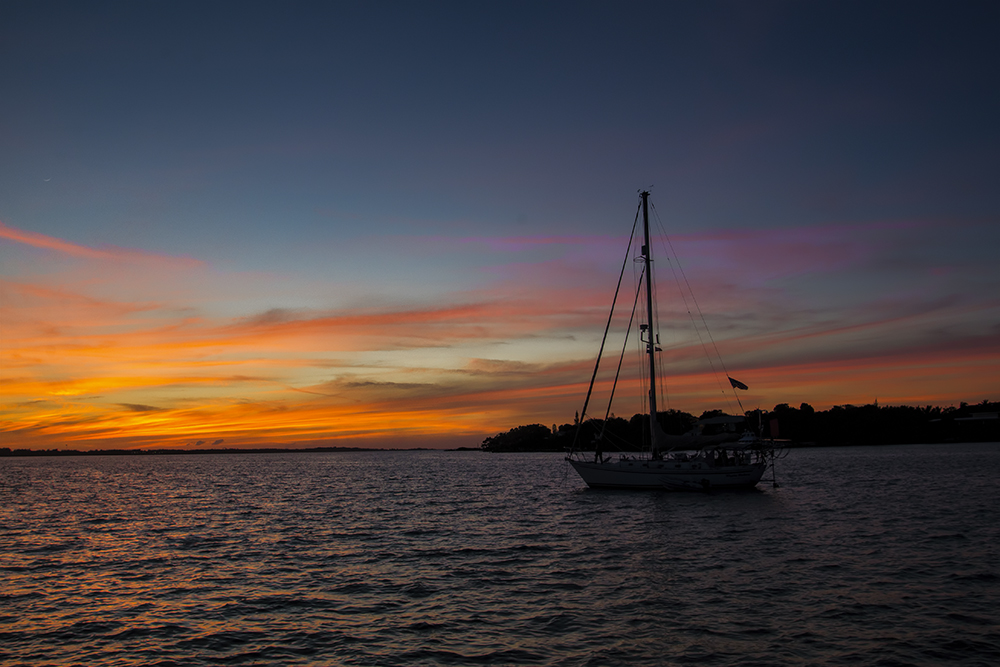
Marsh Harbour sunset
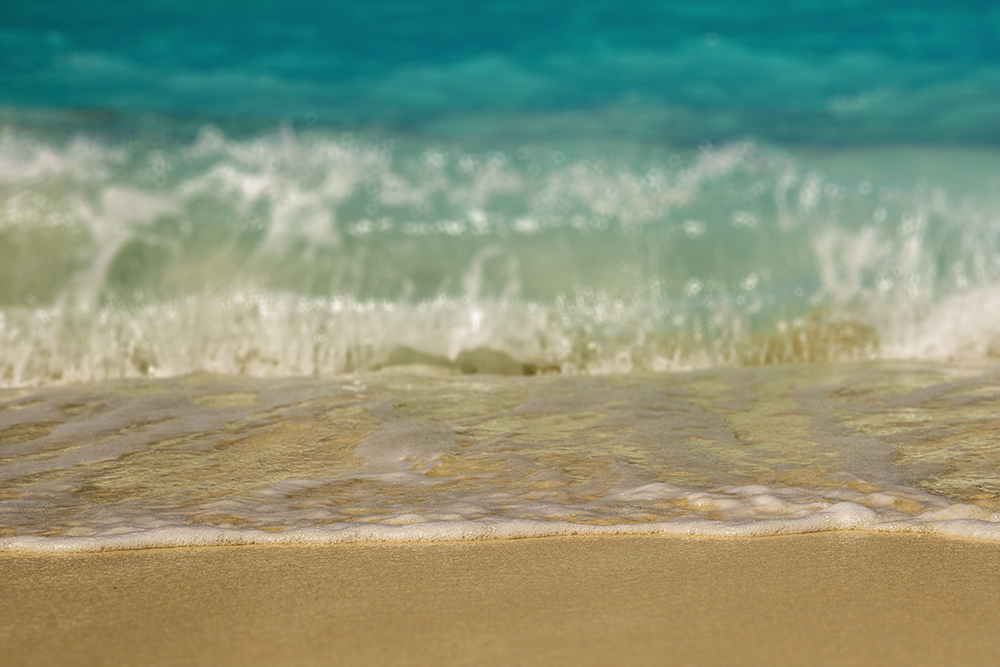
Pristine water

We proudly fly the Canadian flag — and so do many other cruisers…

Manowar scene
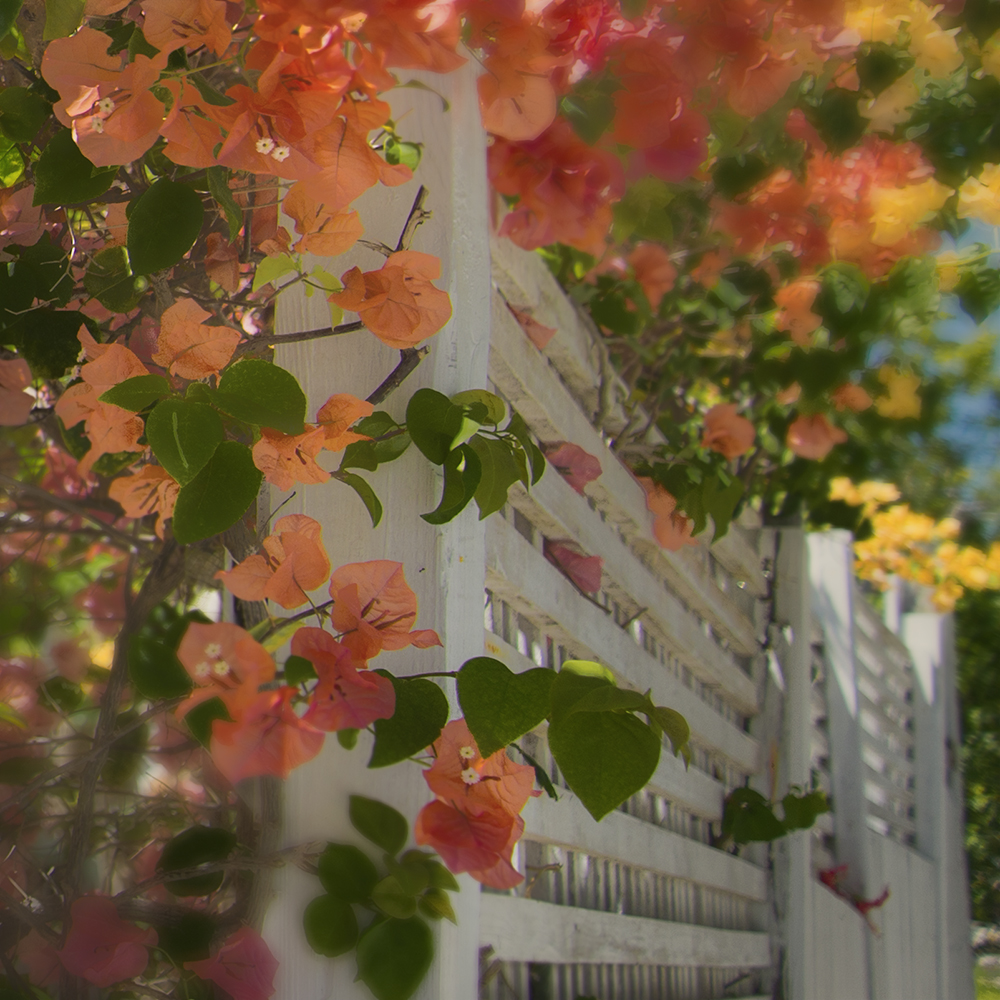
Hopetown scene
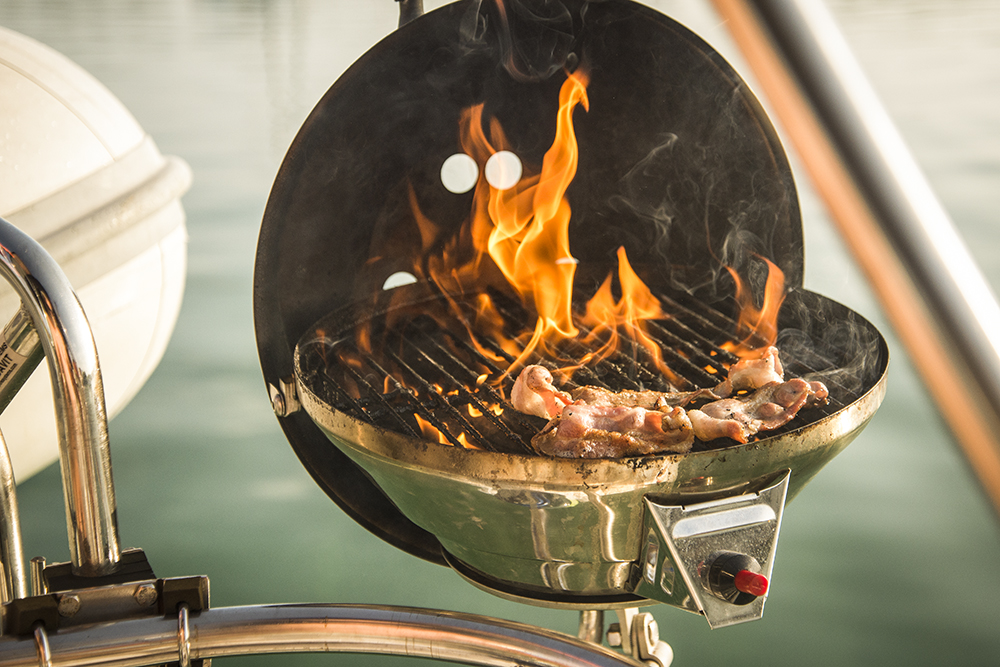
Bacon on the barbie
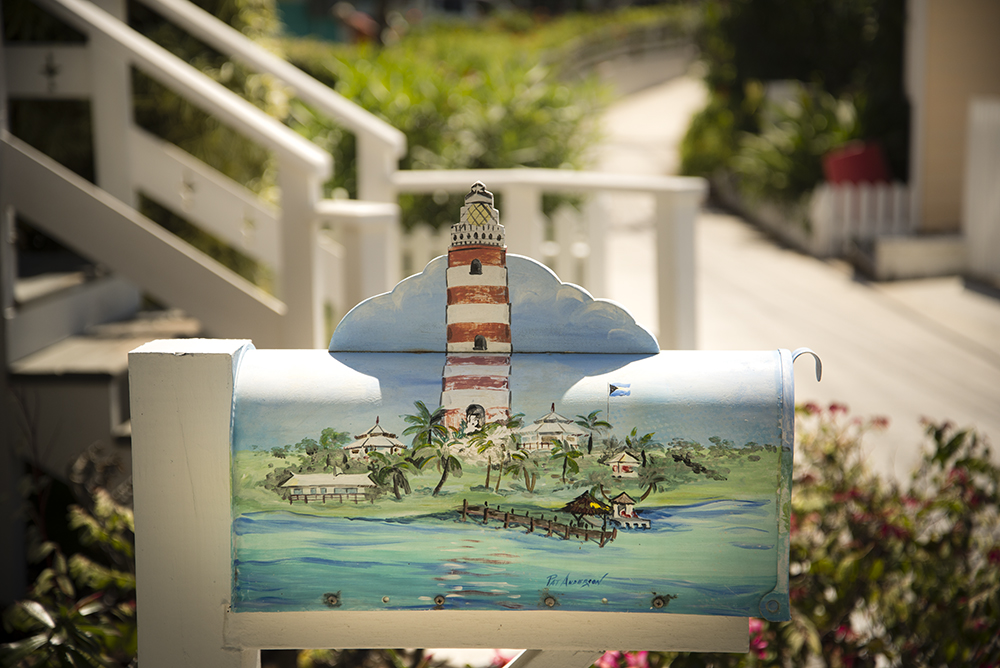
Sweet painted mailbox
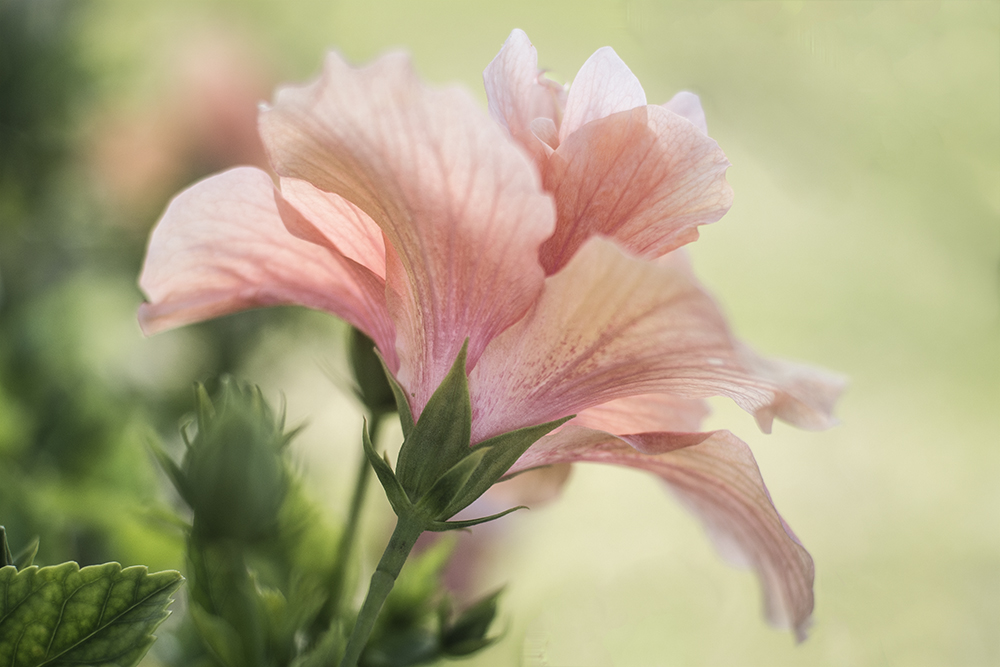
Hibiscus
Share this:

Piggyville…
Many have heard of the swimming pigs of Staniel Cay in the Exumas, but not so many know about Piggyville on No Name Cay in the Abacos.
The last two times we were in the area, we didn’t have time to visit, so this time with a very fluid schedule we made the time. And Beatrice from our buddy boat was full of delight to finally see the wild pigs of the Abacos!
There were lots of children having fun feeding the pigs, which is encouraged, and we couldn’t help think of the grandkids in the North and how much they would enjoy this too.

Share this:

Island Hopping (2)…
Windsong II and Tranquilizer left our slips in West End about 8:00 am on Wednesday, March 16 heading for Great Sale Cay. We motored about 25 minutes and entered a narrow shallow cut in the coral called Indian Cay Passage. The passage took one and a half hours.
While motoring slowly, we used our depth sounder and chart plotter to find the deepest water to go through and watched the bottom only inches from our keel — just over five feet. Having done this last year and the year before, we kept our previous tracks, and these gave us confidence. We were on an incoming tide so if we did get stuck we would just have to wait for the tide to lift us off. Once through, we where on the Little Bahamas Banks — 10 feet of water! Lots! And all of it turquoise!
Given that we were heading northeast and with a brisk wind on our beam, it was a perfect time to put up both sails and run at an average 7 knots. With this nice turn of speed Windsong II got us into the anchorage earlier than expected.
We anchored with over a dozen boats, some going east like us, and others going west, back to the U.S. Marco and Beatrice came over for sundowners and snacks and we discussed our plans for the next few days. After a nice dinner of BBQ chicken and roasted asparagus, we enjoyed the glorious sunset and then fell into bed and slept soundly. Eight hours in the sun and wind can knock a person right out.

Sunset at Great Sale Cay
The next day — St. Patrick’s Day — we set out for Crab Cay, a large isolated anchorage with a nice beach. The winds were WNW, and we had a great sale to Crab Cay, often doing over 7 knots. We noticed a huge difference in our speed from having our bottom painted. We just slid through the water.
After four enjoyable hours, we arrived at 2:00 pm and had plenty of time for play — and work (Bob washed our very grungy dinghy bottom). We all had a refreshing dip and went back to the boat for a delicious dinner of strip loin steak, mashed potatoes and green beans. Another great night’s sleep and we were off to Green Turtle Cay to find a snug anchorage to wait out the coming cold front.
Share this:

Island hopping (1) …
The fog was so thick the morning that we planned to leave Stuart, Florida, to begin our cruise on Windsong II to the Bahamas, we could hardly see the sailboats moored next to us at Sunset Bay. We were scheduled to meet our buddy boat, Tranquilizer, with Swiss friends Marco and Beatrice aboard at 9:00 am. One thing was clear though — we would be late! We weren’t going anywhere in that fog.
We contacted our friends to let them know, and we all waited for the fog to clear. Fortunately, it wasn’t too long before we were heading down the St. Lucie River to the “crossroads” of the Intracoastal Waterway, Florida’s inland waterway.
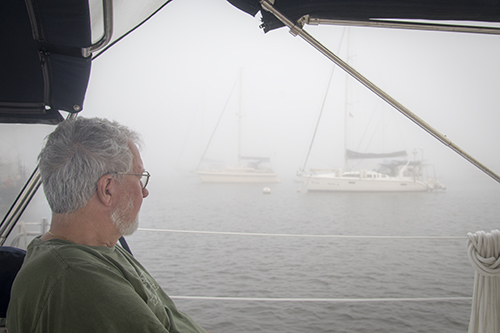
What we woke to on departure day…
As we left the anchorage, we saw a dolphin swim by our boat, which I always take as a positive omen when beginning a trip on the water. We met up with Tranquilizer and all went smoothly as we motored together down the ICW toward Lake Worth, where we planned to anchor beside the Palm Beach Inlet overnight as we had done before our two previous crossings.
We had been studying the weather for weeks and Tuesday seemed like an ideal day to cross the mighty Gulf Stream to the Bahamas. The Gulf Stream is a river in the ocean that moves warm water from the Gulf of Mexico north along the coast of North America. It’s several thousand feet deep and 40 miles wide. The current in the centre can be more than 4 knots. Crossing it is nothing to trifle with. Vessels are pushed north even as they head east. When winds are brisk and northerly, there can be huge waves. So it’s important to wait until conditions are favourable to cross.
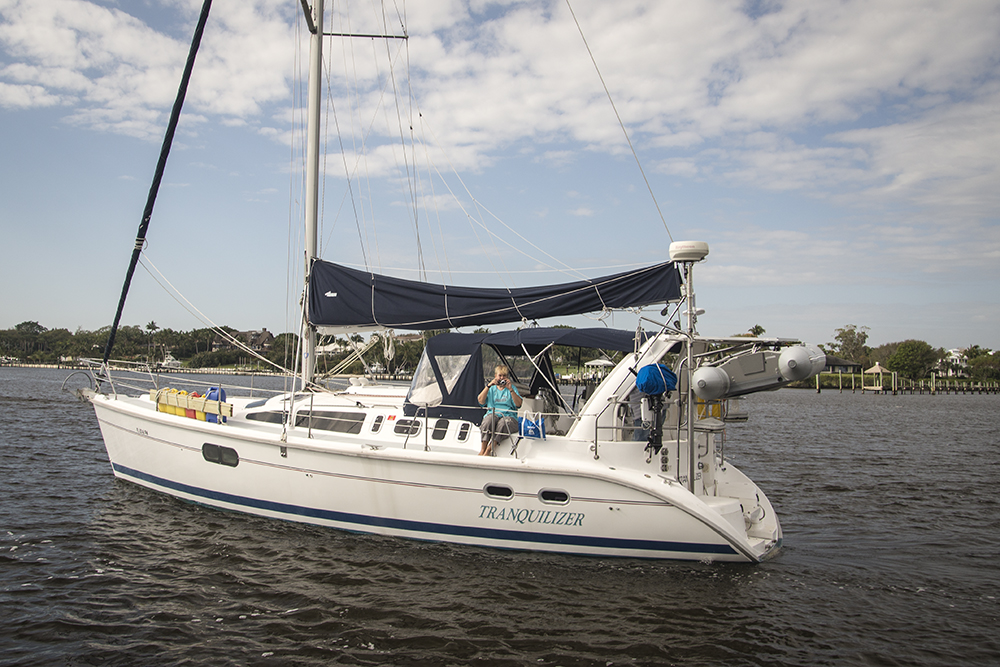
Meeting up with our buddy boat, Tranquilizer…Beatrice and I taking pics of each other.

Tranquilizer going through the Jupiter Federal Bridge.
The particular part of the ICW from Suart to Palm Beach has about seven bascule or lift bridges, which must be raised for sailboats with tall masts (ours is 55 feet) to go through safely. A number are opened on demand and the rest open on a set schedule, such as the hour and half hour. We radio the bridge operators as we approach and make sure they know we are there and would like to go through when the bridge opens.
The ICW can be very narrow in places and it is shared by all manner of watercraft, including large power boats with huge wakes, jet skis and people on stand up paddleboards. One particularly idiotic man was fishing in an inflatable canoe right beside a bridge. When the bridge opened, we proceeded full speed ahead. As we got to it, he decided to cross in front of us. We couldn’t stop and we couldn’t go around him. So we gave him five blasts of our air horn to indicate an emergency. He quickly realized his predicament and moved aside. Whew!
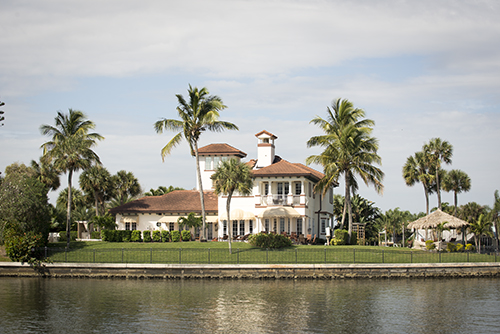
Scenes from the ICW

Near the Palm Beach Inlet the night before the crossing, we toast to a good one!

The crossing from Florida to the Bahamas is 56 nautical miles and took us 10 hours. Our points of departure and arrival are circled in black.
The Gulf Stream crossing went just fine although the beginning was “a bit traumatic” in Bob’s words. When we lifted anchors and moved through the Lake Worth Inlet at 4:00 am, it was pitch black — there were no stars or moon visible at all.
To put it bluntly, it was really hard to see. As we came out onto the ocean, there was a lot of commercial boat traffic going in both directions. It was like trying to cross a busy highway. There were so many lights — some clear, some coloured, some flashing. What did they all mean? You have little depth perception in the dark. It is difficult to judge who is closest to you and who is farthest away.
I kept staring at a whole range of lights in front of us. What is that?, I asked Bob. The AIS identified it as a tug boat and the radar showed two barges in tow about a half a mile behind it. They were connected by a wire just under the water. You don’t want to get between a tug and its tow.
Using our radar and AIS to guide us, we waited for a break and then scampered across the sea lanes. Our buddy boat stayed close and it all worked out well in the end.
It was a bit lumpy out on the ocean — the winds were light, as predicted. We put up our jibs anyway and motor sailed almost the whole way. Later on it was rolly, which we don’t particularly enjoy, but we had no symptoms of seasickness, so all was good. Once we got across the sea lanes there was very little traffic the rest of the way.
I was able to get some video along the way, which really gives a good feel of what the journey was like. I hope to post it later.

Heading east, and leaving in the dark, we had the chance to see the sun rise over the open ocean.

We came into West End/Settlement Point under yellow flags at 2:00 pm and went straight into the slip we had reserved. Once we said hello to Marco and Beatrice and I sent a message home that we had arrived safely (and I kissed Bahamian terra firma!), we walked over to the government office to clear the boat, get a cruising permit and fishing licence, and have our passports stamped.
We were tired, but with our early start we now had time to relax, check the weather for the next day, take pictures and even go for a swim. Later we toasted another successful crossing with a bottle of champagne Tranquilizer had brought along for the occasion.
Now, on to Great Sale Cay and the beginning of our island hopping Abacos cruise….
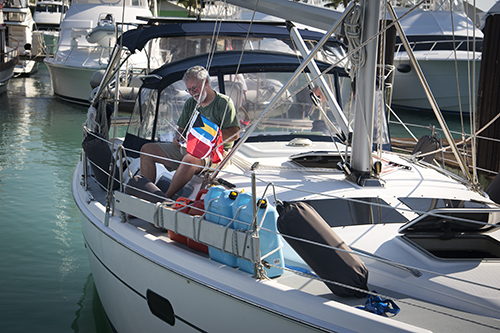
Bob gets ready to hoist the Bahamian courtesy flag after we cleared customs and immigration and took down the yellow flag.
Share this:

What a difference a week makes…

Windsong II and its crew (Bob and me) left Stuart on Monday, March 14 with buddy boat, Tranquilizer (with Marco and Beatrice). We crossed the Florida Straits and the mighty Gulf Stream on Tuesday, a journey of some 10 hours. The black circles show where we left from in Florida and where we made landfall in the Bahamas. The image above is of the sunrise over the ocean as we crossed, having left Palm Beach Inlet at 4:30 am.
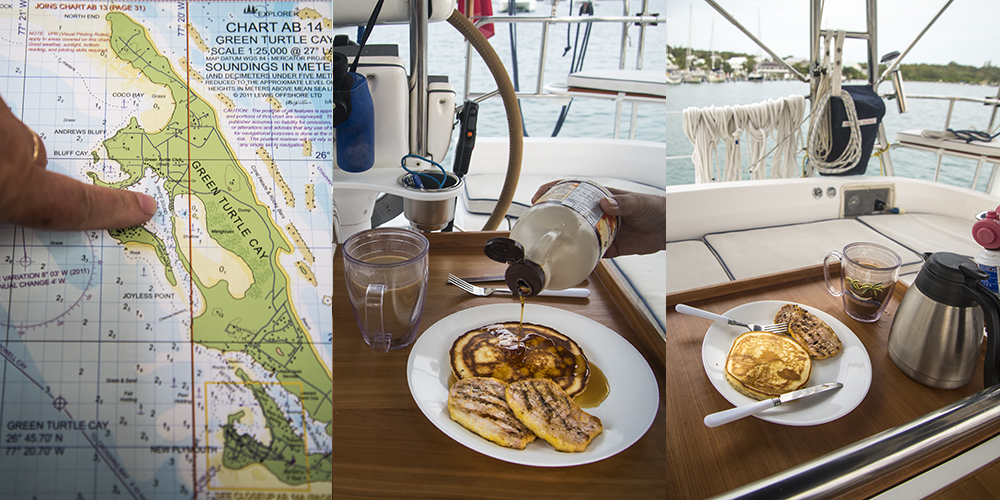
On Friday, we reached Green Turtle Cay. You can see how protected the anchorage is and we are also on a mooring ball. We will spend enjoyable time here as we wait for some bad weather to pass over. Yesterday, we had a relaxing breakfast (for a change) of pancakes and pea meal bacon (aka Canadian bacon) given to us by a kind friend before we left Florida.
More to come on the details in between Monday and Friday…
Share this:

Back on the boat, Part II…
So, what is it like to live on a sailboat on a mooring ball in a Florida anchorage while waiting for a weather window to cross to the Bahamas?
When I’m too old to do this, I’ll be able to look back on my photos and be reminded of what daily life was like. I will remember these days fondly..
Cooking and eating
Getting things ready on the boat
Some projects that have been installed:
- new bimini that Bob sewed up at home
- motor lift crane for the outboard
- a new VHF radio with GPS, AIS and DHC, interfaced to chart plotter and new mike at helm
- two new cockpit tables Bob made at home
- new AM/FM stereo radio at nav station
Hanging out with friends
Enjoying the environment
Share this:

Stay close…

Stay close to anything that makes you glad you are alive.
Hafiz
Share this:

Back on the boat, Part I…

The propeller that you see on the cabin wall to the upper right is not only an item of decor and conversation, it is our actual back up propeller.
For the last few years, we’ve lived in our sailboat in the winter and spring, starting out in Florida and cruising through the Abacos in the Bahamas. Well, we’re now back on the boat…in our “happy place”…
It’s compact living to be sure, but we love the simple lifestyle and freedom. You can see more pictures of Windsong II, our sailboat, here. It’s a Hunter 356, which is just short of 36 feet long.
As Bob has put it: “Windsong II is so much more than our winter home. She connects us to mother nature. With her we can see, hear and feel the wind, the waves, the tide changing, and wonder at the number of stars so bright from our bed at night.We watch the sunrise and the sunset from her cockpit. On her you can feel very small and full of awe. The wind can move her along so quietly — you can tell she loves it when the engine stops and the sails are full. She takes care of us in bad weather. She is our mother ship — she allows us to swim in the clearest water, explore and photograph remote beaches, shorelines and settlements in her tender. She is just big enough we can have friends visit to share these experiences with us — what could be better than that? And those are just a few of the reasons we love her…”
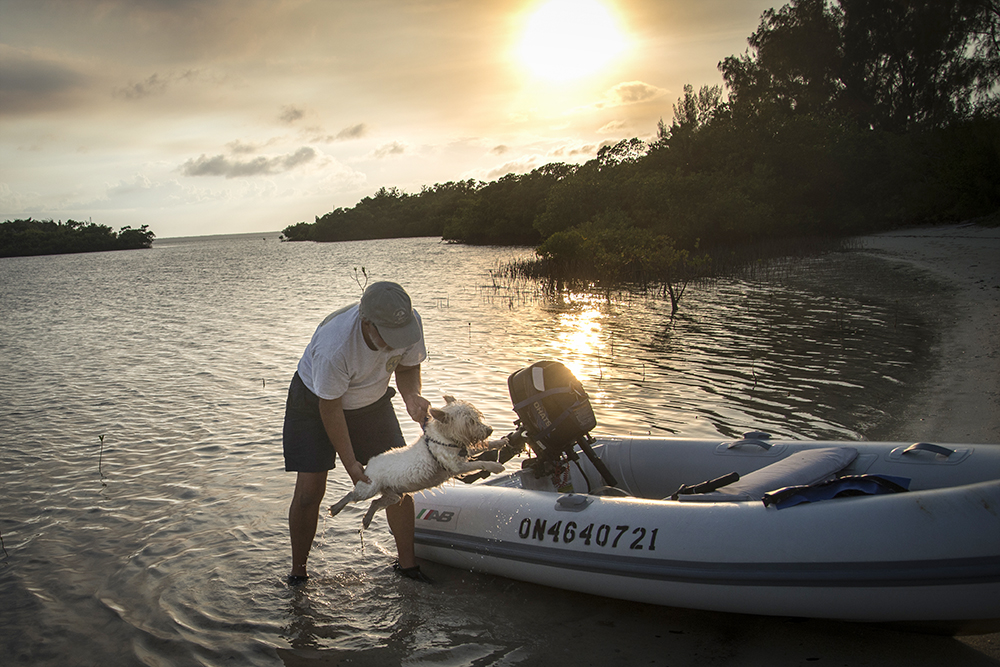
Scene from Charles’ last trip to the Bahamas.
The last few years we’ve stayed in marinas as we cruised with one or two salty dogs, our Westies, Angus and Charles — and being on the dock made it much easier to get them off and on the boat many times a day — but sadly, it’s just Bob and me now. So we have the option of anchoring out or taking mooring balls, which require dinghying to shore.
Right now we are in southeast Florida in a mooring field. We’ve stayed here before and really enjoyed it. It draws a community of friendly cruisers from all over the United States and Canada, even other countries. As part of the modest fee, you have access to showers, tuck shop, lending library, lounge, laundry facilities, wifi, bikes to rent, a shuttle bus and special events. There are also lots of great restaurants in walking distance. And shopping if you have the need.
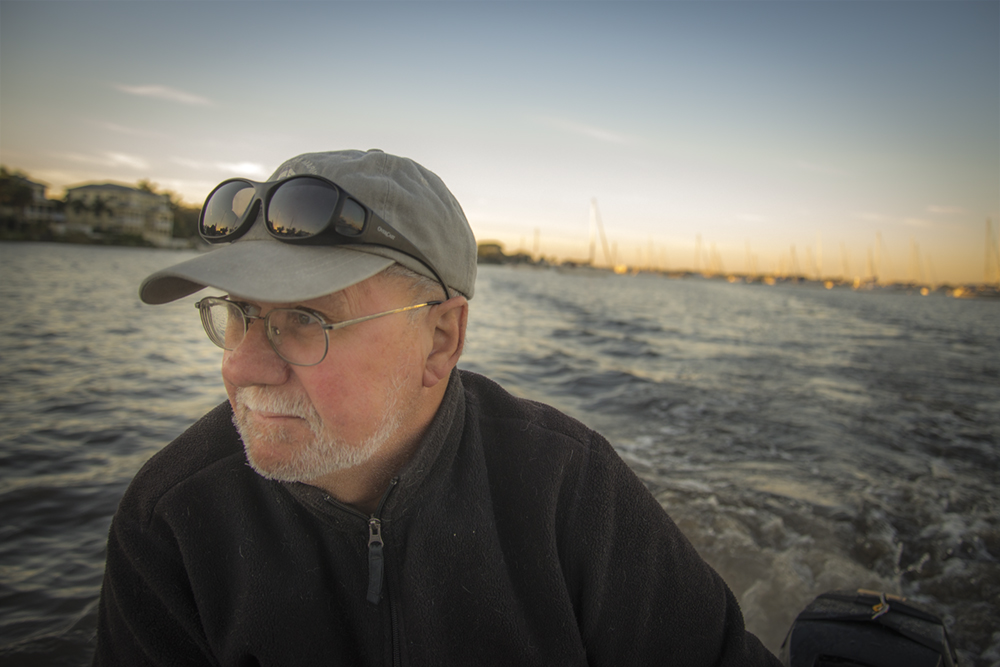
Leaving the mooring field behind as we dinghy to shore — this particular day it was early morning.
On board, we have a 70 gallon fresh water tank, which we use for washing dishes and such, and to fill it we need to haul 5 gallon jugs to the boat. Once you’ve hauled a few of these heavy suckers, you find ways to minimize your water use! Last year we installed a solar panel, so this year we have been relying almost 100% on solar for our electricity — fridge, freezer, LED lights, computers etc. On rainy days, we run our diesel generator briefly to provide power. Many other cruisers have wind generators too, but we haven’t gone there at this point. All in all, we have a much lighter ecological footprint than we do on land.
Scenes from the Sunset Bay mooring field…
It’s called Sunset Bay for a reason. One shore faces east and the other west, so we are treated to beautiful sunrises and sunsets almost every day. I don’t have to go far…just a few steps with my camera and there it is. I never tire of this beauty.
Stay tuned for Part II…

 Sherrygaley.com