A time for refinement…

crab

The feeling of an evolution is a constant for every artist who is pursuing the search for refinement and enlargement of his/her own means of expression.

Andrea Bocelli

I was very much into using textures to process my images a year or two ago. I loved the painterly look that you could achieve and the soft dreamy quality of so many textured images.

I’m still drawn to these images and I admire and enjoy the texture work on the blogs and sharing sites of so many artists and photographers I’ve met online.

But I stepped away from it myself, and this is why…

At one point I realized that I didn’t want to use heavy processing with textures as a crutch when I didn’t know what to do with a less than stellar image. So I decided what I needed to do was spend more intensive time learning and practising and honing the craft of photography — which is really what I’m in love with. I wanted to take full advantage of my equipment and make better base images — by honing key skills — exposure, composition and framing, and focus, for example. I wanted to do a better job of getting my images right in camera.

I also wanted to delve deeper into the hard work of discovering and developing my own unique approach and vision. This has challenged me to become more contemplative and intentional in my image-making, as well as more experimental and risk-taking. I feel I’ve seen an improvement in my images and while many of my experiments have not seen the light of day, they have also yielded some happy results and taught me so much. And not only have I gained ground by working on simplicity, abstracts, double exposures, long exposures, ICM, etc etc etc, I’ve also truly enjoyed every moment. The more I can master the craft, the more my images will become a means for expressing myself.

Over the next while I intend to continue to strive for the best image quality I can get from my camera, I also want to return to spending time refining my processing techniques. For example, I want to learn luminosity masking and make better use of Adobe Camera Raw for raw conversion. (ACR is basically the same as Lightroom, without all the photo organization abilities.) I just learned a few new ACR and Photoshop techniques from a video with Ben Willmore on Creative Live that have me quite excited.

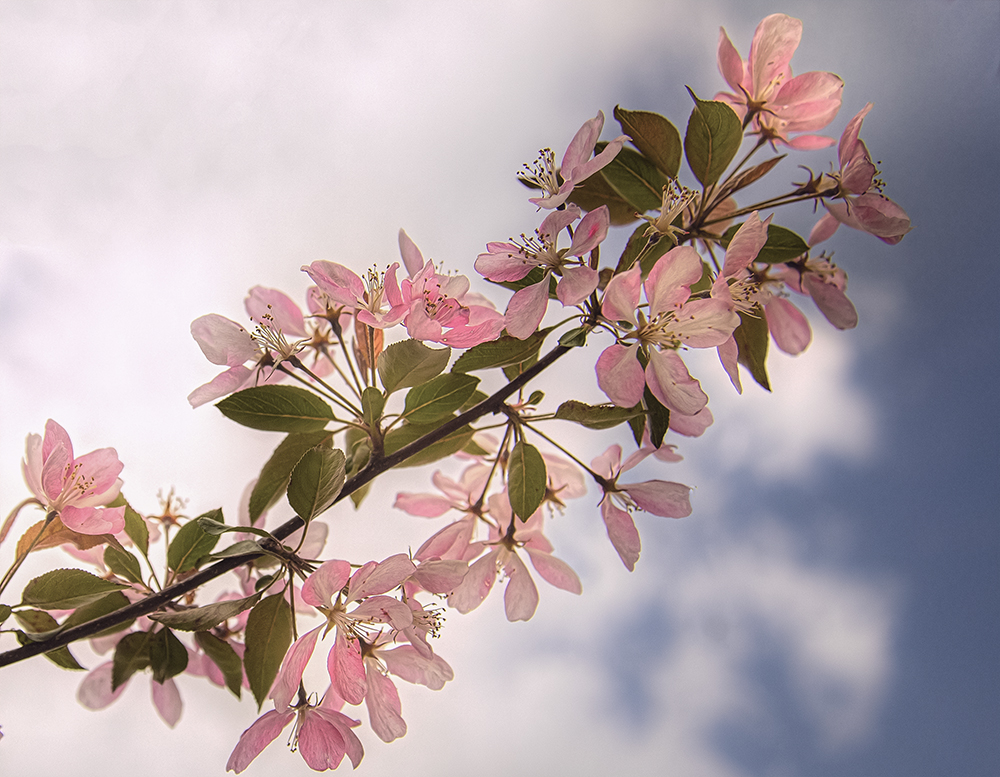
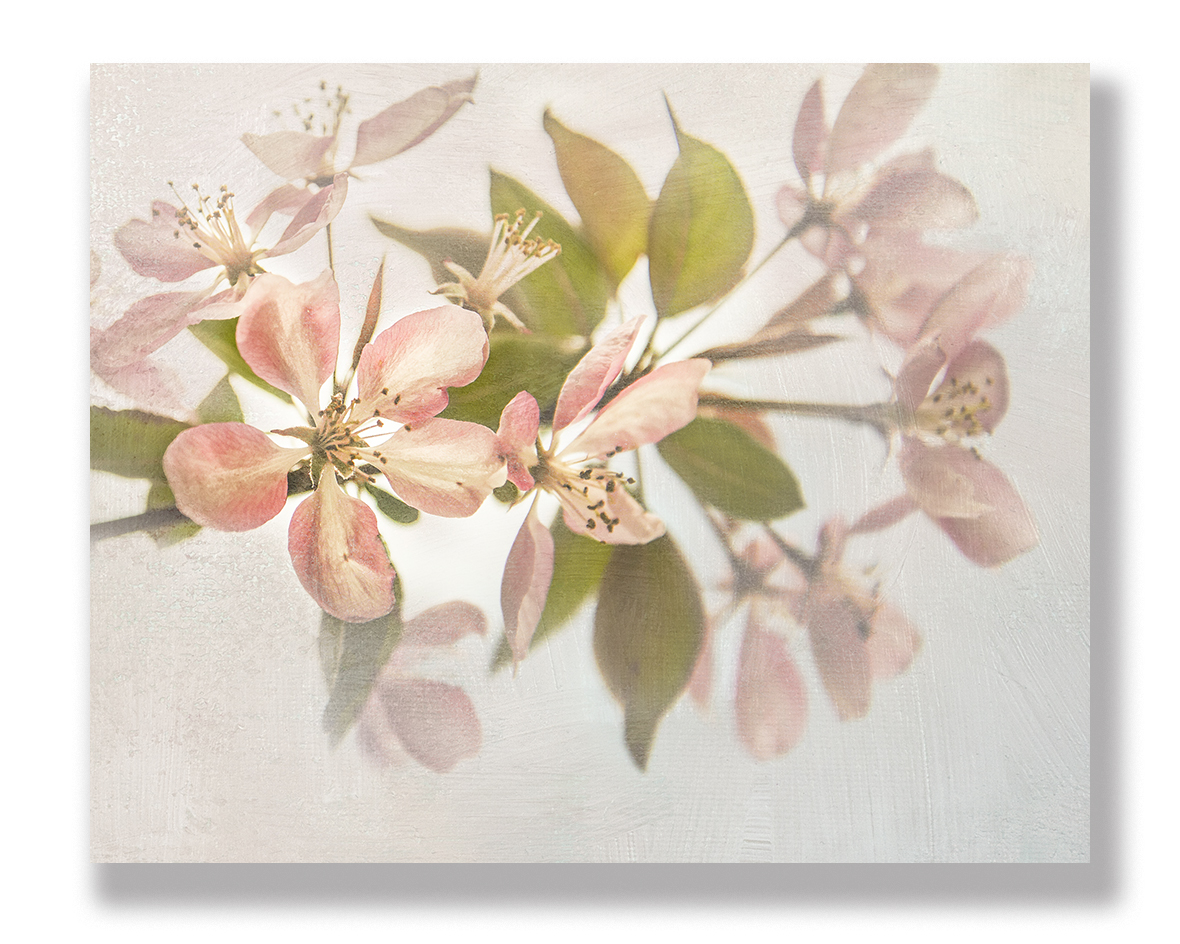
And so just for fun I hauled out my textures the other day and had a play with a few recent crabapple images. I’ve learned that when I start off with a better quality image, I am generally happier with the results of adding textures. My taste is at the “less is more” stage so I went fairly light on the processing of this image to let the beauty and delicacy of the crabapple blossoms shine through.

What are you refining these days?


Things I’m loving right now…Monday edition

crabapple blossom

I love spring, I love tree blossoms, I love wine, I love colourful fruits and veggies (more so now that I’m a vegetarian once again), I love learning tricks that make life easier, and I love recipes that are super easy and also super good.

So in keeping with the above, here are some tips, tricks and recipes that you might love too, along with a fresh image courtesy of a nearby crabapple tree in glorious bloom.

Rainbow sangria — the most beautiful (and healthiest) sangria you will ever set eyes on.

THE best and fastest way to separate eggs — you have to see this to believe it (thanks sis!)

Strawberry rhubarb crisp bars — I made these last weekend with rhubarb from my garden and they are too fast and too good not to try.

Goat cheese and avocado toast — yum!

And just because life is so short and we’re all getting older by the day…40 Regrets You Don’t Want to Have in 40 Years (well, maybe not even 40 — it was written for a younger audience!)

Have a scrumptious week, everybody!

We crossed successfully!

image


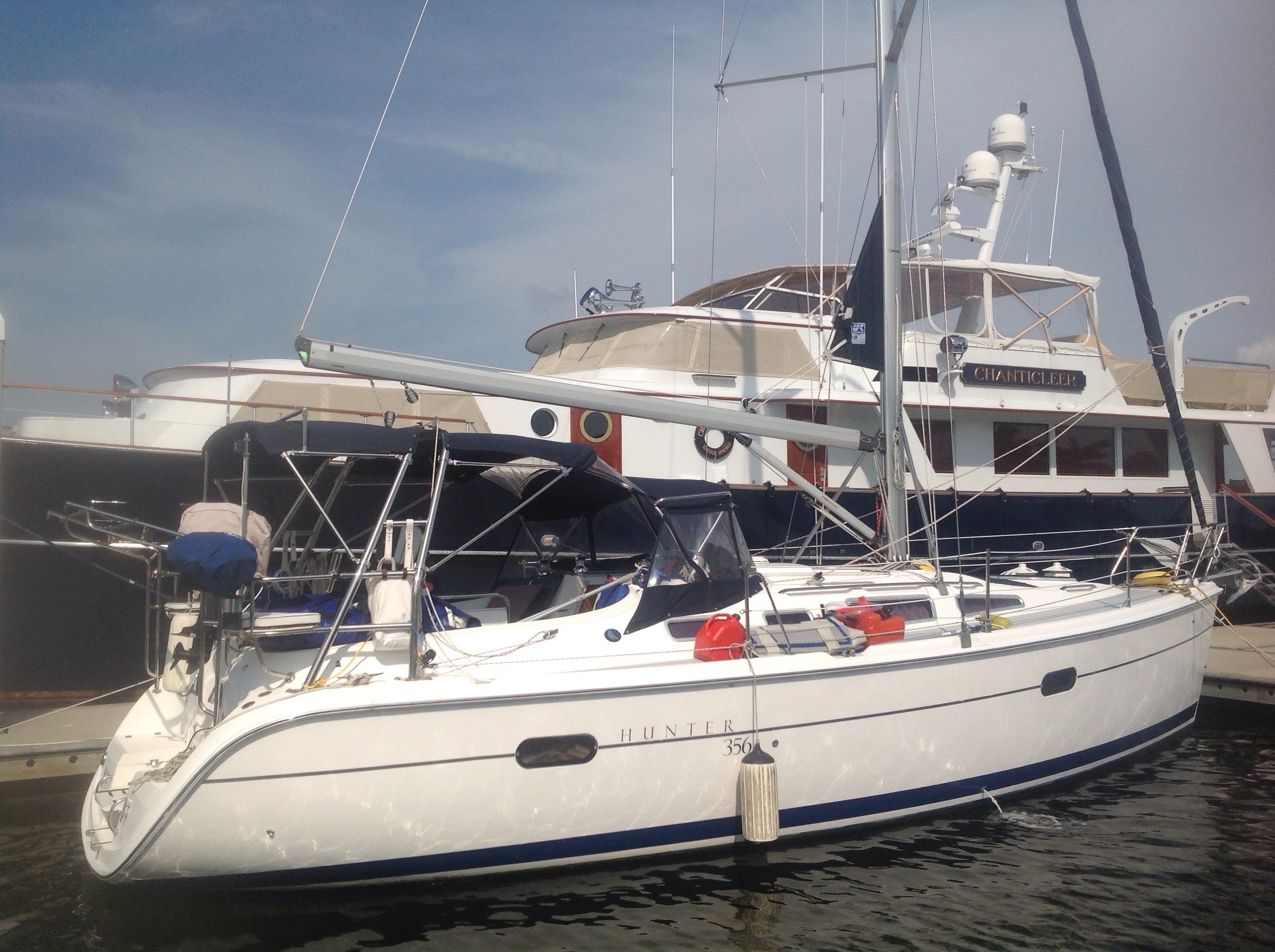
We had an idyllic crossing of the Gulf Stream this time. We’re slipped next to an iconic vessel, the CHanticleer in port Salerno. Our friend Joan’s former husband used to captain this boat, which has spent lots of time in the north channel of Lake Huron.

I have video of our crossing that makes the ocean look like a pond! Can’t post it right now though. Trust me.

We’re cleaning and stripping the boat for storage now. When we’re ready we will head back to Canada.

We want to wish Joyce a wonderful 86th birthday. I must have inherited some of that spirit of adventure that took her to Singapore some 60 years ago!

love ya mum!

Postcards from the Bahamas…

pinkandwhitehouse postcard-small500


I was just about to give up on posting here after trying for a few hours…when magically, things started to move.

The weather looks like it will be great for cruising the Sea of Abaco this week so we will be heading back to Man-o-War to pick up our jib and then go on to Hopetown, which Bob tells me is lovely. And there is a lighthouse there for my collection of lighthouse pics!

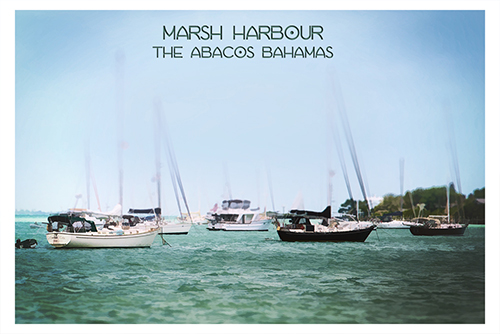
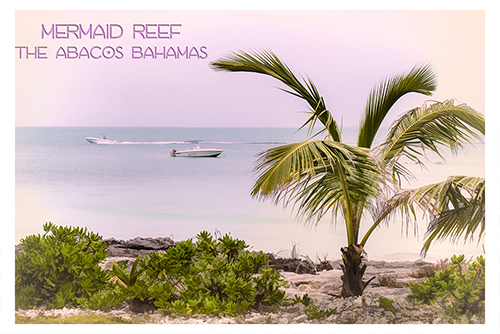
I’ve been creating a series of Bahamas postcards from some of my images just for fun. There’s something about the views and light here that seems to suit a stylized kind of treatment. I’ve been experimenting and having fun with Topaz filters.

So here are some postcards for you, from Bob and Charles and me in the Bahamas…

Joe's Studio POSTARD small

postcard marsh harbour-small500 shell postcard-small500 mermaid reef-small500

Man o’ War Cay…

We headed over to Man o’ War Cay the other day to drop off our jib for repair. It was a 50 minute ferry ride from Marsh Harbour. We stayed for the rest of the day to explore the cay and have lunch.

The history of Man o’ War Cay began with a shipwreck and a love story. In 1820 16-year-old Benjamin Albury found himself shipwrecked on the cay. He fell in love with Nellie Archer, whose parents had settled there to farm in 1798.

They married and today the name Albury is everywhere, from on the ferry line to boat-building to a popular canvas bag-making enterprise.

Boat-building began in the 1880’s and today Man o’ War Cay is home to self-sufficient and resilient residents who are proud of their island and their boat-building heritage.

We loved this little unspoiled cay and here is just a brief taste of what Bob, Charles and I enjoyed recently. (You may notice a certain colour story going on here…I can’t seem to get away from it, but nor do I want to!)

Marsh Harbour Views

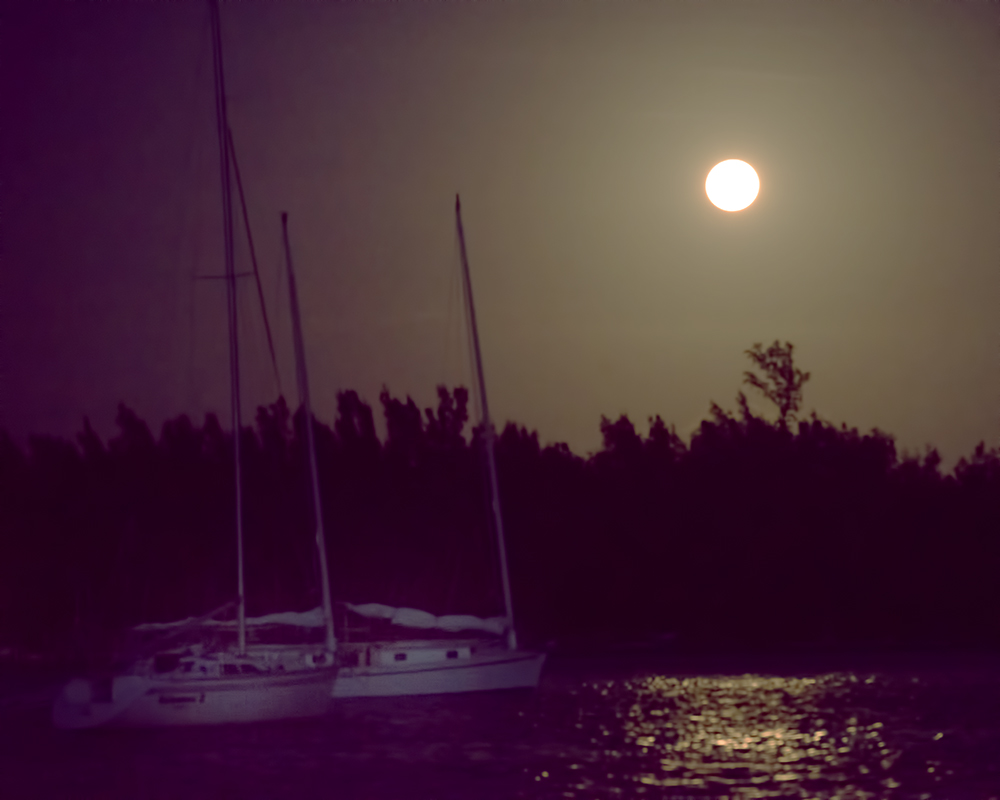
moon over marsh harbour

Moon over Marsh Harbour

When we arrived here in Marsh Harbour, we anchored out in the harbour for a few days while waiting for a slip. Then when a slip became available in the marina, we moved in there. It’s romantic out there on the hook but a bit of a pain to dinghy Charles in in rough weather, schlep our water out and also run the generator every day to supply our electricity. In the slip we have lots of power, water, and Charles has easy access to land. We can also get four TV channels! As we’ve mentioned before the only real downside is poor Internet access. Other than that we are in heaven.

Marsh Harbour is a large protected harbour in the Abacos where many cruisers spend the winter. There is a wide choice of marinas and restaurants and tons of charter activity. Catamarans are a popular rental vessel.

The marina we are in has a good restaurant called the Jib Room which also serves as a cruiser’s lounge. We’ve eaten here quite a bit and really enjoyed it. Lots of fish options for me. The house drink is a “bilge burner” which goes down so easy you can get into trouble very quickly if you don’t watch it.

We dinghy across the harbour to do our groceries and shopping. There is an amazing grocery store called Maxwell’s which provides the best shopping outside of Nassau. In fact we have to go there in a few minutes to get some coffee.

Marsh Harbour is centrally located to allow day trips to many of the popular cays around. This week we took a ferry to Man o’ War to drop off our jib sail for repair. Pics of that trip to come…

marina

View of marina from next door

beach down the street

Nice little beach down the street…

ferns view

Continuing the story…

Part II — March 11 and 12, 2014

Once we left West End the first order of business was to get through Indian Cut, a shallow and narrow 10 mile channel in the reef that would allow us to reach the protected waters of the Little Bahamas Banks.

As we approached the channel, the water depth went from 30 feet to 9 feet. We sounded our way through it trying to find the deepest water. That was often only 6 feet deep and we need at least 5 feet to pass through without going aground.

1bahamas water

Bob was watching the colour of the water as he steered manually from waypoint to waypoint. Leo and I called out the depths from the depth sounder as we progressed.

It was hard not to be distracted by the clarity and colour of the water since it is very unusual to be anywhere in a sailboat and be able to see the bottom. Our friend Mike had promised “gin clear” waters and they were.

Once we got through the reef Leo took control of the boat and Bob fell asleep in the cockpit, staying nearby in case we needed him. He went out like a light and slept a good two hours. We were trying to make Great Sale Cay by dark.

1bbob auto pilot

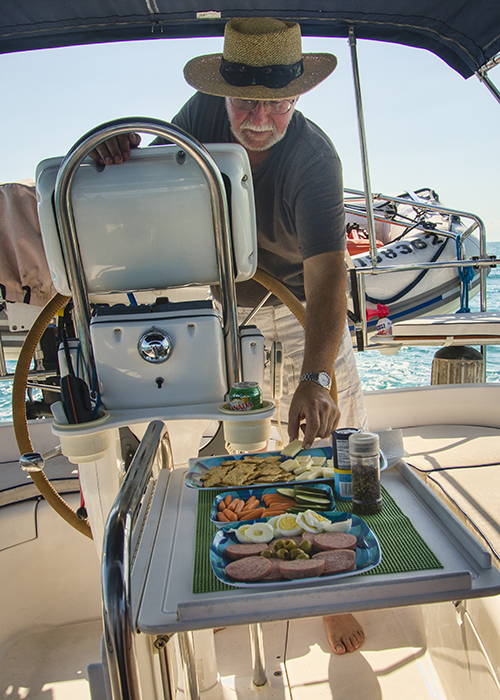
Leo and I took turns having snoozes later. At about 4:00 pm, we were all ravenous. It was lovely and calm so I laid out some cheese, crackers, sausage, veggies, hard-boiled eggs and olives in the cockpit to take the edge off our appetites.

2snacksonboard

Once on the Banks, the water depth varied from 9 to 12 feet. In the mid afternoon, Leo and Bob set two lures out behind the boat. We were moving a bit too fast for fishing but they thought, “what the heck, why not give it a try?”

3asun setting in the west

We arrived in the anchorage at Great Sale just as the sun was setting. We were the last in — there were already 10 boats there when we got there. We set the anchor and launched the dinghy in the dark. Charles was quickly loaded to go ashore for a bathroom break. It was starting to blow about 18 knots. The shore was rough with coral, and with the surf it would have destroyed our dinghy in 10 minutes had Bob landed the boat.  So he had to turn around and come back to Windsong II. We felt so badly for poor Charles, he had been a great boy all day. We tried to convince him to go on the boat but he would not go. He seemed to understand the problem. He has gone on the boat before, so we knew he could do it.

We used the propane BBQ on the back of our boat to make hamburgers for the guys. (I had a salad and veggies since I’m no longer eating meat.) After dinner we collapsed in our bunks — we were so tired from lack of sleep and being out in the sun and wind for so long. The water was a bit lumpy that night but nothing was going to interfere with our sleep that night.

The wind began to pick up again before dawn on Wednesday morning. We were all up at daybreak. Mike called on the radio, itching to go, because bad weather was coming. We had to leave without taking Charles ashore.

The weather forecast called for two days of high winds. The closest harbour that would provide protection was Green Turtle Cay, about 50 nautical miles away. We needed to get there before dark.

We were travelling in an easterly direction over the banks with a strong south wind, so the wind was on our beam, the best point of sail. We motored for a while and then pulled out our jib. The boat stood up and took off. The winds were 22 to 28 knots.. Our boat has a maximum hull speed of 7.1 knots, but we were surfing down waves at 8.5 knots.  It was an amazing sail — we all had wide grins. Leo, our resident speed demon, took great pleasure in calling out our speed as we went along.

3bsail2

We motorsailed like that almost all day. When the gusts got bigger in the late afternoon, we reduced the sail size a bit, but not enough, so we blew the leach line out of our sail. What that means is that the stitching on the seam along the back of the sail let go. This was probably due to sun damage over 10 years since the jib was original to the boat.

Bob could fix something like this with his special Sailrite sewing machine, which unfortunately is in the truck back in Florida. (Next time we will know better and bring it with us!) However there is a sail maker nearby on Man o War Cay. We will bring it by and have it fixed by him.

It was another long day and we made it to Green Turtle Cay.

Next instalment: waiting out the weather in Green Turtle Cay.

Note to my fellow bloggers: I deeply regret that I’m not able follow your adventures and blogs right now and send you my comments. Our Internet service is so limited and unpredictable that I have only been able to publish a few blog posts and send a few emails. I’ve managed a few “likes” on Facebook but that’s about it. But know I am thinking of you and I so appreciate all your kind comments. When we get back to Florida, I will so look forward to catching up with all your posts and images. It will be like gorge fest for me! 

Back with the story…

Part I – March 9, am to March 11 am, 2014

After several months of waiting for our new mast and making preparations, we left Mariner Cay Marina Sunday morning (March 9, 2014) at 9 am, having bid farewell to all our friends the day before. We had hoped to sail to Palm Beach inlet in the ocean, but because of strong north winds against the Gulf Stream we decided to go south through the ICW (the Intracoastal waterway). This is a trip of some 45 nautical miles.

charles last walk

Charles takes his last walk for the season

On board Windsong II were Bob, Sherry and Charles. Bob’s brother Leo, who has many years of boating experience, would be additional crew as far as Marsh Harbour in the Bahamas. He’d fly back from there in order to prepare for his upcoming trip to China.

We travelled with our buddy boat Casey Dee, which is captained by our friend Mike, an experienced sailor who hails from Iowa and has crossed to the Bahamas at least 10 times before. It’s always a good idea to go across the Gulf Stream with one or more buddy boats.

Both of us were destined for Marsh Harbour on Great Abaco Island in the Bahamas. The entire voyage would be about 250 nautical miles. Motoring at an average speed, it would take us four days. To put it in perspective, if you left from Florida on a plane, you could be in Marsh Harbour in an hour and a half. We live life in the slow lane!

All went well down the ICW or “the ditch” until we got to our first lift bridge in Hobe Sound, which was a bridge that opened “on demand.” We called the bridge tender on our VHF radio requesting an opening so we could pass through. After about a 15 minute wait the bridge tender explained that there was a mechanical failure and he had called maintenance to come and fix it. We had approached the bridge with our buddy boat Casey Dee, as well as a Hunter 32 and a large motor cruiser.

We began to circle around. Mike, with more experience, immediately and intentionally ran his boat aground in the soft mud and went down below to make a bite to eat. We began motoring back and forth with the other two boats for the next hour.
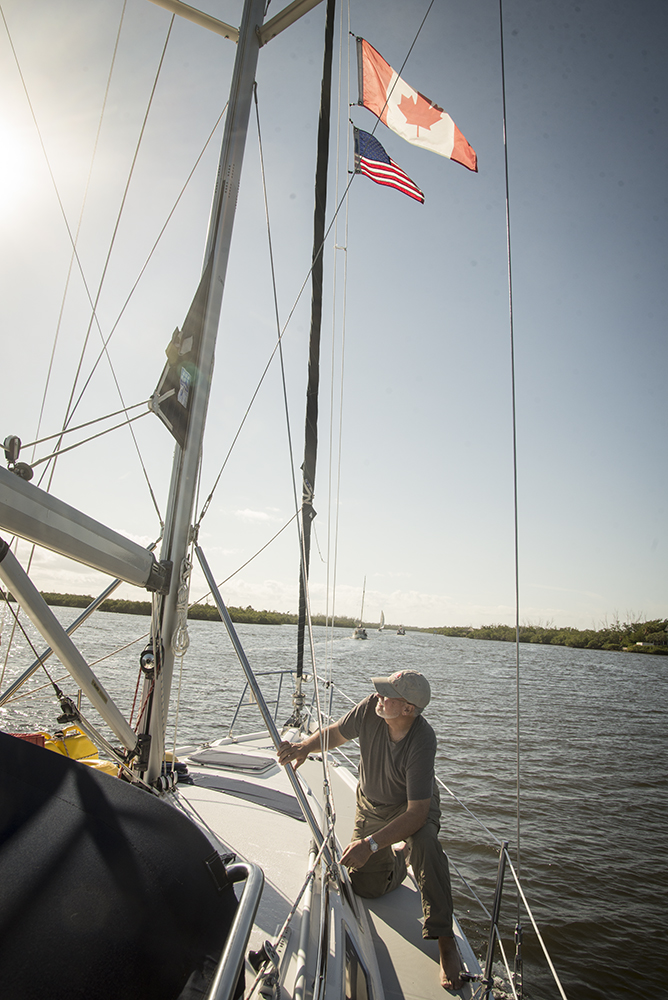
hoisting flags better

Bob runs the flags up the halyard as we start down the ICW…
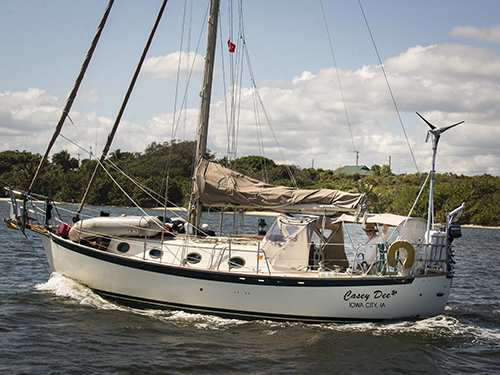
mike waving

Mike waves to us from the Casey Dee…

ICW house2

The ICW is pretty narrow in places…you get pretty close to the houses…
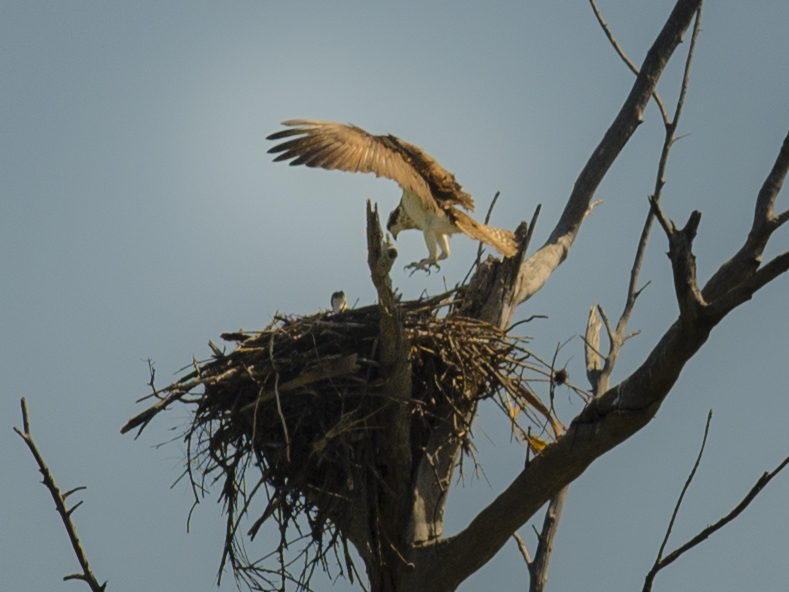
eagle icw

Sighting an eagle landing…

Suddenly the bridge tender radioed: “Bring em up, we’re opening the bridge!” Bob pulled a sharp turn and we watched the depth sounder go from 8.5 to 4.5 feet and we stopped dead as the other boats rushed to queue up for the opening. Our keel is 5 feet. We were aground. Not the best timing!

I moved to the starboard side of the boat and called to Leo to join me. This tilted the boat over a little and Bob opened the throttle for the engine. Slowly we plowed the keel through the soft mud in time to follow the parade of boats through the bridge.Fortunately, the next six or so bridges we had to go through all opened without incident.

We planned to anchor near the Palm Beach inlet so we could be close to U.S. customs in order to process the paperwork we needed prior to leaving U.S. waters. We would depart the U.S. through the inlet the next day.

As we passed Peanut Island, we were accosted by sight of several thousand spring breakers in bathing suits with their small power boats stacked ten deep in the shallow waters next to the island, a popular recreation spot. Many were standing on the sand bars beside their boats drinking from paper cups, shrieking and listening to loud music. It turns out that you cannot be charged for under age drinking if you are not on dry land or in a boat. This was a legal loophole that the “youngsters” were taking full advantage of!

We anchored right next to the northern tip of the island of the “rich and famous” called Palm Beach. That night and the next morning we watched as huge cruise ships entered the inlet from the Bahamas and went right past us. On Monday we took care of our customs business and gave Charles a good long walk on Peanut Island.

palm beach march 10

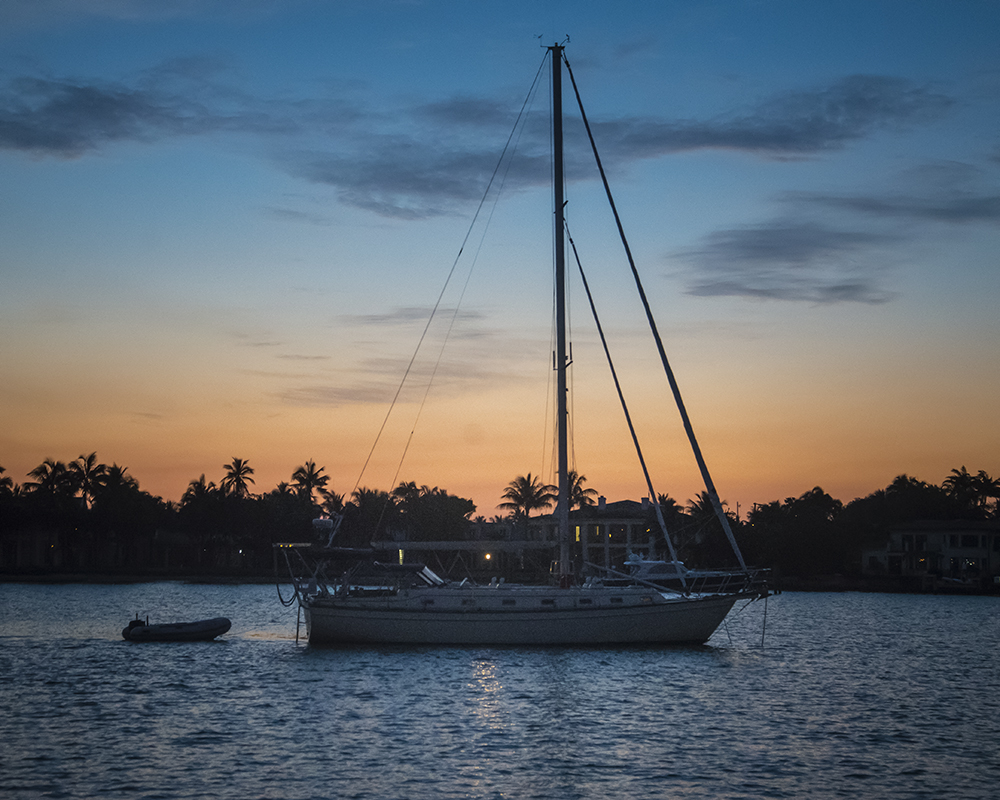
Anchored out near Palm Beach

cruise ships march 10

Cruise ships come in and out the Palm Beach Inlet

The time to cross the Gulf Stream was fast approaching.

Our destination was West End in the Bahamas, almost due east, 55 nautical miles away. In between us and West End lay the Gulf Stream. The Gulf Stream is an ocean river, which flows from the Gulf of Mexico along the east coast of North America to Europe. Between Florida and the Bahamas, the water depth changes very quickly from 20 feet to thousands of feet deep. So the volume of water is forced through this canyon. Wind acting on this water flow can produce very dangerous conditions for smaller boats.

We usually cruise at 5.5 knots. The centre of the Gulf Stream moves at 4 knots in a northerly direction. Imagine trying to walk across a street that is a conveyer belt and which moves almost as fast as you can walk. In order to cross the street directly, you can’t do it in a straight line.

We talked to lots of experienced crossers and read up on all the advice offered on strategies for crossing the Gulf Stream. Our plan was to navigate the boat to a point about 15 degrees south of West End. By combining our speed going east with the Gulf Stream speed going north, after 11 or 12 hours, we should have West End in sight.

It’s important to arrive in the Bahamas in daylight because the navigation charts require that you’re able to see where you’re going (This is called visual piloting rules.) Sailboats going from Florida to the Bahamas usually have about a 12 hour journey. Most usually leave in the middle of the night.

We decided to leave Florida at 5:30 pm on Monday afternoon. Since this was our first trip we wanted to see for ourselves that the weather reports that we had been glued to for days were actually correct.  As newbies, we wanted to be able to go out on the ocean in daylight, check out the weather a couple of miles offshore and still have time to come back to the anchorage by dusk if the seas were too choppy.

All reports said we had an ideal weather forecast for our crossing. It was quite beautiful leaving Florida. As we went out the inlet, Tiger Woods’ megayacht “Privacy” was just coming in. He didn’t recognize us. We watched the sun set over the coastline and the seas were smooth and calm as we left the mainland.
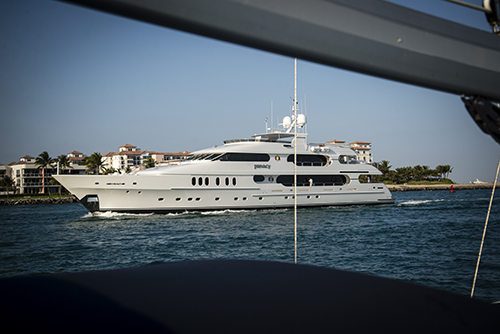
tiger's boat

Passing Tiger Woods boat on the way out…
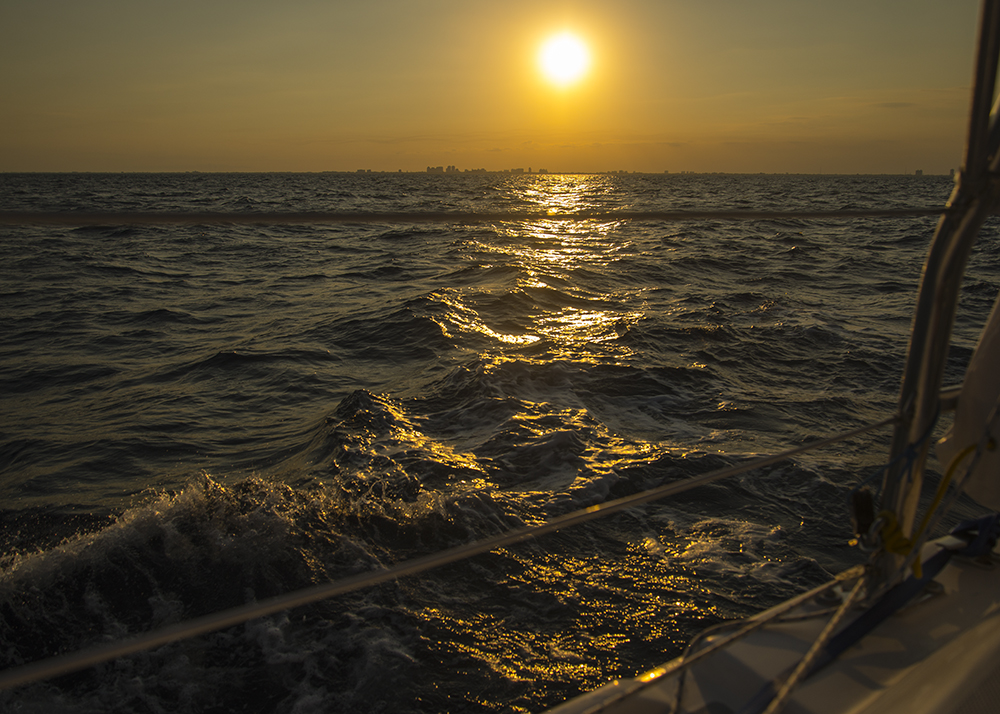
leaving florida

Leaving Florida…

Our colour digital radar allowed us to see the cruise ships and cargo vessels around us. On one occasion we altered our course to be sure we would pass behind one.

At night it can be very difficult to see exactly how far away things are and sometimes what direction they are moving. We could also see Mike in his boat because of his Big Blipper radar reflector. We did not cruise really close together but we did stay in radio contact, and could usually see him on our radar. It was a beautiful moonlit night, waves were about 2 to 3 feet with light winds just as forecast. We were amazed how much we could see on the water in the moonlight.

About midnight the sky started to cloud over a bit and the wind came up some causing some bigger waves, but nothing to get excited about. Mike radioed he had put his sails up and was having a ball.  We decided to just keep motoring as we were making better time than expected and it seemed that might get in to West End ahead of schedule.

By 1:30 am we were in near gale force winds of 28 knots with gusts to 35. We kept in close radio contact with Mike, who was having some challenges getting his sails down. The winds were behind us causing some large breaking waves around us. The moon had disappeared and we could not see much of anything; we were just crashing along through the dark, watching the radar screen.

But Windsong II was taking good care of us and was handling it well. We never felt we were in trouble or the boat was being overwhelmed. We were all in the cockpit for the whole time, including Charles, who slept through the entire experience.

It was a bit disturbing not being able to see the waves coming, each one seemed on a slightly different angle to the stern of the boat, all moving much faster than we were, as they broke they growled and the boat heaved one way or the other, rolling as the waves passed under us.

By playing with the autopilot and Leo’s keen observations Bob was able to get a direction that minimized the discomfort, allowed the boat to settle down a bit and the autopilot was able to do a better job. We cannot imagine not doing this trip without an autopilot. It was not really the direction we wanted to go but it was close enough.

No one got seasick, thank goodness. I took a mild seasickness pill as a precaution and we drank some gingerale along the way, but we really had no problems at all.

We approached West End at about 4 am in the pitch black, quite a bit earlier than expected. We could see lights but could not see the shoreline at all. You know that old saw about it always being darkest before the dawn. Well, that was certainly our experience. My eyes started playing tricks on me and I imagined all sorts of weird and wonderful things out there in the ocean.

The radar allowed us to see things. In fact as we were crossing Bob could see West End from about 40 miles away on the radar.

For safety reasons we chose to motor around outside the entrance to West End until daylight. We had plenty of fuel. The winds continued at 25 to 35 knots with big breaking waves. We used the autopilot and tried to pick the best directions for our comfort without getting too far away from our final objective.

Finally at about 7:30 am there was enough light to see, so we turned to approach the entrance to the channel. We could now clearly see the opening in the breakwater. We had no problems getting in with the light of day. It would have been truly impossible at night.

We tied the boats to the government dock at the customs office, exhausted. We had gone 24 hours straight without sleep.

Bob ran a yellow flag up the flag halyard — this stands for the letter Q. We were under quarantine until cleared. We started cleaning up stuff and trying to tidy up a bit in case we were inspected by customs.

arriving west end smallerThe customs office opened at 9 am and we went in. There were eight long forms to complete including things like a ship’s inventory, a health form swearing we were not aware of any plague, cholera, etc. on board, that we had no infected rats on board and all crew and passengers were in good health. These forms were obviously developed many years ago and were still in use!

Bob and I filled in the forms together. At this point he could hardly think straight. After an hour or so we walked out with our cruising permit for the boat and all our passports stamped.

Understandably, Charles was anxious to get off the boat and relieve himself. We were pretty hungry so we headed to a beachside restaurant at the Old Bahamas Bay resort where we devoured large veggie omelettes and downed copious cups of coffee.

By about 11 am we had topped up our fuel tanks and were back on the boat. The next leg of the journey would take us to Great Sale Cay, where we would anchor in the lee of the island.

Stay tuned for more…
We made it to the Bahamas!

Windsong II and its crew crossed the Gulf Stream from Palm Beach in Florida to West End in the Bahamas successfully the evening of March 10, arriving March 11.

Given our challenges with Internet access here, let me just post a few images today to give you the flavour of the last week and I’ll return with a more detailed post soon.

Arriving at West End in the Bahamas after a night crossing the Gulf Stream

Arriving at West End in the Bahamas after a night crossing the Gulf Stream

Waiting for customs and immigration to open...WIndsong II and buddy boat Casey Dee

Waiting for customs and immigration to open…WIndsong II and buddy boat Casey Dee


Heading out in calm turquoise waters to our first anchorage at Great Sale Cay

Heading out in calm turquoise waters to our first anchorage at Great Sale Cay


Had some amazing sailing between Great Sale Cay and Green Turtle Cay, with speeds up to 8.5 knots

Had some amazing sailing between Great Sale Cay and Green Turtle Cay, with speeds up to 8.5 knots


Marsh Harbour on the Island of Abaco, where we are right now...

That’s our dinghy in front at Curly Tails in Marsh Harbour on the Island of Abaco, where we are right now…